"Well, I know that Lief is the numbers guy. He's all about pricing and valuations and return projections. And that's all important, I realize. However, I'd like to ask you a question, putting all those things aside.
"I'd like to know your three favorite places in the world right now," continued the attendee at last week's Emergency Offshore Summit in Panama City. "The top three places you'd recommend today, profit agendas notwithstanding."
I replied without hesitation:
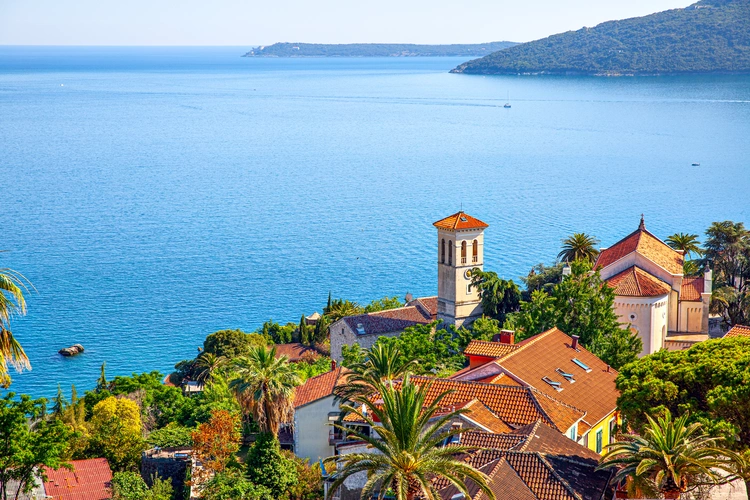
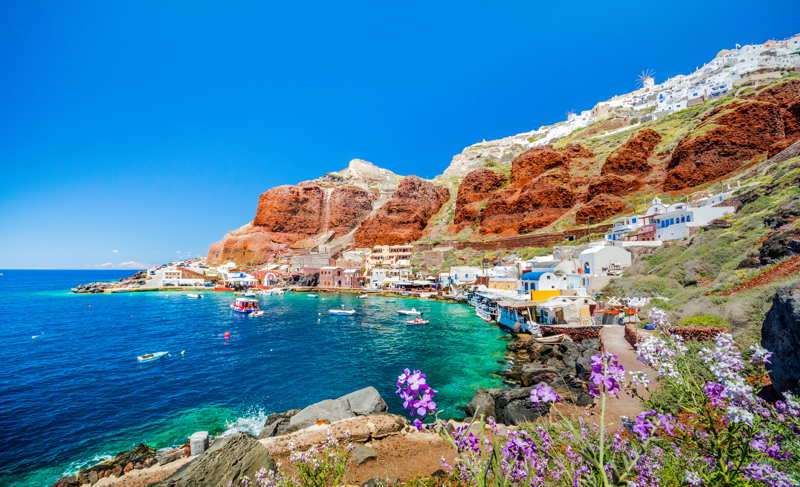
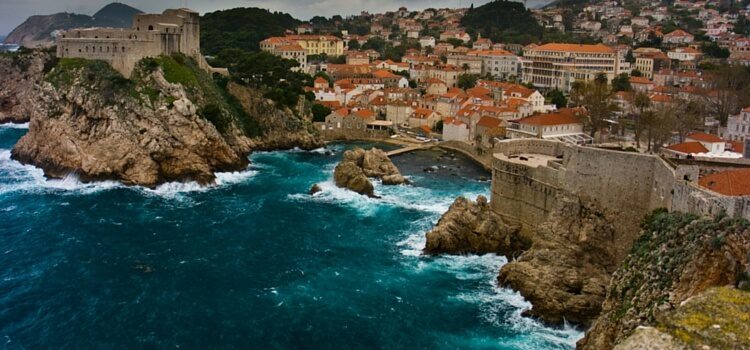
"Paris, Istria, and Medellin."
Investment arguments can be made for each of these markets. Paris is perhaps the most recession-proof rental yields market in the world. I believe that values in Istria, Croatia, will move up over time, and, meantime, in this part of the world, Europeans are keeping the rental occupancy rates high. Medellin, Colombia, is one of the most undervalued real estate markets in the world right now, meaning prices are absolutely low. Meantime, in this case, the supply of available rentals is low, and demand is increasing.
Even if none of those things was true, though, I'd still want to own property in these three places.
For me, at this stage of my life and my investment career, that's the litmus test when considering any real estate buy:
Is this a place where I want to spend time?
If it's not, even the promise of a serious profit upside probably won't get my attention.
As the attendee at last week's conference understood, my perspective is different from Lief's. Lief prefers to invest in places where he wants to spend time, but his head can be turned by a straight-up profit promise. And, in truth, if you're buying for investment, it can be dangerous to cloud that agenda with one related to personal use. Serious property investors want to keep the profit objective separate from any others.
The rest of us should buy houses and apartments in places where we want to be.
In that context, again, three places I'd recommend as holding out what amounts to world's best-level quality of life right now, as I suggested to my new friend at last week's conference, are Paris, Istria, and Medellin.
In different ways, for different reasons, life doesn't get any better than you'll enjoy it in each of these three very special places.
Kathleen Peddicord
P.S. What else this week?
- "Years ago," Robert Bauman began as he opened this morning's sessions of this week's Emergency Offshore Summit in Panama City, "I had occasion to hear Ronald Reagan speak. He told a story:
"A Cuban fled his country, the not-yet-president Mr. Reagan explained. Through great effort and at great risk he made his way to the United States, where he intended to build a life for himself.
"Sometime later, he retold his experiences to an American, who responded to say how great it was that the Cuban man had made his way to the United States.
"'We Americans are very lucky, aren't we, to live in this country,' the American remarked.
"'You're lucky? I am lucky,' the Cuban replied. 'I had somewhere to go.'
"This month is the 10th anniversary of the horrible events of Sept. 11, 2001. It marks another anniversary, as well: Sept. 17, the day that the U.S. Constitution was signed (in 1787) in Philadelphia.
"This second anniversary goes largely unremarked every year, for, I would maintain, the U.S. Constitution is and has been, for decades, largely ignored by the U.S. government.
"Meantime, that same government now consumes nearly 40% of the U.S. GDP.
"There is no shortage of blame to go around for the current state of affairs in the United States, and, frankly, a lot of blame must be accepted by We the People...
- "The G20 countries are blaming the traditional 'financial paradises' for their problems. And these G20 countries are in trouble. They need cash. So they're forcing the world's 'financial paradise' nations to sign information-sharing agreements.
"The bottom line reality as a result," continued one European banker with decades of experience addressing the group assembled in Panama City this morning for our Emergency Offshore Summit, "is that there is no longer any such thing as secret banking.
"This isn't the banking world of 10 years ago or even 5 years ago. It's harder and harder to open a bank account anywhere, and it's going to continue to become harder and harder still. It's no longer reasonable to think that you can say to a banker, 'It's my money. It's none of your business where it came from or what I want to do with it. Just follow my instructions.'
"And I believe that right now is only the beginning. Everyone is signing agreements with everyone. The global banking landscape is changing very quickly. The United States is pushing its weight around in an unprecedented way. The provisions of the HIRE Act related to banking are the most extra-territorial in history. In effect, the United States is forcing the world's bankers to become IRS collection agents.
"The rest of the world seems to be going along. It's an extraordinary thing, but countries seem to be reconciling themselves to the idea that they're going to comply with the relevant provisions...
- Jay Wintrob, president of SunAmerica Financial and the guy behind the group's recent "Retirement Re-Set" study, concludes, after surveying 1,000 Americans age 55 and older, that would-be U.S. retirees are proving themselves "to be both resilient and resourceful." They're embracing a new strategy, Wintrob explains, as follows:
"Work longer, save more, spend less, and adjust your lifestyle expectations..."
That's one approach.
Here's another:
Dive into a richer, more adventure-filled life. Reinvent yourself at this important stage. Imagine the life you want and then go find it.
It's possible, market meltdowns, downgraded credit ratings, shrinking home equity values, and spiking unemployment notwithstanding. These things are all current realities, but they don't need to define your life or your retirement.
You need to define your life...
- Some Brazil fundamentals:
- Brazil is a big market that operates largely unto itself. It was barely touched by the crisis of 2008 and today is booming...
- Brazil's real estate market is driven largely by Brazilians, meaning, again, that it is not suffering as a result of what's going on in North America and Europe...
- Brazilians like real assets, including beach condos and productive land. That's where they continue to park their available cash...which is why prices for beachfront condos, for example, are higher than you might expect them to be (more than US$3,000 per square meter along the front line in Fortaleza, for example)...
What does all that translate to for the individual investor?...
Also This Week...from Resident Global Real Estate Investing Expert Lief Simon:
I've been beating this drum for some time, but I don't think the point can be made too strongly or too often:
It's a yields market. All over.
With very localized exceptions, I don't see any opportunity anywhere today for big capital upside.
That's why, this week at our Emergency Offshore Summit in Panama City, one of our themes has been investing in productive land...land that can throw off a yield...including farmland.
One of the best places in the world today to shop for farmland is Uruguay. As Uruguay attorney Juan Federico Fischer explained in his presentation to the group this week, Uruguay makes sense overall as a solid market choice right now because:
- It's the safest country in South America...
- It's politically stable, with a solid democracy...
- You don't find big social differences...there's not a big gap between the have's and the have-not's...
- The country boasts excellent, affordable health care...
- Corruption is not an issue (very uncommon for Latin America)...
- The infrastructure is developed and reliable...
- No restrictions are placed on capital flows in or out of the country...
- The country imposes no inheritance tax (a nice plus if you're looking to build legacy wealth)...
- The banking system is solid...
- You have a number of interesting, safe, and solid investment options...
Including, again, farmland.
Uruguay is a country of 3.5 million people...12 million cows...and a lot of very fertile land. Main crops include soybeans, wheat, corn, and sorghum.
Investing in productive agricultural land is a more appealing idea right now than it's been in a very long time...in theory. However, investing in productive agricultural land as a practical matter? That's something else.
Maybe you like the idea of retiring to a small finca of your own down Uruguay way (which could be great)...or maybe you have no interest whatever in becoming a farmer.
Your options then would be to invest in land that you could lease out to someone else to farm for you. Or to engage farm management. Leasing your land to someone who'd like to run cattle or grow soybeans on it could be a straightforward strategy, but it lacks a big upside. Going this route, you'd make a regular but probably modest return.
Engage someone to manage your farmland for you, and you would be positioned to benefit from rising crop values.
How would you organize this in Uruguay? Juan Federico could help, connecting you with the right people in the country both to buy right and then to maximize your yields over time.
You can contact him here.
Editor's Note: Juan Federico Fischer's complete presentation on current investment, banking, residency, and land opportunities in Uruguay will be included as part of our Emergency Offshore Summit Home Conference Kit, which will be available two weeks after the close of this week's live conference in Panama City.
Meantime, while the conference continues, you can arrange for the pre-release purchase of this bundle of "going offshore" resources at a discount of more than 50%. Note that this discounted pre-release offer is available only until Friday, Sept. 23. Details are here.
Read more...
We were in the market for one of the old white stone houses you find across this peninsula. We wanted to stake our small claim to this beautiful and historic region that, during previous visits, had so captured our hearts and our imaginations.
On that trip six years ago, Kaitlin, 15, Jackson, 5, Lief, and I followed our property agent from one stone farmhouse to another, up and down the narrow winding roads of these mountainsides, through the medieval villages, and past the expansive fields of olive trees, grape vines, and sunflowers, more infatuated with the region with each passing day.
We had recently made our move, at the time, from Ireland to France, and, one rainy morning of that Istrian family adventure, standing in one muddy Istrian farmyard, Kaitlin observed, "But haven't we done this already? Haven't we already bought an old stone house surrounded by mud? Isn't that what we just did in Ireland? Why do you guys want to do this again?"
Probably Kaitlin wasn't the only one to wonder why we'd decided to make this investment. But we believed in the future of Croatia, a country with an extraordinarily complicated history and an extremely open-minded, forward-looking population. We recognized, a half-dozen years ago, that Croatia was at another turning point in its long history, and we wanted to be part of it.
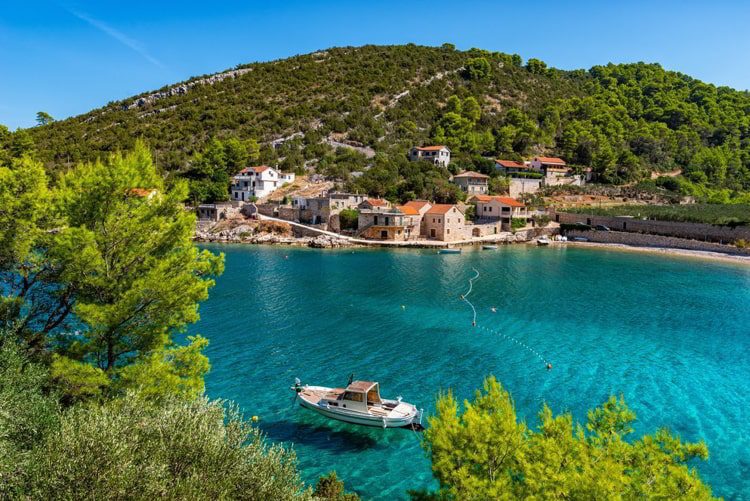
Plus, the Istrian Peninsula serves up some of the most delightful scenery on this planet. The land seems to rise up to embrace you. Everywhere you look, something nice is growing--olives, grapes, figs, tomatoes, pumpkins, blackberries, wildflowers... Even the buildings seem to be of the earth, built of its white stone and red clay.
In some parts of the world, Nature outdoes herself. In others, that which man has built is impressive. In Istria, Nature and mankind have worked together over centuries, starting with the Romans, to create a land of delights you have to see to appreciate.
One rainy morning on that trip six years ago, we found one 200-year-old white stone house that we particularly liked, perched as it was on a mountainside above a long valley of olive trees and grape vines, made an offer to the Istrian owner, and agreed the terms with a handshake. The seller sealed the deal by making a gift to us of lavender oil his wife had bottled.
We returned to Paris and got distracted. Four years later we moved to Panama. This week, finally, we are back in Istria, to check in on our little stone farmhouse and to see how things have changed on this peninsula in the intervening half-dozen years.
We have arrived, without thinking, at peak tourist season.
Every August, Europe hits the road. Everyone in this part of the world gets four weeks' vacation each year, and, typically, they take it in one go, over the month of August. Those in Northern, Central, and Eastern Europe get in their cars and drive toward the beach.
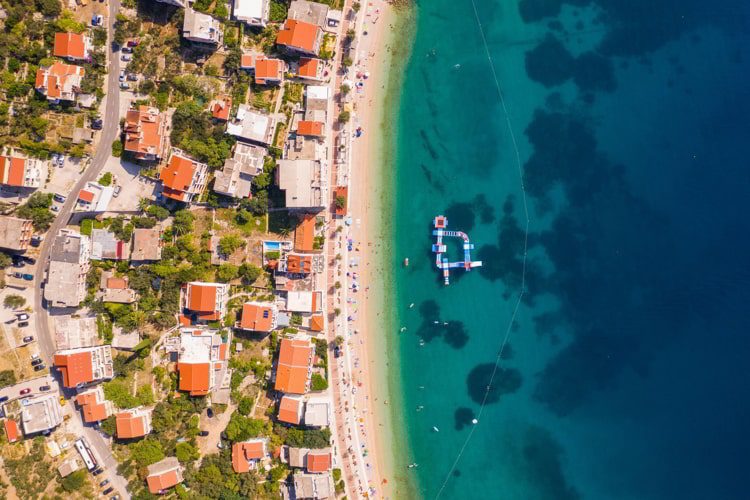
Beach is one thing Croatia has in spades. This country's long Adriatic coastline is magnificent. What's more, Croatia enjoys more days of sunshine annually than any country in Continental Europe. So when Europeans on the Continent set out on their beach holidays, Croatia is one of the destinations they target. Here in Istria, we've seen dozens and dozens of license plates from Germany, Switzerland, Slovenia, Slovakia, Hungary, Austria, Italy...
The Italians have sunny beaches of their own, but those over here in Croatia can be more affordable.
We're staying in one of the dozen or so big hotels purpose-built to accommodate this influx of European sun-seekers. Every morning the hordes of German, Hungarian, and Italian holiday-makers we're living among for these few days set off, barely clad, with their beach mats and their sun umbrellas, headed for the beach.
We, meantime, head for the hills. We've been touring the same mountain roads we traveled six years ago. We were worried we might, this trip, ask ourselves the question that Kaitlin put to us on our last family adventure in Istria. I can report, however, that we're as enamored of this region now as we were back then.
We're happy to find that we like this sun-soaked peninsula we're rediscovering as much today as we did six years ago, and we're making plans, finally, for the renovation of the little stone farmhouse that, we're even happier to find, has neither fallen down the mountainside where it's been perched for two centuries nor been occupied by gypsies (as Lief feared).
We're traveling around with the help of a GPS we rented with our car. We notice that Croatia has the opposite problem of Costa Rica. In Costa Rica, maps were made for years showing a beach road that didn't exist. It had been promised for so long that map-makers, I guess, figured it must have been built and started including it.
Here in Croatia, on the other hand, we're encountering many roads that don't appear on our GPS map. GPS map-makers can't keep up with the rate of new road construction in this country. Once the warring finished in the region, Croatia embarked on an aggressive reconstruction and expansion program. One result is the new tourist beach hotels I mentioned. Another is the ever-expanding highway infrastructure.
Today, we take to these brand-new Croatian highways again. Destination: Venice.
More soon.
Kathleen Peddicord
This is where the smart money is moving.
P.S. What else this week?
- You can find anything you might be looking for in Zurich, Switzerland. The question is whether you can afford to buy it.
Even if we weren't coming from Panama, prices in Zurich would be a shock. A friend from France warned me in advance of our trip. "Be careful," he wrote. "A Big Mac costs close to US$20 in Zurich these days!"
We don't happen to be in the market for a McDonald's meal, but we do have to eat. As I said, you can find any kind of food you might be hungry for in this posh Swiss city, but, seeing the cost, you might lose your appetite. Our first afternoon in the city, we had a pleasant lunch of pizzas and salads in a modest restaurant with outdoor seating in its courtyard. We drank only water. The bill for the five of us came to about US$150.
As we've gotten to know Zurich a little better, we've realized we got off easy with that first meal. The simple Continental breakfast in our hotel is 16.50 Swiss francs per person, and 40 to 50 Swiss francs per head for lunch isn't unusual.
What are we doing in Zurich in the first place? We, along with our 22-year-old daughter Kaitlin, our 11-year-old son Jackson, and our daughter's boyfriend Harry, are on vacation. Last weekend, following our conference in Panama, the five of us flew from Panama City to Zurich, rented a car, and set off for a two-and-a-half-week do-it-ourselves tour of the Continent.
The trip was planned entirely by our children. Lief and I are along for the ride. And to pay.
Seventeen days in a rental car touring Europe with our children... A friend in Panama remarked that it sounds like the script for a Chevy Chase movie...
- "Vicki and I are in remote Tonghai, China," writes Intrepid Correspondent Paul Terhorst, "a two-hour bus trip south of Kunming in the Yunnan Province.
"Talk about complicated travel. We arrived in Tonghai with two pages from a Lonely Planet edition of 10 years ago. That's it. China can change more in 10 days than other countries change in 10 years.
"We quickly discovered the bus station had moved and that the hotel we wanted, near the bus station, had disappeared.
"We only speak pantomime-and-smile Chinese. We were stuck. Signs were all in Chinese, people around us spoke only Chinese. Our map was out of date, the cab stand was empty, hotels were far off--if, in fact, there were any hotels.
"What to do? And what were we doing in Tonghai in the first place?...
- "Nestled at the base of the foothills just east of Thailand's highest mountain ranges, Chiang Rai is in an ideal location," writes Asia Correspondent Wendy Justice.
"Thick, cool forests, majestic waterfalls, elephant camps, and some of the most diverse hill-tribe villages in the world are located just a short distance outside the city.
"At the same time, as it lies at the heart of the infamous Golden Triangle, where Thailand, Burma, and Laos converge in what was once the world's largest opium-producing region, the city offers plenty of mystique..."
- "Queen Elizabeth treats it as a weekend cottage, as it is only an hour's drive from Buckingham Palace, even though it has a thousand rooms and was first built by William the Conqueror in the 1070s,"writes Correspondent Paul Lewis.
"But most visitors to Windsor Castle, famous for its signature fat round tower, take a day trip there by train from London's Waterloo or Paddington stations. With three trains an hour in each direction, just turn up and jump on for the 40-minute ride, following the river Thames for much of the way..."
Also This Week...from Resident Global Real Estate Investing Expert Lief Simon:
An expectation of rapid capital appreciation is unfounded in most markets today, unless your plan is to add value (by renovating, for example, or by converting a piece of property from one use to another) or you're able to find a particularly under-valued opportunity in one of the few stable real estate markets right now.
Both those things are possible and interesting. However, the bigger-picture play in the current climate is for yields. That's why this continues to be my focus.
This month another good yield opportunity has come to my attention from a long-time colleague in the real estate business on Roatan (the largest of the three Bay Islands off the coast of Honduras).
I'm not a big fan of the Caribbean in general, but Roatan isn't a flat spot of sand in the ocean (as most Caribbean islands are). It's a mountain that sticks up out of the water. And it's close enough to the mainland (Honduras) that you have distant mountain views rather than uninterrupted open water to the horizon, at least from the south side of the island.
Of course, Roatan also has the white sand beaches that define the Caribbean and that most people seem to appreciate far more than I do.
From its hammocks-on-the-beach-for-backpackers beginnings, Roatan has grown into a full-fledged resort island destination. Tourism is the main economic activity. Snorkeling and diving are the big attractions, plus cruise ships call regularly. Along with dozens of resorts and hotels to accommodate the tourists, dozens of real estate developments have been undertaken catering to the retirees and second-home buyers the island continues to attract.
The opportunity I want to bring to your attention today is related to the tourism part of this island market. One of the more established resorts in Roatan's West Bay (the most developed area of the island) finds itself in need of more rooms. To meet this need, they are building a series of four-plex buildings with the intention of selling the rental units to investors.
Henry Morgan Hotel and Beach Resort has been successful since it opened in 1999, mostly because it has focused on all-inclusive packaged vacations. It's known as the "Italian" resort because its management has made a business of flying in charters of Italian tourists for week-long stays. The Italians fly in, check in, and hang out at the beach for a week, eating, drinking, and sunning, then they fly home. This model has worked extremely well, and the resort is now expanding to bring in groups from other countries, including Canada and Germany.
The success and the plan for expansion have created the demand for extra rooms. In fact, the resort has already built some one-, two-, and three-bedroom villas to help with supply. However, they still need more, and they are moving now to a more efficient design for their next round of construction--all one-bedroom units.
The plan is to build 120 units in total, doubling the capacity of the resort. Each building will have four units. The bottom two units will be 899 square feet each, and the upper two units will be 1,564 square feet each. The upper units will include rooftop patios; the inside construction will be basically the same. Obviously, the view from the upper units will be better. Lower units are priced at US$99,000; upper units at US$129,000, all furnished.
Less than US$100k is a good price point, and less than US$1,200 a meter (the metric I use to compare properties) is great. Perhaps more exciting than the absolute pricing is that the resort has worked with a local bank to arrange for financing. The terms are not what you're likely used to back home, but they are decent for Central America.
The bank will lend 80% of the purchase price with payments amortized over 15 years. You'd have a balloon payment at the end of year eight. The interest rate is 9.5%. So your monthly payment on a lower-level unit would be US$825 a month.
On the revenue side, the developer is offering a guaranteed rental income of US$8,000 for six years. That income guarantee is regardless of unit, meaning (obviously) that a lower unit provides a better net yield. In addition to the guaranteed income, each owner gets 28 days use of his unit each year, and owners get a 30% discount on food packages at the resort.
Taking the US$8,000 a year of guaranteed income into account, with the bank financing, you'd have a cash outlay of about US$1,900 a year. Use the unit for your 28 days, and the nightly room rate, amortizing the US$1,900, is about US$67, which is great for a resort on Roatan.
Not to confuse things, but you should know that the resort is also offering a financing option, whereby you pay all but the final US$39,000 of your purchase price and that balance is paid off by the rental income. In other words, you can pay US$60,000 for a lower unit and forgo the rental income for the initial six years...while still enjoying the 28 days of use a year.
Of course, cash works, as well. The payment terms for a cash deal are a reservation deposit of US$2,000 with another US$28,000 due within seven days. The promesa de venta is to be signed within 30 days. Then US$40,000 is due when the construction is completed (but before the unit is furnished). The balance of US$29,000 (plus closing costs) is paid at closing.
In addition to the guaranteed rental income of US$8,000, the resort is guaranteeing the construction time. The contract stipulates that they must complete construction within 18 months, or they have to start paying the guaranteed rental income anyway.
Thinking through the cash flow, you can get into the deal with US$30,000 today and pay the balance in 12 to 18 months (I don't think construction could be completed in less than a year). If you have funds pending from selling other property or a business, that timeline could work well for you.
Typically, I'm leery of guaranteed income deals like this. Usually, when a high yield is offered, you are either over-paying for the property (that is, funding the yield up front yourself), or the return is for a short period only, not long enough to make the deal interesting on its own.
In this case, the guarantee period is decent at six years (it's a three-year contract that automatically renews for three years). And the price, at less than US$1,200 a square meter for a furnished unit, is excellent.
The important thing to factor in (and why I think this is a win-win for the resort and the investor) is that the resort has a track record. It's been operating successfully for 12 years. Now it needs more rooms to expand. Simple enough.
Interest rates are high in Honduras, as indicated by the local bank financing offer the resort has negotiated for interested buyers. In other words, it would be expensive for the resort to seek local financing to build the 120 units itself. Additionally, assuming every owner uses his 28 days, the resort gets added occupancy during which they make some money on food and beverage.
If you like the Caribbean and would be able to enjoy the 28 days a year vacationing on Roatan, then this deal is a no-brainer. Even, though, if you're looking at this opportunity strictly for its investment potential, I think there's a lot to get your attention. The guaranteed 8% annual net yield (assuming you buy a lower unit) is excellent. But even the upper units generate a guaranteed 6.2% net yield annually.
And, at the end of the day (or the six years of guaranteed net yields), you still have the hard Caribbean asset.
For more details, contact Janine Goben here.
Read more...
Why do I focus in these dispatches on the countries I do...and give less (or no) virtual ink to others? I have a Top 10 list. On it are my picks for the best places in the world right now to think about spending your time and your money. This list has been created based on more than 25 years experience traveling the globe and covering this live, retire, invest overseas beat...and it has been compiled with the help of dozens of correspondents and friends who keep in touch with me in real time from all corners of this earth. I can't be everywhere at once or know, firsthand, the situation on the ground in every country in the world at any given time. But I can stay well-informed, with the help of smart, savvy people I trust to provide me not only with information (information alone is a glut on the market...often not worth the virtual paper it's printed on), but, much more important, with perspective and judgment. In that context, here are my Top 10 picks right now:
- #1: Panama
- #2: Belize
- #3: France
- #4: Malaysia
- #5: Ecuador
- #6: Argentina
- #7: Uruguay
- #8: Croatia
- #9: Dominican Republic
- #10: Chile
The trouble with a Top 10 list is that it's limited to 10. If I were to expand this list a bit, I'd add:
- #11: Vietnam
- #12: New Zealand
- #13: Mexico
- #14: Nicaragua
- #15: Malta
Some of these countries make sense as full-time overseas retirement havens; some are more interesting for part-time living (because of the challenges and costs associated with establishing permanent legal residency). All, though, offer particular advantages to the would-be retiree, adventurer, or investor. That is not to say, however, they are the only places in the world that could make sense for you. You have your own agendas and circumstances, your personal experiences and priorities. If you've been traveling to the Bay Islands of Honduras for years, for example, as has one reader who wrote the other day...have made friends in this part of the world...have begun shopping for a beach home on Roatan...don't think you must adjust your plan and refocus your attention on Belize because I recommend that country over Honduras. It's true. Belize is generally more advantaged than Honduras. The whole of the country is English-speaking (while, in Honduras, it's the folks out on the Bay Islands, only, who use English as their primary language of communication). Belize is more stable politically than Honduras. Its currency is tied to the U.S. dollar. Its foreign residency program is one of the most user-friendly in the world right now. And Belize qualifies as one of the few remaining banking havens on the planet. All of that is true, but it doesn't mean Roatan, Honduras, couldn't make sense for you. This is such a personal decision. I offer my Top 10 list as a guide...as some stars to steer by. Based on my long experience and with the help of real-time intelligence from friends on the ground in each place, I recommend these places as worth a close look. But, again, I understand, and you should, too, that they are not the only places to consider considering. The other important thing to understand about any Top Picks list is that, if it's based on real-world experience and real-time intelligence, you can count on it to change. Tax laws, visa requirements, the cost of real estate, the cost of living, and the availability of quality health care...as well as the political situation, the value of the local currency, and the ease of coming and going from other parts of the world...all these things change all the time. Just as some U.S. states are more appealing today as places to live or retire than they were a decade ago, some countries are more interesting to the would-be overseas retiree right now than they were two or three years ago. And we can expect that others will become more interesting in the future than they are today. Any list of the World's Top Retirement Havens, including mine, is a moving target. One thing you come to understand when you begin considering the idea of spending time and money overseas is that you must be flexible and open-minded. Just as circumstances are changing dramatically in the United States right now, so, too, can they and do they elsewhere. One way to hedge the potential risks that this truth implies is to diversify...not only your investments, but also your life. Just as it's smart to invest in different markets and to hold assets of different types in different currencies, so, too, are there advantages to spreading your life among different jurisdictions. Do your banking in one country (where you can feel reasonably secure your deposits are safe), reside in another (where you pay no tax), run your business in a third (where entrepreneurs are respected and incentivized) and hold a passport in another. If possible, hold a second passport. I didn't invent this strategy, of course, It's written of often, as the Five Flags plan. It's about organizing both your time and your money (that is, planting your "flags") to your greatest advantage. Plant your flags based on your current circumstances and agendas. But don't plant them in concrete. You might want to be able to move them around from time to time. Kathleen Peddicord P.S. What else this week?
- At what age should you think about retiring overseas?
It's almost never too late...or too early. Laurie Norton and Paul Jewitt, two easygoing Canadians, low-key and modest, started their new lives in Belize four years ago, as young 30-somethings. As Belize Correspondent Ann Kuffner explains, "Laurie and Paul are part of an emerging trend. Move over, Baby Boomers! An increasing number of adventurous 30- and 40-year-olds are making their mark on the local San Pedro Town scene here on Ambergris Caye. They're making their way down here to La Isla Bonita with small savings and pockets full of dreams, and they're starting small businesses so they can stick around.
- "Laurie and Paul, for example, had vacationed in the Virgin Islands, Hawaii, Mexico, Puerto Rico, and Florida. Each time they returned to Toronto, they were more determined to escape the winters. Laurie kept pushing Paul to make their move sooner rather than later..."
- "'Do you have any regrets about moving to Belize?'"That's the question we're probably most frequently asked, both by our neighbors here on Ambergris Caye and also by friends and family back home in the States," writes Belize Correspondent Anne Kuffner.
"Without hesitation, my husband Mike and I answer, 'No. No regrets. Not a one.' "The folks back home often find it baffling that we could be as happy--in fact, happier--living here in little San Pedro Town than we were living in the San Francisco Bay Area. "Initially, we invested in property on Ambergris Caye because of our love for the Caribbean Sea and the laid-back tropical lifestyle on this island. Even today, years later, we're still thrilled to be surrounded by so much beauty, color, and nature. "But there's another attractive aspect of daily life on Ambergris Caye that kept drawing us back to this low-key Caribbean retreat: The people and the strong sense of community we perceived here from the start. I'd never experienced anything like it before. In a big metropolitan area, like the San Francisco Bay Area, one can easily feel lost in a sea of bodies. It's difficult to get to know your neighbors..."
- "As I've explained, Vicki and I considered canceling this trip to Chiang Mai," continues Intrepid Correspondent Paul Terhorst, picking up where he left off yesterday.
"On the Thursday before we planned to travel, Switzerland, Brazil, the UK, and Australia raised their travel advisories to: Do not travel to Thailand. These four countries joined 14 others already making this recommendation, including Saudi Arabia, the United Arab Emirates, Spain, China, Hong Kong, Vietnam, Taiwan, Germany, Italy, Denmark, the Netherlands, Israel, Belgium, and New Zealand. "We came anyway. We flew into Chiang Mai, 700 kilometers north of the main violence in Bangkok. "I've written that unrest comes with the territory these days. Terrorists, natural disasters, riots, strikes, and more make our world a dangerous place. We need to deal with these problems on the ground and within the context of our own real-world experience. More often than not, it's a bad idea to run away. That was my first tip. "Here are two more..."
PLUS: From Global Real Estate Investing Guru Lief Simon: How much does it cost to build a house overseas? As my wife, Kathleen Peddicord, likes to say when people ask her how much it costs to live overseas, "I have no idea...and neither does anyone else." It depends where and what you're building. Not only in what country but where in that country. And not only whether you're building big or small but also how you're finishing, fitting out, etc. A friend is building a small house in the interior of Panama. He is acting as the general contractor and hiring local laborers. He can do this because he has years of experience building in this part of this country. It's a small house, so he's buying materials retail. And it's basic. Nothing fancy. His cost for this small guesthouse, once it's completed, will be US$30 to US$35 per square foot, including the cost of the enclosed space and the covered exterior space. That's an appealing number; US$30 a square foot is absolutely (as opposed to relatively) cheap. So, if someone were to ask me what it costs to build a house in Panama, I could reply, "About US$30 a square foot." And I'd be telling the truth. I could provide the invoices to back it up (with my friend's help). But I wouldn't be giving the full story. At that price, you're building what I refer to as "local housing." A simple structure that serves the basic purposes. There's a basic bathroom, a basic kitchen, a small bedroom, maybe a small sitting area. No fancy fixtures, no high-end tiling (maybe no tiling at all), no closets, no laundry room, etc. This kind of "local house" can be comfortable and certainly livable, but it is not the quality of construction and finishes you would expect to find in a middle-class U.S. neighborhood, for example. And it probably doesn't meet the expectations of the typical retiree considering building a home in another country. Jump up to the next price level--to say US$50 to US$60 a square foot--and you're building what I call middle-class local housing. This is probably closer to the kinds of structures you'd expect to find in a middle-class neighborhood in the States--except for the finishes. Still, these won't be what you're used to. Windows, faucets, door hardware, and lighting fixtures, for example, will be what you'd likely consider very low-end. Go up to US$90 a square foot, and you're in the ballpark for high-quality construction and finishes. You can spend as much as you want when it comes to finishes, and this is where the cost of construction can really increase. In the US$90-a-square-foot range, you're buying very good quality stuff. So, again, how much does it cost to build a house in Panama? As much as you want it to cost, within a very broad range (US$30 per square foot to US$90 per square foot or more), depending on the kind of house you want to build. This is the case almost everywhere. In some countries, you can't build at the really super cheap end of the range, because of construction regulations. This is the case in much of Europe. Still, even in Europe, for example, you can spend as little or as much as you want on finishes. I was reminded of all this by a reader who wrote yesterday to say that he believes he could build a house cheaper in the States than in either Costa Rica or Panama. I guess that could be true--some places in the States, for some kinds of construction--though, frankly, I find it hard to believe. Not when you compare apples to apples--comparable kinds of construction and comparable levels of finishing.
Read more...
"Kathleen, your Live & Invest in France Conference sounds great. We are trying to make plans to attend with the thought in mind of a possible relocation next spring or as early as November. My husband's 15-year-old would be moving with us, and I am interested in information on schooling options for him. This could be a great opportunity for him to attend a culinary arts program, too. He's not out of high school yet but is interested in getting his GED and then attending a culinary school in France. I think that would be amazing for him. "We understand it might take us a few years to learn the language!" -- Hope B., United States
***
"Kathleen, my husband and I are looking to retire overseas in about a year and find your posts helpful as we compare and narrow possible locations that meet our interests. We want to be near water to enjoy those pursuits, but we want to have other interesting and beautiful options nearby to explore, as well. "While Central America seems to be on its way up, offers QRP programs, and seems to have much natural beauty and beautiful Caribbean or Pacific beaches, Croatia, particularly the Dalmatian Coast, seems to be coming out on top of our list, for the water as well as for the architecture, history, and charm. "We have read your book, but we still have questions about the feasibility of having a business in Croatia should we be interested in pursuing that option while living there. I also have questions about the tax/investment advantages. Would love to hear more from you about this." -- Angela B., United States Croatia is one of my favorite places in the world, for the reasons you cite. It has a gloriously long coast, plus a long and interesting history that has resulted in both a sophisticated, eclectic, and open-minded population and many architectural treasures. As a lifestyle choice, Croatia is tops. As a doing-business choice, not so much. You can set up a business in Croatia as a foreigner, but the language and legal requirements make it more difficult than other places. Further, there are no tax advantages to doing business in Croatia on the Croatian side. All the U.S. advantages remain, of course--the Foreign Earned Income Exclusion, etc.
More on Croatia here.Continue Reading:
Read more...
Croatia has captured my imagination since my first visit nearly 10 years ago. The entire family, in fact, was so taken with the beauty, the history, the culture, and the lifestyle of this country that, during that very first visit, we bought a tumbledown stone farmhouse on the side of a mountain on the Istrian Peninsula. It was an impulse buy that we haven't regretted for an instant. I daydream often about spending time in this special spot overlooking an expanse of olive groves and vineyards with a view across the valley of a medieval village built entirely of the white stone the region is known for.
Our architect-friend in Croatia, who drew up the plans for the renovation of the pile of stone rubble we'd bought so impulsively, told us a story years ago that helped to put the history of this complicated country into perspective.
"My father," Levorko explained, "lived to be nearly 100 years old. He lived his whole life here in Istria, in the same town. He died living in the house where he'd been born.
"And, in his lifetime, my father lived in nine countries."
Croatia was ruled briefly by France under Napoleon. It was part of the Hapsburg Monarchy. It was part of Serbia. Part of Yugoslavia. It was ruled by the Venetians and occupied by the Italians, who left behind their cuisine and their language (some street signs even today are in Italian). And it was organized into a series of republics, culminating in the current Republic of Croatia.
Here's something else you may not know about Croatia: It's the birthplace of the necktie. The Croat contingency of the French service wore their traditional knotted handkerchiefs during the Thirty Year's War (1618 to 1648). The Parisians took a fancy to them and called them "cravat"—a cross between the Croatian and French words for Croat (Hrvati and Croates).
So began a cravat fashion frenzy. In the 17th century, these kerchiefs became so intricate that they were tied in place with strings and made into bows that took forever to arrange.
Croatia has a great climate, which is why it's able to produce increasingly sought-after Zinfandel grapes. Croatia's mild winters and sunny summers make for perfect Zinfandel weather.
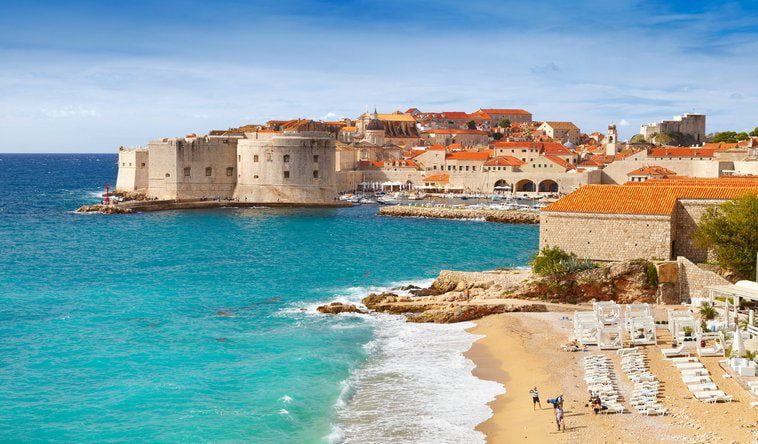
Croatia is a sailor's paradise. All up and down its long coast, you see flotillas of white yachts offshore from ancient towns hidden behind thick walls. This is a fairy-tale land of fortresses and bell towers that so attracted and impressed the Romans they invested in some of their best building here, including, for example, a large and largely intact coliseum at Pula where lions and Christians once entertained.
How would I thin-slice this enchanting land?
First, Istria, where Nature and man have worked together over many centuries to create something very special, almost magical. The ancient Romans named it "Terra Magica."
The hinterland of Istria is a beguiling patchwork of meadows, vineyards, and olive groves, plus carefully tended gardens where trees hang heavy with ripening cherries, figs, and walnuts. This fertile land also grows wild asparagus and truffles, for which Istria is becoming famous. High in the hills, behind more medieval walls, are yet more toy-town settlements of fountains, chestnut trees, and frescoed churches. Frankly, I defy you not to fall in love with Istria. Both the landscapes and the way of life rival the best of Tuscany or the French and Italian rivieras, but this place is still undiscovered and therefore affordable. Renovation projects (centuries-old stone farmhouses on hillsides overlooking valleys of olive groves and vineyards) can start at less than $100,000.
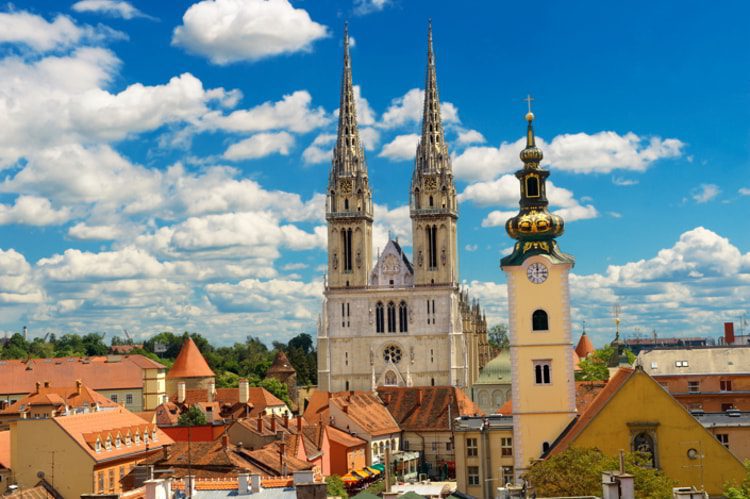
Next, Zagreb. As capital cities go, this one is just about perfect. And here's why:
First, its location. It's tucked in southeastern Europe, bordering the Adriatic Sea, between Bosnia and Herzegovina and Slovenia. It's a prime location near Vienna, Venice, Budapest (all spectacular cities in their own rights), plus skiing in Austria and golf in Slovenia.
Second, its size. Zagreb's manageable size enables you to enjoy every corner of the city and the surrounding areas on foot or bike or using its easy transportation system. Zagreb is one of those rare capital cities where you can enjoy a morning of skiing or hiking, visit several museums or swim on a nearby beach after lunch, and then enjoy a play or an opera that same evening.
Third, it's fun. Croatia's tumultuous history has created an enormously diverse culture.
Finally, like all Croatia, Zagreb is inexpensive.
Like France, this isn't one of the world's cheapest places to live. But it's one of the most affordable options on the Continent, delivering extraordinary lifestyle for the cost.
Kathleen Peddicord
P.S. The best-known spot within Croatia is Dubrovnik, a World Heritage Site walled jewel of a city. However, because it's the most expensive and most touristed spot in the country, I don't recommend it among top lifestyle or retirement options. You want to see Dubrovnik (by all means), not necessarily to call it home.
Editor's Note: This month's issue of the Overseas Retirement Letter, in production now, features a complete report on spending time, in retirement or otherwise, in Zagreb, one of our favorite capital cities and a top choice in Croatia. If you're not yet a subscriber to the Overseas Retirement Letter, get on board here now in time to read our new Zagreb Report.Continue Reading:
Read more...
|