





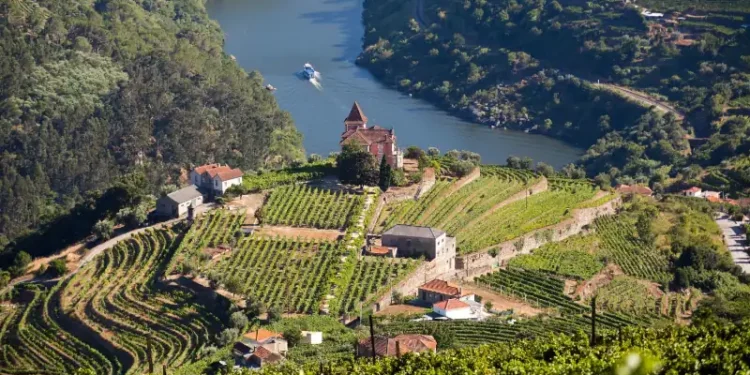
This is perhaps the best time of year for wine tours and vineyard visits in Europe—it’s harvest season, and you’ll find the wineries buzzing with grape picking, pressing, special harvest meals, and other seasonal traditions that aren’t part of a standard tasting-room visit at other times of year.
Plus, the weather is pleasant and tourism is down… crisp autumn walks among the vines that you don’t have to share with dozens of others.
This time of year is when wine tourism is less like sightseeing and more like being invited into the winemaking process itself.
You may have already done some wine tours on the Continent… perhaps Bordeaux or Champagne… These classics can seem a little mainstream these days, with lots of package offers and lots of other wine tourists. These well-trod paths can feel a little impersonal.
Whether you’re cruising along the Douro on a small river boat, or trekking through the hills of Alentejo… raising a glass of tawny port or savoring a complex Madeira… every wine experience in Portugal feels unique.
What Wine?
Mention Portuguese wine and you probably think of Port, which deserves its reputation, sure.
The Douro, in Northern Portugal, from which port hails, is one of the world’s great wine regions, with vineyards carved into steep river valleys and a wine history that stretches back centuries.
But stopping at Port would be like going to France and drinking only Champagne.
There’s so much more to explore here… Portugal has a deep wine culture that few really know about.
This little country has an extraordinary range of landscapes and growing conditions: mountains, river valleys, Atlantic coastlines, and sandy plains. It has around 250 native grape varieties, and blending different grapes is a longstanding part of the country’s winemaking tradition.
And that’s what makes Portugal so much fun for a wine trip: there isn’t just one Portuguese wine experience, there are many—and each one feels personal and one-of-a-kind.
In the north, you can drink Vinho Verde: young, fresh wines from the Minho, often with that characteristic little spritz that makes them so refreshing. And despite the name, Vinho Verde isn’t actually a “green wine”—the name refers to its youthful character.
Travel inland and things change dramatically…
The Douro is famous for Port, but the region also produces dry reds, whites, and rosés. Its wine landscape is so distinctive that the Douro has been a UNESCO World Heritage site since 2001.
Then there is Dão, a region that’s practically unheard of, even in Portugal. It’s truly one of the country’s best-kept wine secrets, producing balanced, long-lasting wines as well as rosés and sparkling wines.
And if you keep going, the list just keeps getting more interesting: Bairrada and its sparkling wines, the high-altitude vineyards of Beira Interior, the extensive vineyards around Lisbon, the value-oriented wines of the Tagus, the dessert wines of Setúbal, the broad landscape of Alentejo, and eventually the very different wine worlds of Madeira and the Azores.
Go Where—And When—Everyone Else Isn’t
Where Portugal gets especially interesting for wine travel is in how off-path its experiences are compared to the more well-known wine destinations.
If you’re planning a wine trip outside the height of the traditional tourist season, don’t assume that the famous, polished tasting room is the experience you want… Think smaller.
Look for wineries that aren’t built around busloads of visitors and those without the well-known names. Search for family producers, smaller estates, and places where the wine is part of the everyday landscape rather than a tourism product.
That’s where you’ll get something completely different: a quieter tasting, more time with the people making the wine, a chance to ask questions without feeling like you’re being moved along to make room for the next group.
And, depending on the winery and season, you may also find the pricing to be much more accessible than more established wine-tourism destinations.
Think Beyond Port
If you’re going to Portugal for wine, absolutely drink Port, but don’t make it the entire trip.
The country has been making wine for centuries and it’s has been part of Portuguese life for generations. Winemaking in what is now Portugal goes back at least to Roman times in some areas, and even earlier in others. Wine wasn’t simply something exported abroad, it had a regular place at Portuguese tables and celebrations.
That history makes the wine culture feel different when you’re actually there. In Portugal, you can feel that you’re not just visiting a collection of vineyards, you’re stepping into a land where wine has long been part of the food, landscape, and social fabric.
So try an aromatic Alvarinho from the north. Seek out an Encruzado from Dão. Explore Baga in Bairrada. Taste a wine from the high vineyards of Beira Interior. Go looking for Moscatel in Setúbal. If you’re near the Atlantic, explore what the coastal climate does to the wines around Lisbon.
And if you’re feeling particularly adventurous, look at Madeira or the volcanic vineyards of the Azores.
Now that’s a wine trip…
The Joy Is Not Knowing What You’re Going to Find
Fourteen wine regions, multiple classification levels, hundreds of native grape varieties, and an enormous range of styles and blends…
You can spend a morning drinking something light and fresh, an afternoon tasting powerful reds, and dinner with a bottle made from a grape you’ve never heard of. Don’t forget some Madeira with dessert.
So go a little farther. Book the smaller place. Ask about the local grapes. Try the wine you’ve never heard of. Travel outside the busiest period.
You’ll spend less… You might have the tasting room to yourself… You’ll likely end up talking to someone who has been making wine there for generations. And you’ll have discovered a side of Portugal that you can only get by traveling off-path.
Bonne route,