



If you’re dreaming of a new adventure in a Portuguese city, you’ve got some great options. Today, let’s take a look at two expat favorites, Lisbon and Porto and see how they stack up against one another…
Lisbon
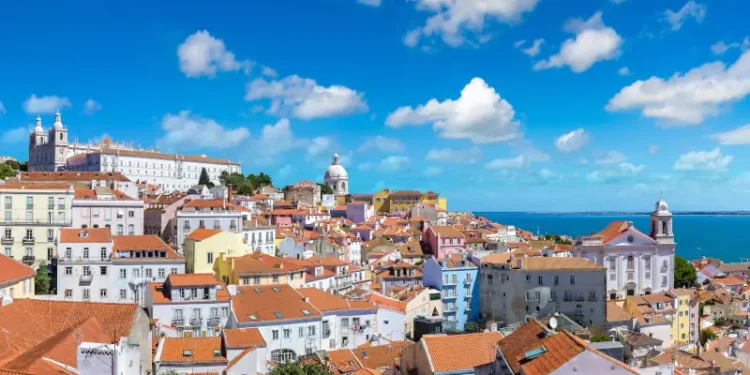
Lisbon is Portugal’s capital and largest city. It lies in southwestern Portugal at the mouth of the Tagus River and along the coast of the Atlantic Ocean.
The city is served by Humberto Delgado Airport, which provides direct flights to locations across the U.S. and Canada, as well as other destinations in Europe, South America, and Africa.
Lisbon is a global city with an important role in finance, commerce, media, entertainment, arts, international trade, tourism, and education.
Its culture scene is rich and busy, with theater shows, opera, and festivals dedicated to rock, jazz, and world music throughout the year, plus museums, galleries, bars, and restaurants serving up world-class cuisine.
Four hundred years older than Rome, Lisbon has deep historical roots. Architecture that spans the centuries provides a postcard-worthy backdrop to daily life.
Lisbon has parks and miradouros (viewpoints) where city dwellers can enjoy time spent outdoors. It’s a coastal city, with swimmable beaches minutes from the city center.
Access to high-quality health care is easy in Lisbon, with dozens of hospitals and clinics throughout the city. Many of the best hospitals in the country—CUF Descobertas Hospital, CUF Descobertas Hospital, Hospital Lusíadas Lisboa, and more—are found in Lisbon.
Lisbon is an accessible old-world capital city, with one of the lowest costs of living among Europe’s capitals. Public transportation is efficient and affordable, and the beaches and parks nearby provide ample respite from city life when you want it.
If you like city life and want easy access to the country’s biggest international airport, with no shortage of museums, concerts, performances, and more, you would enjoy a retirement in Lisbon.
Lisbon may not be a good choice for those with mobility issues, as it is hilly and paved with cobblestones in many areas.
Porto
Portugal’s second city and the “Capital of the North” is found in northern Portugal along the Douro River estuary.
Porto is served by Francisco de Sá Carneiro Airport, which has seasonal direct flights to a handful of North American cities as well as connections throughout Europe. You can also get to Porto by way of Lisbon by train, bus, or car—a journey of about 200 miles.
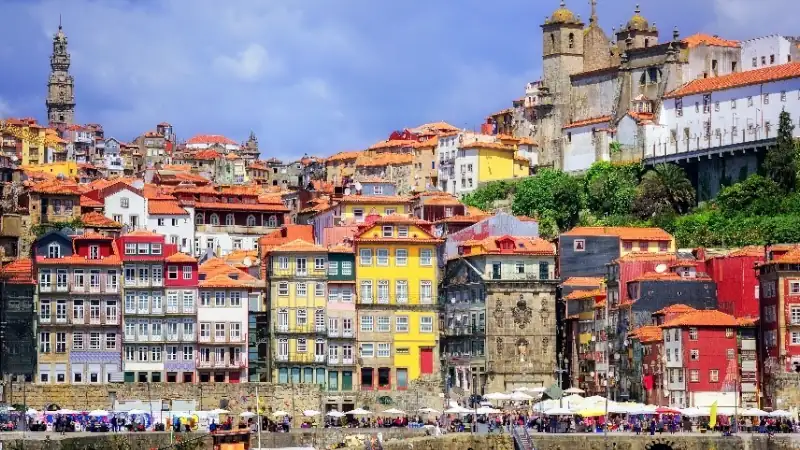
Porto is considered one of Portugal’s most charming cities. It offers a vast array of things to do and see, including art museums, impressive architecture, historical neighborhoods, sun-soaked beaches, colorful parks, and lush gardens.
Porto’s historic center is one of Europe’s oldest, and it, along with the Luiz I Bridge and Monastery of Serra do Pilar, enjoys UNESCO World Heritage status. It features outstanding architecture of Baroque, neoclassical, and modernist styles.
Porto is famous for port wine, which is produced in the Douro River Valley—the oldest demarcated wine region in the world. Directly across from Porto, in Vila Nova de Gaia, you’ll find several cellars where you can do wine tastings.
Like many cities in Portugal, Porto hosts all kinds of events throughout the year—from music festivals to sports events, film festivals to religious celebrations.
Porto is well served in terms of health care, with public health care centers and private clinics, as well as several public and private hospitals. Hospital de São João and Hospital CUF Porto are two highly-rated hospitals found in Porto.
Porto provides all the advantages of city living, including dazzling urban landscapes, strong infrastructure, and abundant services but it’s half the size of Lisbon with a more close-knit feel and a lower overall cost of living.
Porto has its own cultural identity that’s entrenched in history and based on its people’s resilience, authenticity, and hard work. The warmth of Porto’s locals makes up for the slightly cooler, wetter weather in this part of Portugal.
Until next time,

Kathleen Peddicord
Founding Publisher, Overseas Opportunity Letter