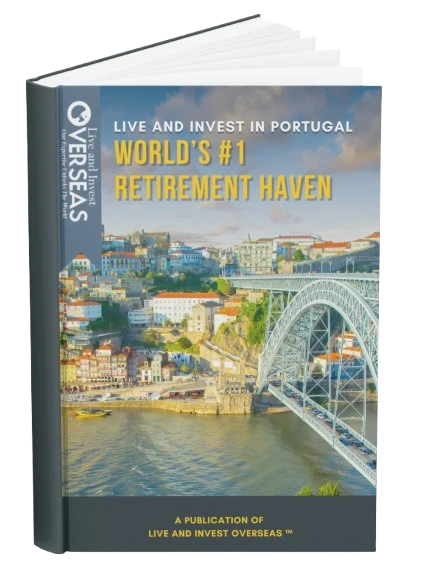





Portugal is our All-Star… the MVP of the overseas living world.
We—along with many others—have named it the #1 Retirement Haven in the World for many years running, and it’s also earned its stripes as a digital nomad haven and a great place to raise a family… and just about anything else you might want to do!
This little country offers plenty of options for expats and retirees, from lively coastal towns to historic cities and sun-soaked beach communities.
But the best place to call home depends on the lifestyle you’re looking for, your budget, and how close you want to be to beaches, culture, and everyday conveniences.
Here are 3 picks from each region of Portugal: the north, the south, and the central region—the top picks in the country and that represent the great diversity of options in this little corner of Europe…
The Algarve—Portugal’s Sun-Soaked Coastal Haven
The 3 Best Things About The Algarve:
- More than 300 days of sunshine a year, with golden beaches, dramatic cliffs, and beautiful coastal towns
- A well-established international expat community, with English widely spoken in many areas
- A relaxed outdoor lifestyle, excellent fresh seafood, and a cost of living that can still compare favorably with much of North America
The coastline is the region’s biggest draw. Golden beaches lie between dramatic ochre cliffs, hidden coves, and striking rock formations. You can spend your days swimming, surfing, sailing, or simply soaking up the sun. Beyond the busy resort beaches, quieter stretches of sand offer a more natural escape.
But there’s more to the Algarve than its coast. Inland, rolling hills, orange groves, cork oak forests, and traditional villages reveal a quieter side of the region. Local markets brim with fresh produce, while family-run restaurants serve grilled fish, seafood rice, and other regional specialties.
Choosing the right town is key, because the Algarve offers several distinct lifestyles…
Lagos, in the west, combines a historic center and beautiful beaches with an active international community. Faro, the regional capital, has a more urban feel, with an airport, cultural attractions, shopping, and access to the Ria Formosa lagoon system. Tavira, farther east, appeals to those who prefer traditional architecture and a quieter pace. In the central Algarve, Vilamoura attracts residents seeking golf courses, marinas, and upscale amenities.
For something more rural, the western coast around Aljezur offers rugged scenery, spectacular beaches, and a less resort-oriented atmosphere. Meanwhile, inland towns can provide a more traditional Portuguese setting, often at lower property prices than the most sought-after coastal communities.
The Algarve’s established expat population makes settling in straightforward. English is widely spoken, and newcomers can find social clubs, activities, and networking opportunities.
The Algarve is no longer the inexpensive secret it once was, though. International demand and holiday-home ownership have pushed property prices higher, particularly in popular coastal areas. Long-term rentals can also be difficult to find where landlords favor seasonal visitors.
The trade-offs are worth considering. Summer brings crowds, traffic, and higher seasonal prices, while some resort communities become noticeably quieter in winter. And if you crave the cultural intensity of Lisbon or Porto, parts of the Algarve may feel too seasonal or spread out.
Cascais—Upscale Coastal Living Just 30 Minutes From Lisbon
The 3 Best Things About Cascais:
- Stunning Atlantic coastline with excellent beaches
- Proximity to Lisbon and all its conveniences
- A charming town with a big international expat community
Once a sleepy fishing village, Cascais became a sunny playground for people from Lisbon, just 30 minutes away. In fact, some of Portugal’s most famous people have made Cascais their home, from a former president to national hero, the world-famous soccer player Cristiano Ronaldo.
Today, Cascais is a magnet for expats seeking a safe, high-quality lifestyle. It offers innumerable amenities, fantastic restaurants, tons of culture, gorgeous scenery, and more. You’d be hard-pressed to find a Portuguese city more liked by locals and expats.
The lifestyle in Cascais is laid-back yet vibrant. It sits on a stunning stretch of Atlantic coastline and offers golden beaches, which are the main draw for many. You’ll find secluded coves that are ideal for relaxation as well as more active stretches where you can surf and do water sports.
In town, there’s a mix of historical features—cobblestone streets, historic architecture, etc.—and modern amenities, like trendy cafés and restaurants. For anything that you can’t get in Cascais, Lisbon is only 30 minutes away and easily reached by train.
Cascais is safe and friendly, with a diverse community of expats that stands out for being so welcoming. It’s especially popular with families, but it also attracts retirees, digital nomads, singles, and professionals of all ages.
English is widely spoken, and it’s easy to connect with social clubs, networking events, language classes, and more. Despite the big international community, Cascais remains authentically Portuguese, from the local restaurants serving fresh seafood to the festivals and traditions that are kept alive.
Because Cascais is so highly sought after, prices for real estate and day-to-day expenses are higher than in other parts of Portugal. That said, the overall cost of living is still lower than costs in North America, and most expats are happy to pay the price for their above-average standard of living.
Braga—Portugal’s Low-Key, Elegant, Culturally Rich Northern Haven
The 3 Best Things About Braga:
- A university town with a lively ambiance
- Portugal’s third-largest city, famous for its historical buildings, monuments, gardens, and fountains
- Culturally vibrant, with events, festivals, concerts, and exhibitions year-round
Braga is the culturally vibrant capital of Portugal’s northern Minho Province, famous for its lush, green landscapes that produce vinho verde wine.
It’s an off-the-radar retirement choice in Portugal… especially compared to the Algarve, Lisbon, and Porto. Most of the international attention that Portugal gets is focused on those three areas, and that attention has driven up property prices and costs of living.
Braga offers a more authentically Portuguese, tranquil, and affordable way of life relative to those places.
Braga is an attractive, well-loved city, with narrow lanes and lively plazas hemmed in by historic buildings and elegant baroque churches. Its key appeal comes from its historic center, a dense, buzzy neighborhood that’s full of cafés, restaurants, boutiques, churches, supermarkets, businesses, hotels, homes, and more…
It’s a small city with a population of under 200,000 people, but because it’s a university town, the ambiance is always lively, with people out enjoying its gastronomic offerings, parks, and plazas. It’s also compact, so you can easily get by without a car and make your way from A to B on foot.
Braga is well-situated, less than an hour from Portugal’s second city, Porto, as well as the country’s rugged Atlantic coastline. The sprawling landscape of Minho Province surrounds it, providing ample opportunities to commune with nature.
Bonne route,