




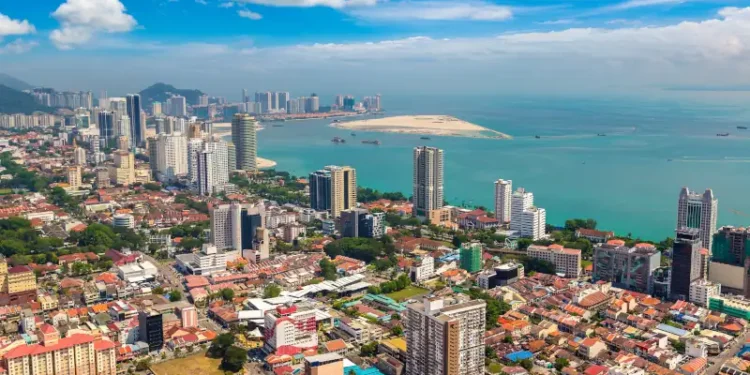
Ten years after moving to Penang, Malaysia, the question was no longer whether the health care was good (in fact, it’s excellent). It was whether a widowed 78-year-old woman still wanted to navigate three airports alone every time she needed to see her grandchildren half-way across the world.
She had done everything right. She and her late husband had researched carefully, budgeted sensibly, chosen well. The cost of living was exactly what they had hoped. The climate suited them. The expat community in George Town was warm and well-established.
For the first decade, the life they had imagined was, more or less, the life they were living.
And then things changed, as things do.
This is not a cautionary tale. And it certainly is not an argument against retiring abroad, to Southeast Asia or anywhere else. Some of the most thoughtful, well-prepared retirements I have encountered have been overseas ones. But in my years working in wealth management, and in the research I have done since into long-stay retirement in Southeast Asia specifically, I have noticed a consistent gap…
People spend enormous energy planning the exciting first chapter of overseas retirement. Very few plan seriously for the later ones.
Behavioral economists have a name for this: optimism bias, the tendency to plan enthusiastically for the outcomes we want while discounting the ones we would rather not think about. It is well documented in financial planning. It is at least as common in retirement planning. That imbalance deserves more attention than it receives.
The Question Almost Nobody Asks First
Most people thinking about an overseas retirement ask themselves the same set of questions: What does it cost to live there? How is the health care? What is the visa situation?
These are reasonable questions but a rarely asked and more important question remains: What happens if the plan stops working?
Not catastrophically. Not through any single dramatic event. But through the gradual accumulation of the things that happen to people as they age… reduced mobility; declining health; bereavement; a change of heart; a pull toward grandchildren that intensifies rather than fades. The things that do not show up in a cost-of-living comparison or a visa checklist.
Returning home from overseas retirement is pretty common and considerably more complicated than most people anticipate when they leave.
Property back home may have been sold or let on long leases. Medicare does not cover you abroad, and returning after years away can mean navigating a changed insurance landscape, potentially with a gap in coverage at precisely the moment health is becoming a more pressing concern.
For retirees from any country, the administrative complexity of unwinding a life built abroad, banking, property, tax residency and health care, can fall to people who are older, perhaps less well, and possibly dealing with grief. None of this is insuperable. But it is far easier to navigate when it has been thought about in advance.
The people who navigate overseas retirement most successfully are rarely the most optimistic. More often, they are the most prepared.
Health Care Concerns
The health care conversation in retire-abroad circles tends to focus on the quality and cost of acute care. And there is much to be said positively on this front, particularly in countries like Thailand and Malaysia, where private hospital infrastructure is sophisticated, internationally accredited, and priced at a fraction of equivalent private care in the U.S.
But acute care is not the same as long-term care. And long-term care is not the same as assisted living. These are different things, and conflating them is a significant planning error.
The harder question is not what happens if you need an operation. It is what happens if you need sustained support, daily, ongoing, possibly for years.
In much of Southeast Asia, elder care has traditionally been a family matter, absorbed into multi-generational households in ways that work well within those cultures but offer little to an expatriate couple without local family nearby.
Assisted living options do exist in major cities, and the market is developing. But the sector remains considerably less mature than in the West and navigating it requires local knowledge, appropriate language support, and access to trusted advice at a moment when a person’s capacity to seek that advice may itself be compromised.
There is also the question of what it means to become dependent in a country where you remain, legally and administratively, a guest.
Long-stay visa programs like Thailand’s retirement visa, Malaysia’s My Second Home program, and the Philippines’ Special Resident Retiree Visa are generally stable but subject to policy change.
None of this argues against the move. It argues for knowing what you are signing up for across the full arc of the plan, not only the first few years.
Money Over Time
The financial case for retiring to Southeast Asia is often compelling and usually genuine. A pension or retirement income that would produce a modest retirement in the American Midwest can support a very comfortable life in Chiang Mai, Thailand; Penang, Malaysia; or the outskirts of Manila in the Philippines. But affordability is not static.
Exchange rates move, sometimes significantly. British retirees have seen this play out acutely since the Brexit referendum, with sterling’s volatility reshaping the economics of retirements that had looked well-planned on paper.
American retirees are not immune: a strong dollar that has served well for a decade can shift meaningfully over a 20-year retirement horizon.
This is not a reason to stay home. It is a reason to hold the financial model with appropriate humility and to maintain enough flexibility to absorb a shift without the plan unravelling.
Health care cost inflation in many Southeast Asian countries has historically run ahead of general inflation. International health insurance premiums tend to rise with age in ways that can alter the economics of a retirement that looked financially sound at 62 considerably more than it does at 75.
The return journey, if it becomes necessary, is also not free, and its costs tend to be underestimated, if they are estimated at all.
There is also the quiet administrative erosion that accumulates over years abroad. Expatriates frequently discover that maintaining bank account at home from overseas is more difficult than expected.
Plus, U.S. citizens abroad remain subject to American tax filing obligations regardless of where they reside, and many foreign banks have become reluctant to hold accounts for U.S. passport holders due to FATCA compliance requirements.
The time to think about maintaining some financial presence in your home country is before you have fully dismantled it.
What Good Planning Actually Looks Like
None of the risks outlined above require abandoning the retire overseas plan. They simply require building it with enough flexibility to absorb change. In practice, that means a handful of things worth doing deliberately…
Maintain some optionality at home. Selling a property to fund an overseas retirement is not always the wrong call, but it closes a door that can be expensive to reopen.
A foothold at home, a modest property, a letting arrangement, or simply a clear plan for where you would live if you returned, is worth considerably more in the later years of retirement than any yield it might generate earlier.
Keep financial infrastructure in both countries. A functioning bank account, an active credit history, accessible pension or retirement account arrangements are all far easier to maintain than to rebuild after a decade’s absence.
Have the dependency conversation explicitly—and revisit it. Where would you want to receive long-term care if it became necessary? What would prompt a return?
Couples who have discussed this openly tend to make better decisions when the question becomes real, because they are not making them for the first time under pressure.
Revisit the whole plan every five years. Exchange rates shift. Health changes. Family circumstances evolve. A plan that is never revisited is not really a plan, it is a decision made once and then hoped for.
The People Who Get It Right
The couples and individuals who approach overseas retirement most successfully are, almost without exception, the ones who have thought about exactly these questions. Not because thinking about them makes the risks disappear. But because working through them, genuinely, honestly, without filing the difficult questions under “we’ll cross that bridge”, produces a clarity that makes the adventure both more enjoyable and more sustainable.
The person who has thought seriously about what they would do if they needed to come home is more able, not less, to enjoy the years when coming home is the last thing on her mind. The couple who have discussed what dependency might look like, and where they would want to face it, are not being pessimistic. They are being thorough.
Retirement abroad, done well, is one of the most rewarding choices a person can make. The climate, the cost of living, the quality of life available in much of Southeast Asia represents a genuine and often life-changing opportunity for retirees. What it rewards, more than anything, is the willingness to ask the questions that most of the retire-abroad ecosystem seems in no particular hurry to answer.
Sincerely,
James Swaby
Contributor, Simon Letter