




Every year, I speak with hundreds of potential expats who are thinking of moving abroad.
When picturing their new lives overseas, few envision themselves in gated communities or private residential complexes… especially not expat-oriented ones.
That’s because we rarely think about the practicalities of managing property when we dream about our new lives overseas. Instead, we dream of adventure, excitement, and rich cultural experiences.
And the best way to fulfill that vision is to immerse yourself in the local culture… not restrict yourself to a North American enclave. Many expats write off gated communities altogether.
But things shift when people face the nuts and bolts of living abroad… about 90% of those who make the move end up buying in some sort of planned community—either a gated community or condo project.
And there are valid reasons for this.
Before you opt out of a planned community, here are some factors to consider…
How Often Will You Use The Property?
If you plan on living abroad full-time, immersing yourself in a local neighborhood might be a good option.
But if you’re using your property as a part-year residence or vacation home, then you have to consider how the property will fare during your long absences.
Planned communities have staff to look after the property while you’re gone. With a single home, you’ve got to arrange for this yourself within the local community.
A local property management company would serve the purpose, but you have to consider the cost… and whether or not you trust them.
Do You Speak The Local Language?
Making arrangements for a caretaker requires knowledge in the local language. I’ve had four caretakers across Ecuador, Uruguay, and Brazil, and none spoke English.
If your Spanish, Portuguese, or Malay isn’t what it should be, it’ll be a challenge when you need to call a plumber, a roofer, or a gardener.
In a planned community, knowledge of how to find services like these is shared among the English-speaking residents, making it easy to get things done.
Who Will Pay The Utilities And Taxes?
My two properties in Colombia produced (annually) 8 tax bills, 48 utility bills, and 24 invoices for condo fees… and it took months to get things set up so they’d all be paid on time. In one case, I paid condo fees a year in advance because there was no other easy way to do it.
In a planned community, this is easy to figure out. This is because everyone’s doing it the same way… you often have an English-speaking developer… and you’ll usually have English speakers around to show you the ropes.
How Are The Crime Levels In The Country You’re Considering?
Gated communities are inherently more secure than unattended, standalone homes. In many countries, that’s one of their primary benefits.
In countries with poverty and crime issues, only residents in gated communities can live without bars on their windows or fences or walls around the house.
Are There Local Public Facilities And Amenities?
Many planned communities come with a pool, a gym, tennis, a clubhouse, and other facilities that you can enjoy when you’re there. Some even have stables, shops, a private beachfront, a clinic, and more.
In a planned development, you don’t have to look for these amenities, and they’re maintained for you. In a local town or city, you may have to look far and wide and pay for the individual memberships… assuming they exist at all.
Here are some projects that I’ve personally visited that tick all the boxes for the North American expat…
Boutique Condo Development, Tulum, Mexico
Tulum is Mexico’s Caribbean hot spot that attracts well-heeled tourists from around the world. It offers white-sand beaches, eco-reserves, crystal-clear cenotes, and ancient Maya ruins…
In a quiet, residential area of Tulum, a boutique resort offers luxury condos starting from just $139k. The resort offers a suite of 5-star amenities, including a cenote-inspired pool, a gym, a co-working lounge, 24/7 concierge and security, massage facilities, and more…
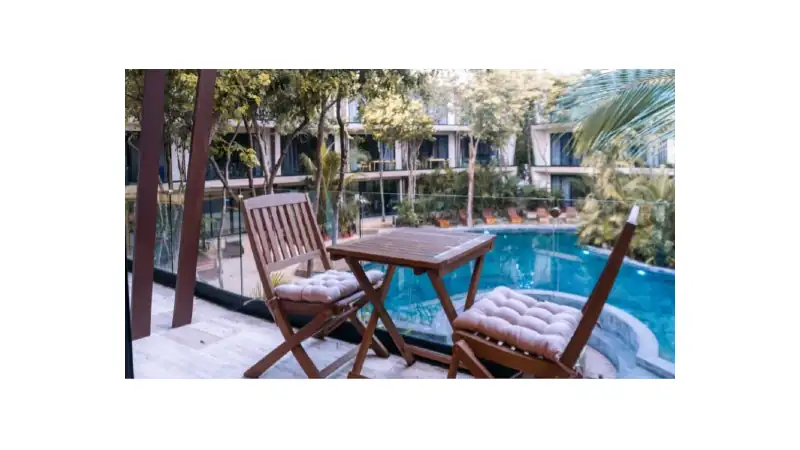
Fully built and operational, earlier buyers are already earning a turn-key $15k per year in rental income…
Only a handful of units remain. Right now, you can claim one of the last few at a 10% discount. Click here now to find out more.
Off-Grid Eco-Community In Belize’s Cayo District
This is a 100% off-grid eco-community located in the Cayo District of western Belize. It’s in a rural area of lazy rivers and rolling hills, far from the hordes of tourists found in the far-more-famous Ambergris Caye on Belize’s coast.
With elegant homes, it offers the latest in off-grid design. The state-of-the-art solar technology supports air conditioning, washers, dryers, and refrigerators. Plus, all homes have high-speed internet, so some residents here work remotely.
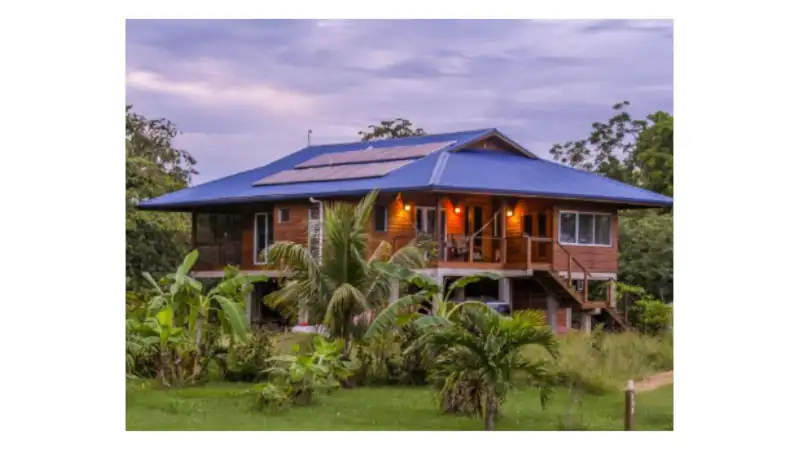
Residents here are both young and old… male and female… full-time and part-time. The community vibe is strong, whether residents are pitching in at a community garden or just hanging out at a neighborhood picnic.
The development offers building lots, custom-designed homes, and tiny homes. Building lots start at just $59,000.
For more information, take a look here.
Luxury Living On The Western Azuero Peninsula, Panama
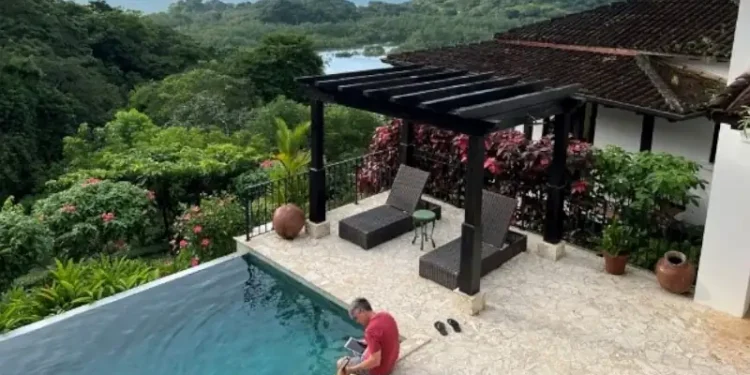
Los Islotes is a high-spec planned community located among the rolling hills on the west side of Panama’s Azuero peninsula. This area is called the Sunset Coast because it’s the only developed stretch of coast in Panama that faces west. The sunset views here are remarkable.
Los Islotes offers rolling hills, mountain and ocean views, two beaches, and elegant, tasteful homes of several attractive designs.
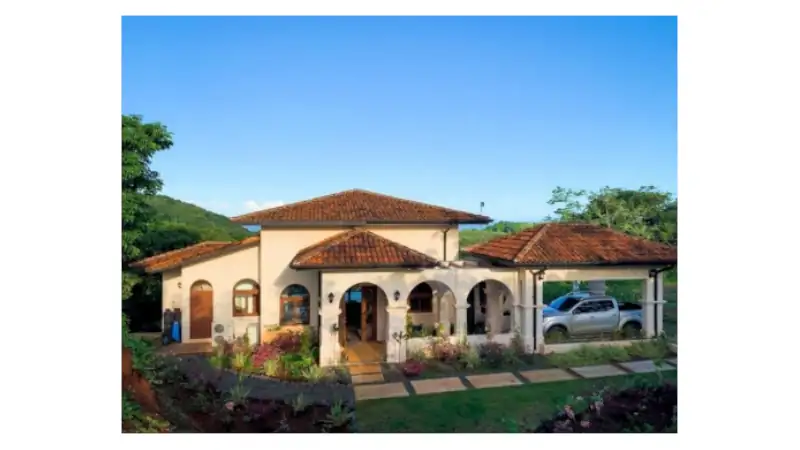
It’s also one of the few communities (in any country) that offers an equestrian center… along with a clubhouse, bar, fitness center, and 24-hour security.
Los Islotes is the project and passion of Kathleen Peddicord and Lief Simon, and its high standards reflect their personal hands-on approach to design and development.
With a budget of $49,500 or more, you can secure a lot with ocean views. Smaller lots start at just $39,000. For a lot plus the construction of a Rainforest Chalet, you can get in for $199k. Discover Los Islotes here.
Sincerely,

Lee Harrison
Contributor, Global Property Advisor