

FREE 3-PART MASTERCLASS
Watch The Free 2027 Overseas Masterclass Today!
Simply enter your email address below and watch 3 unedited, on-demand streaming sessions with local lawyers & expat specialists.


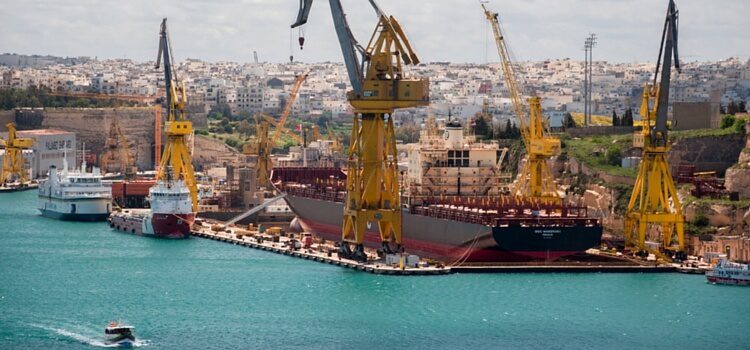
The economy in Malta is heavily dependent on foreign trade and freight distribution/docking. The financial services sector is well-developed.
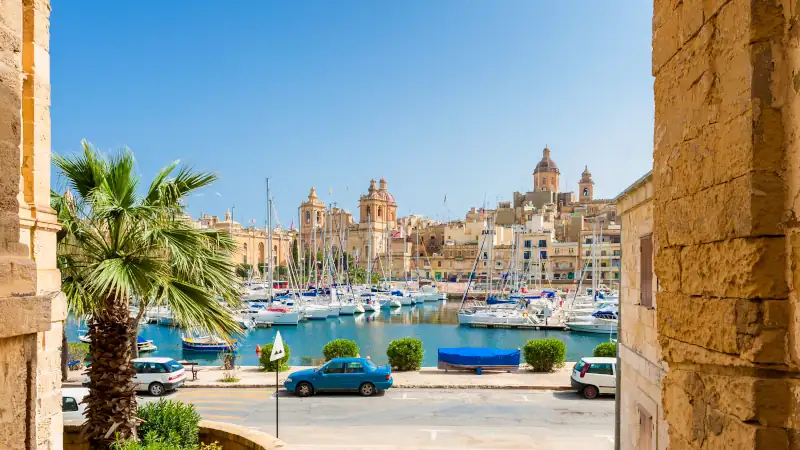
The economy in Malta is heavily dependent on foreign trade and acts as a freight distribution and docking point for the region.
Most importantly, the Maltese government has invested heavily in education over recent decades, and the result is a multilingual, highly sought-after, productive labor force.
The country adopted the Euro in 2008. Also, the financial services sector is well developed and the country is a key player in cross border fund administration.
Much of Malta’s manufacturing is focused around the electronics and textiles industries. As you would expect, tourism also plays a key part in the country’s economy.
Today, Malta clocks up around 1.2 million tourists per year, which equates to an impressive three tourist visits for every resident.
Malta is a rapidly developing country and the prices are increasing. The cost of incorporation almost reached the prices of Switzerland. However, the tax benefits outweigh any disadvantages.
Most importantly, Malta is an excellent location for people who seek access to the European common market and want to pay the lowest tax in a regulated and transparent business environment.
This country offers other hidden tax advantages, and it’s a great hub for private jet and yacht registration as well. EU nationals can register their yachts without any restriction.
Another plus is that Malta has a full imputation tax system which eliminates the economic double taxation of company profits.
Shareholders in receipt of dividends are entitled to a tax credit equal to the tax borne on the profits out of which the dividends are paid.
Although Malta is a small country, it gets a lot of air traffic. Plus, Malta’s international airport is well accustomed to catering to it.
| Information Type | Notes |
|---|---|
| Real annual growth rate (2024) | 4.6% |
| Per capita income | US$31,534 |
| Inflation rate (2024) | 2.9% |
| Sectors by GDP | services (87.2%), industry (11.4%), agriculture (1.4%) |
| Exports (Dec. 2023): US$4.224 billions | machinery and mechanical appliances; mineral fuels, oils and petroleum products; pharmaceutical products; books and newspapers; aircraft/spacecraft and parts; electronical equipment. |
| Major trade markets | Eurozone |
| Imports (Dec. 2023): US$6,265 billion | mineral fuels, oils and products; electrical machinery; aircraft/spacecraft and parts therereof; machinery and mechanical appliances; plastic and other semi-manufactured goods; vehicles and parts. |
| Major suppliers (2022) | Italy 25%, Canada 10%, France 7.3%, Germany 5.6%, Greece 5.5%, China 5%. |
| Labor force (2024 est.) | 305,100 |
Opening a bank account in Malta is a simple process. To open a bank account you will need a valid passport, a utility bill showing the current place of residence and a bankers‘ reference letter. Also, you must demonstrate to the bank that you’re a resident in Malta or that you have income arising form Malta.
However, companies need to present a certificate on incorporation and the Memorandum and articles of Association, a valid passport, utility bill and a bankers’ reference letter in the name of all directors and shareholders involved in the company.
Explore top living destinations, beach communities, highland havens, and city hubs across Malta.
Practical guidance for planning your life, move, retirement, property purchase, or investment in Malta.
A string of small islands in the southern Mediterranean makes up Malta. One of the tiniest countries in Europe, it also has the tiniest…
Read InsightAI has no role at Live and Invest Overseas. Every time we allow AI into the conversation, we give up a little piece of your trust—and trust is the foundation of everything we do. Our strength is simple: real people speaking from real experience, in first person, telling real stories from the ground.
We will never publish AI-generated content. Not from ourselves, and not from anyone submitting to us. Our work is built on judgment, experience, trust, and what’s actually happening on the ground—not scraped summaries or recycled internet information.
When you read us, you’re reading lived experience. The stories, the insights, the perspective—that’s what AI can’t touch. And that’s exactly why we don’t use it.
Top Countries
Budgets
Resources
Real Estate
Conferences
Store
Free Report
© 2008 - Live and Invest Overseas - All Rights Reserved.