


FREE 3-PART MASTERCLASS
Watch The Free 2027 Portugal Masterclass Today!
Simply enter your email address below and watch 3 unedited, on-demand streaming sessions with local lawyers & expat specialists.

The Portugal property market is well-established, with no restrictions on the purchase of real estate. Learn how to purchase property here.

Buying and selling real estate in Portugal is a simple, transparent process, but it takes time.
The property market in Portugal is well-established and there are no restrictions on the purchase of real estate, and transaction costs are generally low.
Most property is sold freehold. The country’s property registry system is centralized and very reliable.
The law protects property, property rights, and the right to access and use one’s own property.
After languishing for a few years following the financial crisis of 2008, the Portugal property market began to bounce back in 2014 and has been improving ever since. The market has done especially well over the last 6 years.
Overall, prices rose 11.4% in January 2020 from a year earlier to an average of 2,060 euros per square meter.
A typical 120 square meter apartment in a high-end part of Lisbon will rent for around 3,426 euros a month and costs 340,000 euros to purchase.
The same apartment in the Algarve will rent for about 1,736 euros a month and sell for 220,000 euros.

To start the purchase process, you’ll need a personal fiscal number from the local tax office—if you got a local bank account then you were automatically assigned one.
While many countries overseas do not require credentials for real estate agents, Portugal does. You’ll find agents in the city with licenses issued by the government.
Also, the registration of purchase and mortgage both have a fixed cost of 250 euros each, and the stamp duty is 0.8% of the purchase price.
Transfer tax (IMT) is 6.5% and can be avoided through the use of a holding company—but offshore companies have maintenance fees, so make sure you understand the costs of the holding company (and be sure they are lower than the transfer tax cost) before committing to this route.
Agent fees are between 3% and 5% (plus tax, which is 23% in this case), legal fees between 1% and 2%.
The registration fee will be between 0.2% and 1.2%. In total, the buyer can expect to have to pay between 8% and 10% of the property’s total value in fees.
Annually, municipal taxes (called IMI or imposto municipal sobre imóveis) are charged on properties using a formula accounting for variables which include the size of the property and how many amenities or entertainment items (such as pools, tennis court, etc.) it contains.
Each municipality has the right to charge a slightly different IMI value, which range from 0.3% to 0.5%. Older rustic buildings (whose taxable values are normally very low) pay a value of 0.8%.
The process itself is straightforward:
1. Upon finding a property you wish to buy you’ll sign a letter of intent in the presence of a local lawyer.
2. Once a price has been agreed to by both parties the lawyer will then write the promissory contract with the seller contrato de promessa de compra e venda). In order to complete the promissory note you’ll need the following:
3. You’ll have to put down a deposit, usually 10% to 30% of the total purchase price (you may need a lawyer to negotiate a deposit in the lower end). The deposit is forfeited if the purchaser does not proceed; if the vendor withdraws from the transaction double the deposit is paid back to the purchaser.
4. The buyer pays the remaining balance of the purchase price, transfer tax (imposto de sisa), and any attorney or notary fees.
5. Once everything has been paid (usually within about four weeks of signing the promissory note) you’ll be able to complete and sign the deed (escritura de compra e venda).
6. Finally, will have to register the deed at the public land registry and tax office. This should be done as soon as possible after signing the deed.
-Marie Moore wrote:
“While I feel very lucky to wake up in my new Portuguese home every morning, it took more than good luck to get me here. It was the thorough process leading up to my purchase that did it.
I caution all potential foreign buyers to roll up your sleeves and dig into your legal homework before you start viewing properties:
In Portugal, you’ll notice that listings advertise T0, T1, T2, T3 type apartments. All this means is how many bedrooms the unit has. A T0 is a studio, a T1 a one bedroom, and so on.
A T1+1 is a little more tricky. Usually a T1+1 indicates a one-bedroom apartment with an additional room that could be converted or used as a bedroom. Usually the room is an internal one with no windows—but in a pinch it could be used as another bedroom.
It never hurts to ask what other rooms the apartment contains, just to be sure of what you’re getting. Ask about separate kitchen, separate living room, any storage spaces, etc.
-Marie Moore wrote:
“I had visions of colorful Portuguese tiles, floor-to-ceiling wood-framed windows, elaborate crown moldings, and a walkout to a roomy terrace overlooking an idyllic town square… Luckily, my real estate agent sat me down for a frank conversation about the realities of historic city-center living in Tavira, in the Algarve.
Before deciding between a charming historic renovation or a modern new-build development, consider these critical on-the-ground factors:
By Lief Simon
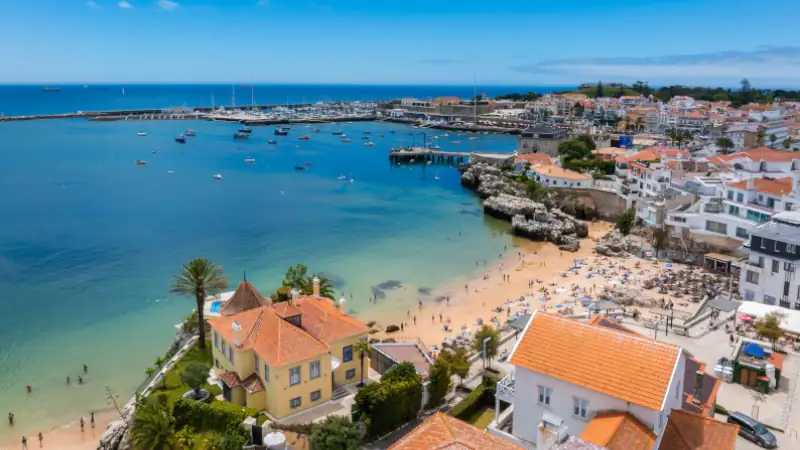
Once you understand Portugal’s property-purchase process, the next question is often how to fund it. Fortunately, Portugal stands out in Europe as one of the few countries where non-residents can still access local mortgage financing.
Where in the world can you obtain bank financing as a foreigner for the purchase of real estate?
I get the question all the time.
In fact, that’s not the question to ask. More precisely, the question is: Where can you obtain bank financing as a nonresident who is not earning income in the country where you want to borrow?
It may seem a slight distinction, but it’s usually the critical point.
In Panama, for example, some banks will lend to a nonresident foreigner.
Some banks will lend to a resident foreigner with no income in Panama.
But most banks will lend only to a resident foreigner who can show income in Panama.
Before the 2008/2009 global real estate bust, banks in many EU countries offered mortgages to nonresidents. People from other EU countries and beyond were flocking to Spain, France, and elsewhere in Europe shopping for investment properties and second homes in the sun… and getting local financing for their purchases.
Pre-2008, most EU banks didn’t distinguish between residents and nonresidents.
Back then, I was able to get a loan in France to buy my first apartment in Paris… even though I was a nonresident with no income in France. I was a resident of Ireland at the time, but that didn’t seem to bother the French bankers. All they cared about was that I was able to prove enough income to afford the loan amount I was requesting.
It’s a different world today. In Europe today, it is much more difficult and often impossible to get a loan as a nonresident or even as a resident if you can’t show adequate income in the country where you want to buy.
A couple of banks in France say they’ll do mortgages for nonresidents, but the requirements are so strict that precious few non-France residents would qualify.
One exception to this general rule is Portugal.
I’d say that Portugal is the easiest place in Europe to get a mortgage right now as a nonresident. This country is open for business and attracting a lot of foreign investors thanks to its Golden Visa program and Non-Habitual Resident (NHR) tax benefits.
Banks in Portugal will lend to nonresidents for up to 30 years (or until age 75) and offer up to 80% LTV in some cases.
Current interest rates are excellent—in the range of 2.2% to 2.7%, depending on the length of the mortgage and whether the rate is fixed or variable.
With the U.S. dollar still relatively strong against the euro (standing as of this writing at US$1.14 to 1 euro), this is still a good time to buy in Europe with cash if your cash is denominated in Greenbacks.
However, if you need or want a mortgage, you can get one in Portugal… and you can hedge against the possibility of a stronger euro/weaker dollar over the term of the loan.
The foreign exchange company Moneycorp that I’ve been working with for years now offers a program whereby you can set up regular monthly payments that lock in the current exchange rate for up to two years.
With the euro on an upward trend, locking in your mortgage payments in U.S. dollar terms for two years should save you money long term. However and moreover, it also gives you a fixed number in dollars for your monthly budgeting purposes… at least for two years.
Using Moneycorp to send your down payment (or your entire purchase price if you’re paying cash) can also save you dollars up front, as you’ll get a better exchange rate from Moneycorp than you’ll get from your bank.
Even a slightly better rate through Moneycorp could translate into savings of hundreds or even thousands of dollars.
Lief Simon
“How can you navigate buying property in Portugal from afar if you cannot travel in person immediately? Today, technology and established Portuguese legal protocols make remote purchasing fully secure and routine.
Key remote acquisition strategies shared by Portugal Property Consultant Luis da Silva:
Yes. Major retail banks in Portugal (including Millennium BCP, Novo Banco, and Santander Totta) routinely underwrite mortgages for non-residents and foreign nationals. You do not need Portuguese credit history; approvals are based on your home-country tax returns, proof of income, and debt-to-income ratios. Non-residents typically qualify for up to 70% LTV.
Banks like Millennium BCP, Novo Banco, and Santander will lend to non-residents and foreigners in Portugal. You have to qualify, and you’ll get up to a maximum 70% LTV.
Note that in most European countries that use civil law (Portugal, Spain, Italy, Greece, etc.), banks make life insurance mandatory for mortgages.
Terms, therefore, can vary according to age. The eligibility age for life insurance is typically 70 or 75. The closer your age is to the cap, the shorter the loan term you can usually expect.
Interest rates are still low in Europe at around 3% to 4% in Portugal.
Explore top living destinations, beach communities, highland havens, and city hubs across Portugal.
Practical guidance for planning your life, move, retirement, property purchase, or investment in Portugal.
Secrets. I have a few. I figure everyone does. Well, secrets sometimes need to be revealed, explained, or clarified—especially if the secret has anything…
Read InsightAI has no role at Live and Invest Overseas. Every time we allow AI into the conversation, we give up a little piece of your trust—and trust is the foundation of everything we do. Our strength is simple: real people speaking from real experience, in first person, telling real stories from the ground.
We will never publish AI-generated content. Not from ourselves, and not from anyone submitting to us. Our work is built on judgment, experience, trust, and what’s actually happening on the ground—not scraped summaries or recycled internet information.
When you read us, you’re reading lived experience. The stories, the insights, the perspective—that’s what AI can’t touch. And that’s exactly why we don’t use it.
Top Countries
Budgets
Resources
Real Estate
Conferences
Store
Free Report

© 2008 - Live and Invest Overseas - All Rights Reserved.