



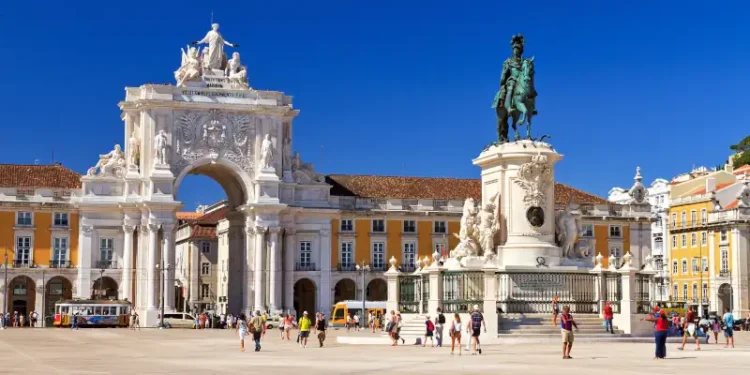
I’m most comfortable in cities with long pasts, and Lisbon’s past is long indeed.
This city on the Tagus, one of the oldest in Western Europe, was originally settled as a Phoenician trading post. It was in the 15th and 16th centuries, though, that Lisbon flourished. Awe-inspiring landmarks were constructed during this Golden Age of Discovery—the Jerónimos Monastery and the Tower of Belém, for example, and, on the waterfront, the Praça do Comércio.
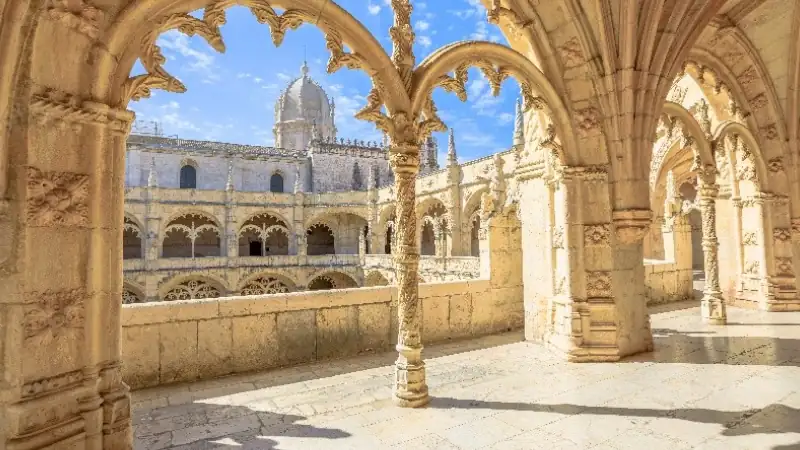
I remember stepping through the triumphal arch onto this immense plaza our first visit to Lisbon. Lief and I paused without meaning to. The enormity of the space and the height and grandeur of the structures on three sides around you almost take your breath away when you face them for the first time.
“Imagine what it must have been like to be here, standing on this spot, 500 years ago,” Lief remarked as we looked slowly up, then down the waterfront before us.
“Imagine the activity… the trade… the money…” he trailed off.
From that spot, 500 years ago, Lisbon carried its culture to the four corners of the globe, colonizing Asia, South America, Africa, and the Atlantic islands…
And then it carried back from these far-flung territories great wealth, much of which was invested in the betterment of what became one of the most glorious cities of its age.
Lisbon became Lisbon thanks to its strategic geographic position at the mouth of the Tagus River. According to a popular fado, Lisbon has always been in love with her river… because the river is the city’s lifeline to the sea… and Portugal very much identifies herself with the sea.
“We have a word in Portuguese,” a friend from Lisbon, Miguel, told me once, “that doesn’t exist in any other language.
“The word is saudade. It means a longing for, a missing or a yearning for something. It’s a noun, not a verb, and its meaning is born from the feeling of a young wife for her husband sailor long at sea.”
“Yes, and this is connected to another important word for us,” another friend, João, interjected. “Saudade is connected to fado.
“Fado is our traditional music, but it is also our destiny. It is not good, it is not bad. It is simply the way it is… the way your life is because of the choices you have made.”
“Yes,” Miguel explained. “Saudade is the fado of the woman who has chosen to marry a sailor. It comes with the territory.
“Most of the world looks at Portugal as the edge of Europe,” Miguel continued. “We Portuguese look at the world map and see ourselves right at the center… at the heart.
“For us, the sea is part of our territory… a continuation of our domain… so, for us, Portugal is quite expansive…”
As I’ve gotten to know it better, I’ve realized that Portugal is a small country with a colorful history and a big romantic heart.
Lisbon is a noble and elegant city, one of Europe’s least appreciated, I’d say. Its centuries-old, pastel-colored stone structures are bordered by jacaranda trees and set off by formal gardens and parks with elaborate fountains.
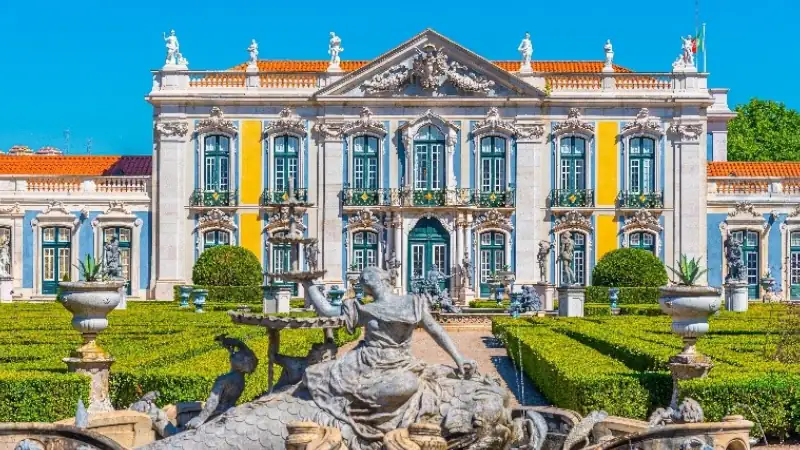
Roads, walkways, and pavements are laid with small cobblestones in contrasting colors to create elaborate patterns and sea scenes that are like works of art, almost mosaics.
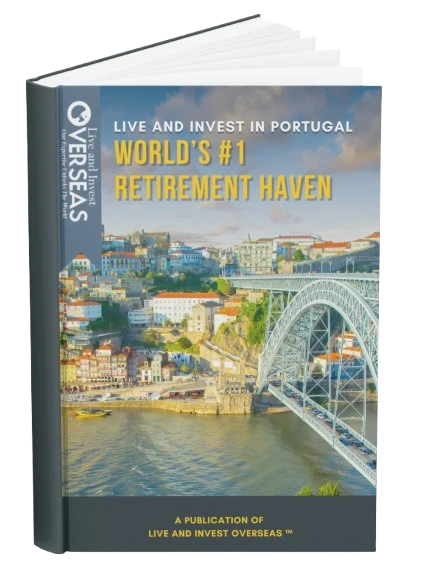
In the north, Porto beckons visitors with its colorful historic center, cobbled streets, world-class food and wine, and riverfront scenery. Known for its enchanting Douro Valley and port wine, this is the oldest demarcated wine-producing region in the world.
Down south, the sun-drenched Algarve boasts beautiful Blue Flag beaches with sparkling waters and limestone grottoes reachable only by boat. The Algarve’s coastal areas are dense with tourists, but you can easily slip away and find yourself surrounded by peaceful countryside or the white-washed cottages of a traditional village where you’ll feel transported back in time.
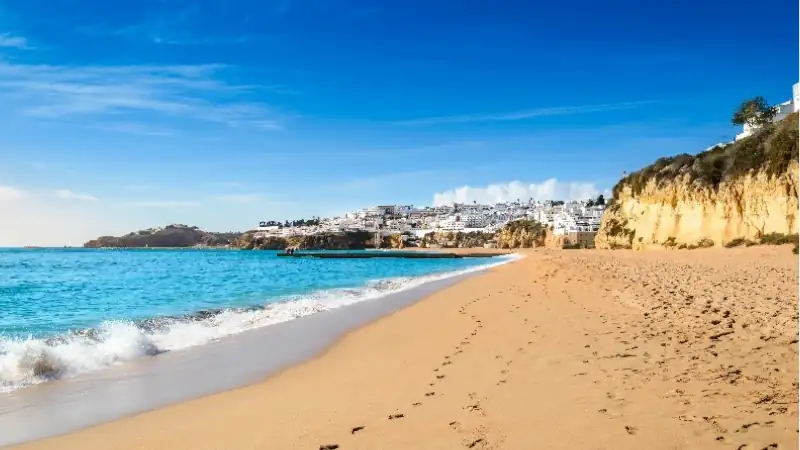
The Algarve is also a golfer’s paradise, with some of Europe’s finest championship courses. And across the country are nature reserves, hiking trails, beautiful mountains, and coastal paths waiting to be discovered.
It’s here on the Algarve we’re hosting the 2027 Live And Invest In Portugal Conference.
There, our team will be joined by dozens of Portugal experts and expats… and, we predict, a sold-out crowd of Live And Invest Overseas readers in attendance for the chance to discover Europe’s best place to call home.
Don’t miss your chance to join them. Book your seat in the room, here.
Until next time,