

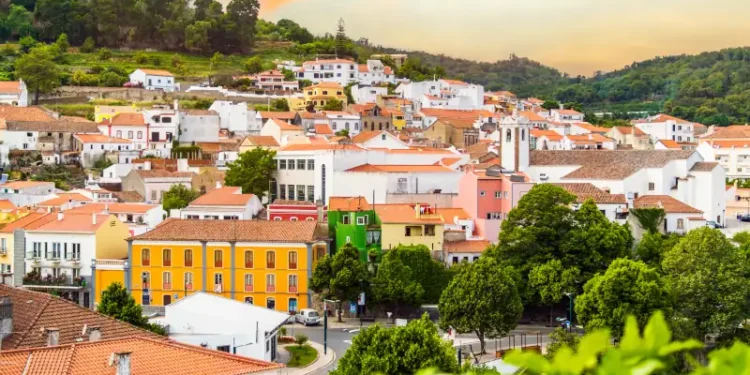
Thirty minutes from the south and west coasts of the Algarve is Monchique, an area of rolling hills, mountains, and rocky outcrops with a beautiful landscape and breathtaking sea views.
The landscape of Monchique is reminiscent of Tuscany, with its picturesque villages and steep, narrow roads winding up into the mountains. It presents greenery, forests, fields, and fertile soil. Orange and lemon orchards abound, and fresh, drinkable water springs from the earth.
The Serra de Monchique stretches north of Alvor and Portimão past the village of Caldas de Monchique towards Monchique town. From there, the roads divide in three directions with many picturesque villages en route: to the east, Alferce, São Marcos da Serra, and the IC1; to the north, Odemira and the Alentejo; and to the west coast via Casais, Marmelete and Aljezur.
The national N266 road, which heads north through Monchique town and beyond to Luzianes-Gare near Odemira, has a junction with the west coast N267, which passes through Cascais, Marmelete, and other villages to Aljezur.
Monchique has a population of around 5,000 and is located 458 meters (1,503 feet) above sea level. The climate is mild, but it can be hotter in the summer than on the coast and more humid in the winter.
The name Monchique was given to the region by the Romans, who built a spa in the little village of Caldas de Monchique. The Serra de Monchique is famous for its alkaline (it has a pH of about 9.5) and healthy spring water. Rich in fluoride, the water helps recover organic vitality. There are many fountains in the area from which the water gushes, and people fill up on natural mineral water in large bottles, especially in Caldas de Monchique.
At Monchique’s heart is a big square surrounded by restaurants, stores, and cafés, as well as a covered market for fresh fish and vegetables, handicraft shops, and galleries, plus many viewpoints and public seating areas.
Monchique town is best explored on foot. There are nice shops, restaurants, bars, supermarkets, churches, and the monastery, Nossa Senhora do Desterro. Once a month, there’s a huge open market with local products, like shoes, clothes, bags, food, and even live animals. A visit is a must.
Monchique also hosts several festivals per year with local food, drinks, exhibitions, and entertainment.
The Serra de Monchique is popular with hikers and picnickers, with plenty of fountains and springs to drink from along the trails. From Monchique town, you ascend to the two biggest mountains in the Algarve: Fóia at 902 meters (2,959 feet) and Picota at 773 meters (2,536 feet), both with breathtaking views over the Serra.
From Fóia you can enjoy the panoramic views of the west coast, and from Picota, of the west Algarve and the reservoirs. The route to Fóia is better known and has many roadside restaurants on the journey to the peak, with spectacular views of the countryside and coastline.
In both areas and surroundings, you can find amazing properties. Cyclists and motorbike enthusiasts also enjoy the winding, scenic routes. It’s ideal for birdwatching, scavenging for mushrooms, and seeking inspiration for artists and photographers… but it’s also just a great place to retreat and relax.
Monchique is known for its local produce, such as smoked ham, cured sausages, and meat from the Iberian black pig, honey, medronho (the local firewater), basketwork, cork products, arts and crafts, knitwear, and homemade local products such as piri-piri (hot chili) sauce, jams, and chutneys. The Serra de Monchique is also the source of feldspar, a unique mineral with granite-like properties that is mined in the region.
Monchique is a quiet region, home to a friendly community of Portuguese and foreigners. Tucked away in the mountains are beautiful properties surrounded by unspoiled nature and featuring amazing views, it’s ideal for people who enjoy a self-sufficient and independent lifestyle.
Sincerely,
Susanna Gross
Contributor, Overseas Opportunity Letter