Banner
Articles Related to Brazil

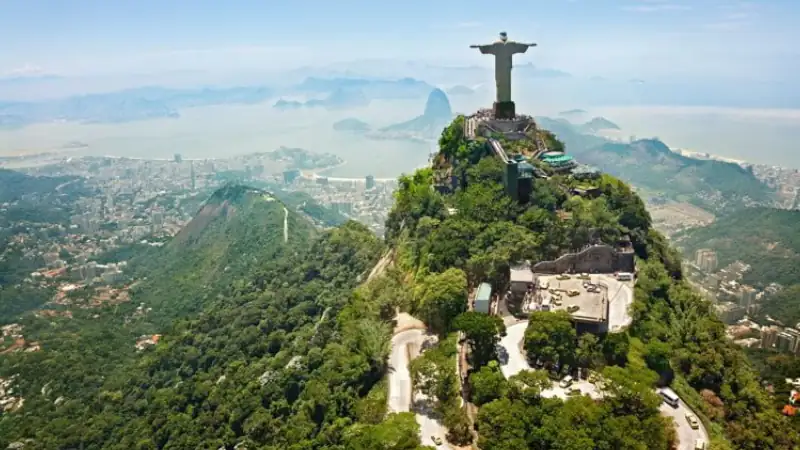
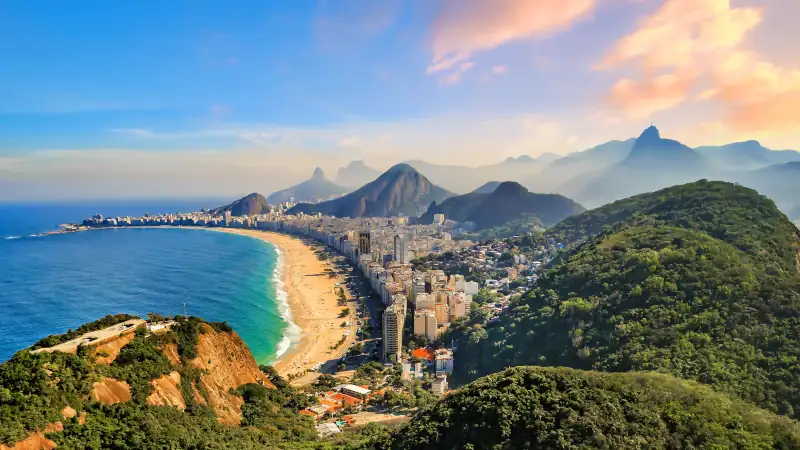
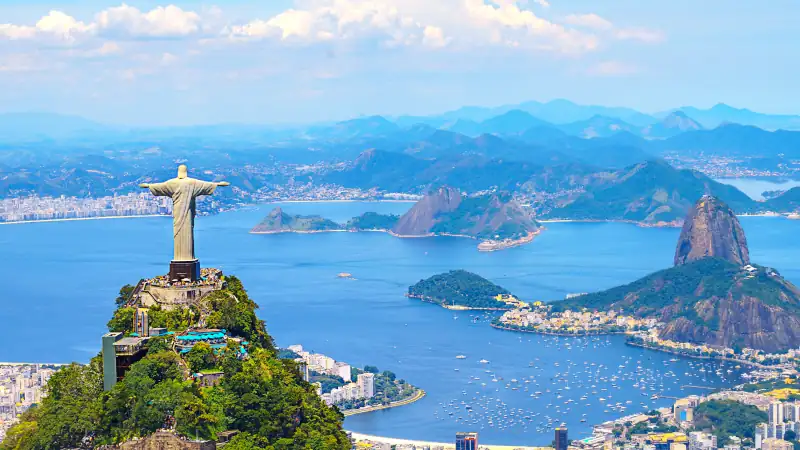
Lief and I are in Fortaleza, Brazil, for the first time, trying, with the help of very gracious Portuguese-fluent hosts, to get our heads around what's on offer in this part of the world.

Lief and I both have written about Brazil in the past, based on reports from friends and correspondents with firsthand experience spending time and money in this country. That intelligence has given us pause.

This week's visit has reinforced our fundamental concerns...and, as well, completely changed our minds.

Bottom line, this Brazilian state of Ceara, where Fortaleza lies, holds out tremendous current opportunity for the individual investor, maybe some of the best in the world right now. But this opportunity is not to do with pre-construction beachfront condos (as you may have read elsewhere).

The opportunity here is to do with agriculture and productive land, and, yes, it's viable for even a very small investor. Lief's attention has been grabbed completely. He's preparing a complete report for his Marketwatch subscribers.

Is this also a place you'd want to live? That depends...

This is not a retirement haven. Fortaleza is not cheap, not generally and especially not for those of us with U.S. dollars in our purses. It's not super-expensive, but nothing we've encountered so far qualifies as a bargain.

Brazil in general is not easy to navigate if you don't speak Portuguese. You can muddle your way through with Spanish, but, if you speak only English, I think you'd feel frustrated and isolated living here, not only because of the language hurdle, but also because you'd find precious few fellow expats to pal around with.

So, I say again, this isn't a place I'd recommend for retirement, certainly not for retirement on a budget. If, though, your agenda is a new life of challenge and adventure, come take a look. The beaches (Brazil's trademark attraction) are what you imagine them to be (that is, long, deep, and powder soft). And the economy is booming. The entrepreneur will find opportunity.

Note, though, that, while Brazil's economy is currently the 7th largest in the world, this country is ranked as the 127th most challenging place in the world to do business.

I'm out of time. I'll file fuller reports later in the week. And, again, Lief's complete report on the home-run productive land opportunity we've been shown will be on its way to Marketwatch members later this month.

Kathleen Peddicord

P.S. What else this week?

  • You can reinvent your life...start over...enjoy the lifestyle or the retirement you've been dreaming about...this year...no matter what your life looks like right now.

No matter how big (or small) your budget...

No matter your age (you're neither too young nor too old...I promise)...

No matter what else is going on in your life right now (there is no "right" time)...

No matter if you need to continue to earn a living (you can)...

No matter your family circumstances (whether you have school-aged children or parents you're responsible for)...or what your kinfolk think (let them call you crazy)...

No matter your concerns, your fears, your uncertainties...

For years, I day-dreamed about what life might be like in some exotic, foreign clime. From the age of 21, I travelled regularly, all over the world...but, for 14 years, I returned home and rationalized a reason to stay there.

We all need a little push, something to get us started. Once you take the first step, the second is easier, the third easier yet, and soon you have that glorious thing called momentum helping to pull you along.

In my case, the little push came from my employer at the time. The international publishing company I'd been working for nearly 13 years wanted to open an office in Ireland, to take advantage of the business and tax incentives that the Irish government was offering back then. The opportunity presented itself...and, finally, I found the courage to jump.

Today I recognize that one reason I was able to leap when I did was because I had no idea what I was getting myself into. I'd been researching and writing about living overseas for years, yes, but research isn't the same as reality. When my husband and I packed ourselves, our daughter, and our eight oversized suitcases into the SUV that day in Baltimore and made our way to the airport for our overnight flight to Shannon, Ireland, we didn't know what we didn't know. And that was probably a good thing...

  • "Granadans," writes Spain Correspondent Susan Rensberger, "like to quote a verse by Francisco A. Izcaza:

"'Give him alms, woman, for nothing could be as sad as to be blind in Granada.'

"Expats have their own refrain: 'I came to Granada for a few days...and I just never left.'

"Granada sits on three hills at the foot of the Sierra Nevada Mountains, overlooking the plains of Andalusia. Built, fought over, and rebuilt by Phoenicians, Romans, Arab Muslims, and Spanish Christians, its crown jewel, the Alhambra, was once the royal palace complex of the Moorish kingdom. Today, the Alhambra attracts more tourists from around the world than any other site in Spain, and the city retains its blend of cultures and international appeal.

"As locals also like to say, 'Anything can happen in Granada.'"...

  • Belize is one of my favorite places on earth and one of the world's top offshore havens right now.

That's not to say Belize is perfect. Living here, like anywhere, you'll encounter challenges and frustrations. For example...

  • My first visit to the island of Ambergris Caye, Belize, I climbed down the stairs of the eight-seater airplane, grabbed my bag from nearby on the runway where it'd been placed by the pilot who doubled as the landing crew, and carried it with me across the dirt road to the hotel where I had a reservation.

There I was met by the real estate agent who had promised to show me around. He wore shorts, a T-shirt, and no shoes. "Welcome to barefooted paradise," he greeted me. I was 24-years-old.

Ambergris Caye, likewise, was but a young girl...

Also This Week...from Resident Global Real Estate Investing Expert Lief Simon:

A reader wrote this week to say, "I want to diversify into international real estate, but I just can't justify it because I'm getting yields from property investments in the United States that are as good as I could get overseas, and the transaction costs in the United States are lower."

That is one way to look at it.

On the other hand, if you're into residential rentals in the States and in the States only, for example, the risks are not insignificant, given both the current market climate and the lack of portfolio diversification.

Over the years, many readers have told me similar stories. They had great portfolios of rental houses or apartments, they explain. All their properties were returning at breakeven cash flow or better. So they'd been systematically expanding their holdings within their target markets.

Then, in some cases seemingly overnight, the local market where they'd been investing shifted. Maybe the economy for the entire city turned, with jobs being lost and people moving away. Maybe the demand for local housing changed, with new neighborhoods opening up and fewer people wanting to be in the neighborhoods where the investors held their rentals.

The end of these stories is always the same. The investors lost everything, sometimes walking away from mortgages they could no longer cover. Once even just some of their rentals weren't occupied, they couldn't make their loan payments, setting off a domino effect that eventually affected their entire portfolios.

The fundamental problem is lack of diversification. All the holdings in each case were in single cities or regional markets. When bad times hit, the portfolios were wiped out. Even if these investors had diversified regionally within the United States, their portfolios overall could have been less at risk...at least until the recent U.S.-wide real estate market collapse.

On the commercial side, U.S. triple net lease properties are earning net yields between 6.5% and 8.5%. And you can find higher cap rates with lower quality locations. Of course, these kinds of property investments come with high costs of entry, with prices starting typically at around US$1 million. Even with bank financing you're looking at an investment of a couple of hundred thousand dollars.

In addition, many of these properties are in what I consider risky locations. Sure, you may have a lease with a well-known national company, but that doesn't mean there's no risk of the business at your location closing. As many of these properties are purpose-built for a specific business, finding another one to take the space can take time.

I'm not saying you shouldn't include residential rentals or triple net lease properties in the States in your portfolio. These can still be good ways to earn respectable yields. What I am saying is that you shouldn't exclude international real estate from your portfolio because you think you'll net 1% or 2% less outside the States after transaction costs have been factored in.

Furthermore, remember the other side of your total return--potential capital gains, which can be dramatically greater in developing and emerging markets than you can expect them to be in the United States (especially right now).

Yes, transaction costs for real estate in many countries are higher than they are in the States. Leverage isn't available in most global markets (which can be a good thing in the long run in terms of risk but increases cash requirements). And you'll have to spend time and money traveling to the places where you invest (on the plus side, this is a chance to write off vacation expenses).

But you've got to keep the big picture in sight. The idea is to build your wealth in a manner that protects it long term.

International real estate can do that while also giving your family a layer of protection should things go south back home.


Read more...
 

July 1, 2011:

"Kathleen, I'm finding your recent writings about Colombia very interesting. Because of my father I may have dual citizen potential in this country.

"If you or your team has any legal contacts who could help me to explore the possibility of citizenship in Colombia, I would be grateful to receive them."

--Tai C., United States

Our attorney in Medellin is Juan Dario Gutierrez Arbelaez. Juan Dario is the man who has walked us through our recent apartment purchase. Lief and I have been completely impressed by him. He and his firm are professional, experienced, and extraordinarily helpful.

Here are Juan Dario's contact details: Gutierrez Marquez Asesores, Calle 7 Sur No. 42-70, Office #1601, Medellin; tel. (57)4444-5044; website: www.gutierrezmarquez.com.

***

"Kathleen, I would like to sign up to receive your e-letter regularly. I hope you keep my e-mail address private!"

--Rebecca B., United States

We never sell, rent, trade, swap, or otherwise make available to anyone any e-mail address on our list. Never.

Our privacy policy is here.

***

"Kathleen, I really enjoy reading your comments and great advice. I found your excellent website as I was arriving in Chitre, Panama, some time ago. You have been correct all along about the beauty and positive future of Panama.

"Last year I was transferred to Paraguay, which I'm finding to be the most interesting of the countries in Latin America. Not yet for investment, but as a place to spend time.

"Paraguayans are not Latin Americans or South Americans, but Paraguayans. I live in Bahia Negra in Alta Paraguay, which borders with Bolivia and Brazil. This is the gateway to the great Wetlands.

"It seems now that I am to be transferred to Barranquilla, Colombia, to work with the victims of the recent floods. So keep your great reports coming. They make my day.

"I promise to return to Medellin once I'm back in Colombia. I lived in Medellin for 10 years. The Paisa is a hard-working Colombian...like former President Uribe!

"Have a tinto to greet each day."

--Bob A., Paraguay   Continue Reading:

Read more...
 

The opportunity is coconut trees. The premise is straightforward. You buy 2 hectares planted with coconut trees, and the management company does the rest. The reality isn't quite that simple, but that's the bottom-line idea.

A managed plantation is really the only way for an individual to invest directly in agriculture...short of becoming a farmer yourself. The management company handles all the work, from planting and maintaining the trees to harvesting the crop. In this case, the crop is coconuts.

Coconuts produce several end products that give them value--coconut meat, coconut milk, coconut oil, and the husk of the nut. The big value is from the oil. It's used for biofuel, and, as you probably know, Brazil is a leader in developing biofuels. Right now more than 50% of the cars in Brazil run on bioethanol, and 90% of new cars in Brazil are designed to burn biofuel.

The price of coconut oil increased 93% from August 2010 to February 2011. It's expected to continue to rise as demand increases for biofuel, but, even if it doesn't, owning a couple of hectares of coconut trees can be a profitable concept. Of course, owning a couple of random hectares of any kind of tree doesn't make much investment sense. For this kind of investment to work, you need trees that are managed professionally by an outfit that has access to a ready market for the sale of the end product.

You could always invest in a plantation of your own, but this is an ambitious undertaking, and, unless you're willing to invest a lot of time in understanding the industry and in managing the farm, you'll likely end up with little more than a bunch of trees. I see this all over Panama--teak "plantations" planted by people wanting to take advantage of government tax incentives for reforestation. Most of these plantations won't yield any return to speak of, because the owners haven't managed the tree growth and have no idea how or where to sell the timber when it's time for harvest.

This is why, for my money, buying into a managed plantation where you own the land is the only sensible way to invest in trees. You have direct ownership (rather than shares of a company, which I don't recommend), while benefiting from the management company's economies of scale and expertise.

Over the years, I've looked at several tree investment opportunities. In the case of the coconut plantation on the table now, the numbers are compelling.

Here's how this works.

You invest in 2 hectares, on which you can plant 500 trees. Each tree produces about 150 coconuts a year and each coconut sells for about 47 cents in today's market. This gives you around US$35,000 in gross revenue annually. The plantation manager takes 30%, leaving you with about US$25,000 a year in net revenues.

The cost of the investment is US$35,000.

What's the catch? The trees don't begin producing fruit for three years and aren't fully mature (that is, producing the 150 coconuts a year) until year five. Still, the projected returns are high.

The long-term projection for your return on investment is 33% annualized. Coconut trees produce for 60 years, so you wouldn't have a replanting issue in your lifetime. Should you want to resell your 2-hectare plantation at some point in the future, I would think that a buyer could be found if the management company isn't interested (and they likely could be, depending on the price you seek). There are always investors looking for a productive yield.

With the minimum investment being only US$35,000 (you could buy more than one 2-hectare investment, of course), this is a low cost way to diversify your real estate holdings. You get titled land with productive trees, turn-key management, some currency diversification, and a potential yield that is very appealing.

As I mentioned, I first wrote to you about this opportunity about a month ago. The response from Live and Invest Overseas readers has been great. That's why I'm writing to you about this again today. As of today, only 8 of the original 107 2-hectare parcels remain available.

For more details on this opportunity, get in touch here.

Lief Simon

P.S. After I first spoke with my contact in Brazil about this investment offering, I wanted to hop on a plane to go to see this plantation and to meet with the management company in person. Unfortunately, getting to Fortaleza from Panama isn't as easy as getting there from the United States (and it's not easy getting to Fortaleza from the United States). I still intend to try to make it down there at some point, but the travel itineraries mean a big investment of time.

You might find it easier to connect with Anthony (as I'm looking forward to doing) during our upcoming Offshore Summit, taking place in Panama City, Sept. 14-16. Anthony will participate in the conference to detail for those in attendance not only the particulars of this opportunity I've detailed today but others I like in Brazil right now, as well. You can read more here.

  • P.P.S. Kathie and I are back in Panama City today after our week in Colombia. She'll have more for you on our Bogota adventures in her Sunday dispatch. Continue Reading:


Read more...
 

June 3, 2011:

"Kathleen, I'm really getting a lot out of your 52 Day program. Thanks.

"About the monthly cost of living items. Are they (food, travel, entertainment) for one or two persons? "Also, although it was way back in the late 1950s, I went to an excellent school in Puebla, Mexico. It was a lovely, clean city to live in with fun, safe places for kids. I think my school was called The InterAmerican School or Escuela Interamericana. Half the classes and teachers were English, half Spanish. The weather in this part of Mexico is five star. Way back then, it was one of the best places in the country to live (although not near the ocean).

"Looking forward to tomorrow's session."

--Bea D., United States

Very glad to hear you're finding the course useful.

All figures I quote in the country budgets included as part of this program are for a couple.Continue Reading:

Read more...
 

That said, I've kept Brazil on my radar, thinking that, eventually, I'd find an opportunity in this market that makes sense.

And I have.

A group I know in Fortaleza is offering an agricultural investment opportunity that I believe is interesting even for small investors. The minimum capital requirement is low, and the risks aren't extreme. Plus (and this is important), they've eliminated at least one of my big concerns--getting your money out of the country when you decide you want to.

The opportunity is coconut trees. The premise is straightforward. You buy 2 hectares planted with coconut trees, and the management company does the rest. The reality isn't quite that simple, but that's the bottom-line idea.

A managed plantation is really the only way for an individual to invest directly in agriculture...short of becoming a farmer yourself. The management company handles all the work, from planting and maintaining the trees to harvesting the crop. In this case, the crop is coconuts.

Coconuts produce several end products that give them value--coconut meat, coconut milk, coconut oil, and the husk of the nut. The big value is from the oil. It's used for biofuel, and, as you probably know, Brazil is a leader in developing biofuels. Right now more than 50% of the cars in Brazil run on bioethanol, and 90% of new cars in Brazil are designed to burn biofuel.

The price of coconut oil increased 93% from August 2010 to February 2011. It's expected to continue to rise as demand increases for biofuel, but, even if it doesn't, owning a couple of hectares of coconut trees can be a profitable concept. Of course, owning a couple of random hectares of any kind of tree doesn't make much investment sense. For this kind of investment to work, you need trees that are managed professionally by an outfit that has access to a ready market for the sale of the end product.

You could always invest in a plantation of your own, but this is an ambitious undertaking, and, unless you're willing to invest a lot of time in understanding the industry and in managing the farm, you'll likely end up with little more than a bunch of trees. I see this all over Panama--teak "plantations" planted by people wanting to take advantage of government tax incentives for reforestation. Most of these plantations won't yield any return to speak of, because the owners haven't managed the tree growth and have no idea how or where to sell the timber when it's time for harvest.

This is why, for my money, buying into a managed plantation where you own the land is the only sensible way to invest in trees. You have direct ownership (rather than shares of a company, which I don't recommend), while benefiting from the management company's economies of scale and expertise.

Over the years, I've looked at several tree investment opportunities. In the case of the coconut plantation on the table now, the numbers are compelling.

Here's how this works.

You invest in 2 hectares, on which you can plant 500 trees. Each tree produces about 150 coconuts a year and each coconut sells for about 47 cents in today's market. This gives you around US$35,000 in gross revenue annually. The plantation manager takes 30%, leaving you with about US$25,000 a year in net revenues.

The cost of the investment is US$35,000.

What's the catch? The trees don't begin producing fruit for three years and aren't fully mature (that is, producing the 150 coconuts a year) until year five. Still, the projected returns are high.

The long-term projection for your return on investment is 33% annualized. Coconut trees produce for 60 years, so you wouldn't have a replanting issue in your lifetime. Should you want to resell your 2-hectare plantation at some point in the future, I would think that a buyer could be found if the management company isn't interested (and they likely could be, depending on the price you seek). There are always investors looking for a productive yield.

Back to my concerns about Brazil...

Language: In this case the marketing company speaks English and they have an English version of the contract. Management at the plantation company also speaks English, so you'll be able to communicate with them.

Currency: Investing the full amount at once (rather than signing on for monthly payments over three years, as many promoters are suggesting for the pre-construction condos being marketed in this part of the world) helps eliminate currency risk. You only have to worry about future ups and downs of the currency exchange if you've got an extended payment liability. In this case, you know up front what your actual dollar investment will be.

Of course, your returns will be in Brazilian reais, meaning you still have this currency exposure. But one can't predict and therefore can't worry about long-term currency rates, especially over a 60-year cash flow.

Getting your money out: The contract states that investors can elect to have their profits wired to any bank in the world. You just pay the wire fee. The burden of getting your money out of Brazil, in full, is borne by the plantation company, which has accounts outside Brazil for operations. Therefore, this risk is greatly reduced.

One more thing to consider with any investment is local taxes. The projected returns I'm quoting here for this opportunity are pre-tax both in Brazil and obviously in your home country. The income tax rate for non-residents in Brazil is 15% on "non-earned" income. It is also 15% on capital gains. Any taxes paid to Brazil can offset U.S. taxes for U.S. citizens (and should for other countries, as well, but check with your tax accountant). So the net tax bite shouldn't interfere too much with your net ROI.

With the minimum investment being only US$35,000 (you could buy more than one 2-hectare investment, of course), this is a low cost way to diversify your real estate holdings. You get titled land with productive trees, turn-key management, some currency diversification, and a potential yield that is very appealing.

For more details on this opportunity, get in touch here.

Lief Simon

P.S. I wanted to hop on a plane to go to see this plantation and to meet with the management company in person. Unfortunately, getting to Fortaleza from Panama isn't as easy as getting there from the United States (and it's not easy getting to Fortaleza from the United States). I still intend to try to make it down there at some point, but the travel itineraries mean a big investment of time.

You might find it easier to connect with Anthony (as I'm looking forward to doing), regarding this investment and other current opportunities in Brazil, during our upcoming Offshore Summit, taking place in Panama City, Sept. 14-16. You can read more here.Continue Reading:

Read more...
 
Start
Prev
1
Powered by Tags for Joomla

ExpatDailyNews

Kathleen Peddicord's
New Book


BookCover

The Wall Street Journal says: "If you're thinking about living abroad in retirement, this book is essential reading..."

"Whether you're in the 'what if?' stage, or have graduated to an investigatory visit, or are now seriously intending to live overseas...the book How to Retire Overseas will be one of your essential resources." ---Rapid River Arts & Culture (Asheville, NC)
Order Now

BannerLosIslotes

BannerInsidePanama


Your Email:

Search

Readers Say

"I wish to congratulate you for the quality of your reports. The plain, matter of fact, but essential and wise information we all need to take vital decisions, especially in these extremely difficult times."

Peter L., United States
"Thank you for all your hard work. You have made a lot of people dream and a lot of dreams come true. I enjoy all the e-mails from all your staff living all over the world. I am always telling people about you and how you started your publications years ago. In fact, I just today told my banker about how honest and smart you are, letting us know where to go. Wish I had listened to you more years ago..."

— Marlene M., Alaska

Kathleen Peddicord

Kathleen Peddicord is the founder of the Live and Invest Overseas publishing group. With more than 25 years experience covering this beat, Kathleen reports daily on current opportunities for living, retiring, and investing overseas in her free e-letter.

Her book, How To Retire Overseas—Everything You Need To Know To Live Well Abroad For Less, was recently released by Penguin Books.

Read more here.

SIGN UP TO OUR FREE E-LETTER

Sign up for the Overseas Opportunity Letter

Receive our editor's latest research reports...absolutely FREE!

letters The Best Places For Living And
Investing in the World for 2012