China: Beautiful Nature, Delicious Food, And A Cheap Cost Of Living
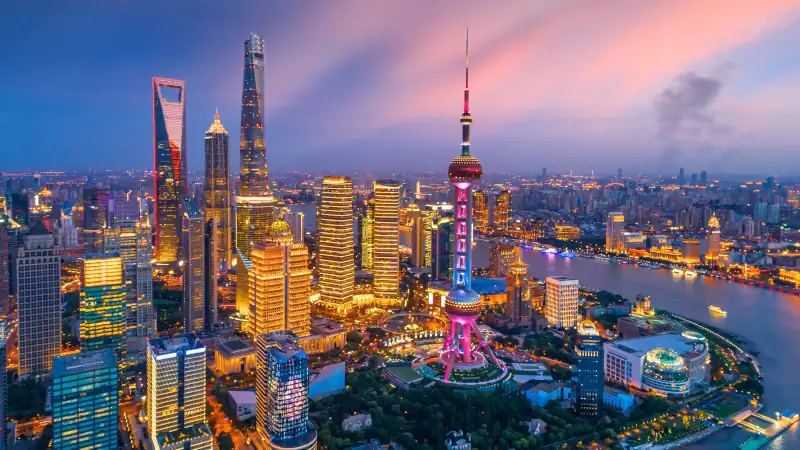
China is the land of contrasts; old-world temples show a rich history and new, high-rise towers are signs of a bright future.
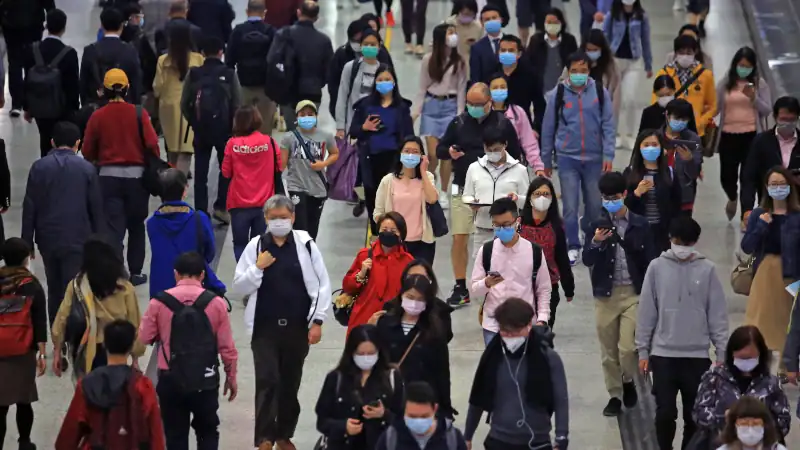
Home to nearly one-fifth of the world’s population, China is set to become the world’s next superpower. This country is a fascinating blend of ultra-modern cities and rural villages where ancient architectural sites and traditions have been perfectly preserved.
China attracts millions of tourists every year who come to wonder at the country’s captivating culture, natural beauty, and lively cities.
Many fall in love with this exciting nation and decide to make it their home. Expat communities are ever-growing in China’s bigger cities, where local economies thrive and job opportunities abound.
China is one of the largest countries in the world, with an endlessly changing landscape embodying dramatic mountains, deserts, rivers, lakes, and forests.
Bordering 14 countries, influences from China’s neighbors add to this exhilarating mix of landscapes, bringing in different cultures, languages, and traditions to China’s mainland.
For much of China’s history, different dynasties took their turn ruling over the country, introducing new philosophies, inventions, and traditions.
A Bit Of History
China’s last imperial dynasty, the Qing dynasty, was weakened during the Opium Wars and throughout the 1900s the Chinese people fought for reform.
After the Chinese Civil War ended in 1949, the Chinese Communist Party took control of the country and has been in power of the People’s Republic of China since then.
Living In China
Since China is such an expansive country, the climate varies greatly from region to region. Some areas experience bitterly cold winters, with lots of snowfall, while others face extremely hot summers.
During summer the rainy season starts, with some parts of the country enduring frequent, heavy downfalls.
This variety in climates facilitates a wide variety of lifestyles across the country, with a climate suited to every expat.
In recent years, China has invested millions into improving its infrastructure. It now has some of the most advanced road, rail, and bus networks in the world. Part of this investment has gone into digital infrastructure, expanding and improving on internet access across the country.
In China’s special administrative regions such as Hong Kong and Macau, English is widely spoken. The same is true for its bigger cities such as Beijing and Shanghai, and many locals speak basic English due to the growing tourist industry.
In China’s rural areas, however, you may need to pick up a phrasebook or get used to communicating via hand gestures, as most people don’t speak English in smaller towns and villages.
Chinese people are warm and welcoming to foreigners, however it can take a while for expats to adjust to social norms. In China’s main cities there are lots of well-established expat groups ready to welcome new members and help them integrate into Chinese culture.
For instance, the Chinese tend to be outspoken. That’s not to say that they aren’t polite people (they are). But it isn’t uncommon to overhear an argument or to happen across a fight following a motor vehicle accident. Although direct verbal confrontation is generally avoided in China, people tend to be more direct in their expression.
Cost Of Living In China
The cost of living in China is generally much lower than in the States or Europe. Even in China’s bigger cities, you could live off as little as US$1,000 a month. The cost of living drops further as you move into the country’s smaller towns and villages, where the cost of rent, in particular, is very low.
Public transport in China is excellent, and fares are minimal. You can also cut costs by buying your groceries at local markets, which are cheaper and have better quality produce than the supermarkets. As with most destinations, imported U.S. products are expensive, so if you are on a budget, it’s best to avoid seeking these out.
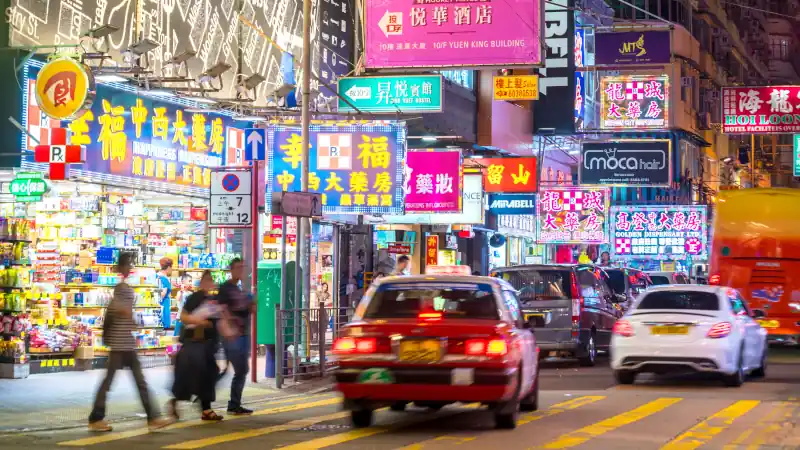
Eating out in China can be incredibly cheap… and incredibly delicious… especially from the street vendors which line the cities’ busy streets offering all sorts of tasty Chinese dishes.
Click here for currency conversion at today’s exchange rate.
Health Care In China
The quality of health care in China’s public system varies significantly depending on location. In larger cities there are lots of clinics operating to Western standards, meanwhile some smaller towns can be hours away from their nearest clinic, which may deal with only basic health care issues.
Wait times in the public system can be long, standards can be low in rural areas, and often doctors don’t speak English. This is why most expats choose to invest in private health insurance. Private clinics in China’s bigger cities are world-class, with English-speaking specialists available in every field.
Getting To China
Moving your whole life to the other side of the world might feel daunting, but it doesn’t have to be difficult. In fact, moving overseas these days, even as far as China, can be a smooth and straightforward process.
Thanks to the internet its easy to find companies to assist you in your move. Many offer a door-to-door service, picking up your belongings from your home in the United States, and dropping them to your new home in China.
You can fly directly to either Shanghai or Beijing with United Airlines from several U.S. cities, including San Francisco, Washington, Chicago, and L.A. Flying non-stop from the United States to China will take up more or less a whole day.
Best Places To Live In China
Sanya
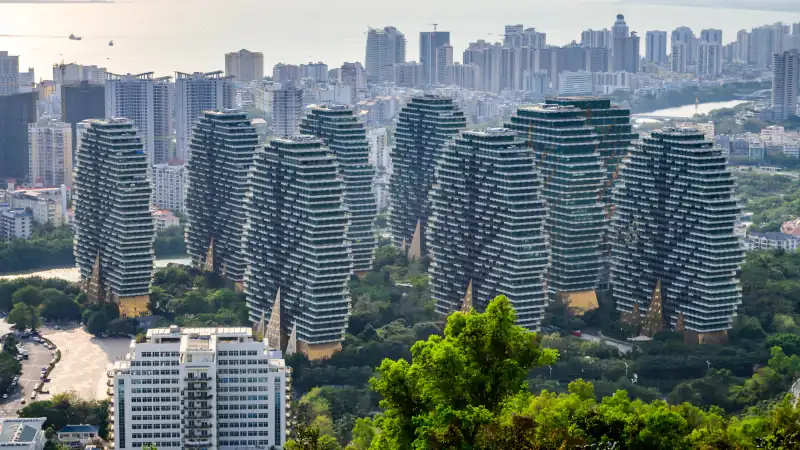
Sanya is a popular tourist resort town on Hainan Island, China’s southernmost province.
In short, Sanya is a popular holiday destination because of its tropical beaches, beautiful weather, and delicious cuisine. Some expats have moved here permanently after deciding that a holiday trip in Sanya was simply not enough.
Sanya gets some of the best weather in all of China, with temperatures rarely dipping below 68, even in winter. Sanya does experience a lot of rain during the summer, so be prepared for regular downpours from June to August.
Hainan is renowned for its cuisine, particularly its seafood. A multitude of restaurants line the beachfront in Sanya offering up delicious, unique versions of the catch-of-the-day.
Beijing
Beijing is one of the best places to live in China. For starters, you can find excellent job opportunities here, and many expats have made the move to Beijing to follow their dream career.
It is also a suitable destination for families with young children thanks to the many international schools in Beijing.
Beijing can offer you things that China’s smaller cities cannot. For example, the public transport system in Beijing is excellent, and its health care clinics are some of the best in the world.
Culturally, Beijing has lots of museums, art galleries, cinemas, and music venues, exhibiting works from artists from all over the world.
Beijing has beautiful parks where locals and expats alike enjoy exercising, going for walks, playing sports, or simply chatting on a park bench with friends.
One downside to life in Beijing is that pollution can be an issue, but the local government is continuously working to resolve this problem.
Interactive Map Of China
Click on any highlighted city or region to explore in-depth guides on what life is like there—from cost of living and climate to culture and real estate opportunities. Each location featured is one we’ve carefully reviewed and consider among the most livable and investment-friendly spots in China. Use this map as your starting point for discovering where in China your ideal lifestyle awaits.
Where Is China Located?
China is a prosperous country. Its cities are newer with more gleaming skyscrapers. Modern subway systems in the major cities make getting around easy.
Also, China’s booming economy has been on an upward trajectory for several years.