




Bulgaria is an ancient country that sits at the crossroads of history. It has a low cost of living, favorable tax rates, inexpensive health care, various residency options, rich history, culture, and vast outdoor spaces.
Bulgaria isn’t on the standard list of places to live overseas or invest in property… but with surging real estate prices and the recent adoption of the euro creating unique advantages, maybe it should be.
Bulgaria is at about the same latitude as Boston, Massachusetts, with an area of 42,855 square miles. Its western frontier is formed by a 400-kilometer stretch of beaches and cliffs along the Black Sea, while the central and northern parts of the country are bracketed by the Balkan and Rhodopes Mountains.
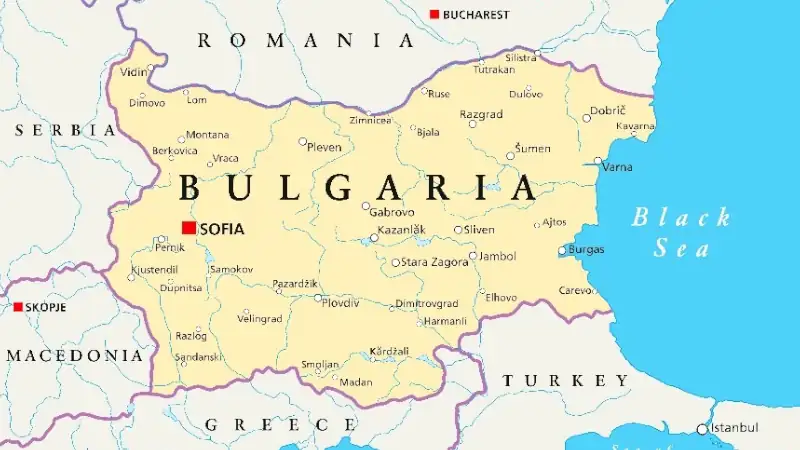
The Danube River forms the northern border of Bulgaria, separating it from Romania. Serbia and North Macedonia are its western neighbors, while Greece and Turkey lie to the south.
Bulgaria is home to 6.5 million citizens and was part of the Eastern Bloc of communist states after World War II but became a parliamentary democracy in 1989. In 2004, Bulgaria joined NATO and became a member of the EU in 2007. It adopted the euro as its currency on Jan. 1, 2026.
One of the most appealing aspects of Bulgaria is the low cost of living, which is about 50% less than the U.S. and Northern Europe. The savings are from inexpensive housing and low food and utility prices. A monthly budget of about $1,350 per month affords a moderate lifestyle, while $3,250 can afford a luxurious one.
Bulgaria also offers favorable tax rates. It has a flat tax rate of 10% for personal and business taxes, plus it has tax treaties with 70 countries, including the U.S., Canada, and the U.K.
To stay in Bulgaria for longer than three months as a non-EU citizen, you’ll likely start with temporary residency. This can be for six or 12 months and is renewable for up to five years. To become a permanent resident, you must live in Bulgaria for a minimum of five years, spending no more than 30 months outside the country across that time.
You can also get residency by investing in Bulgarian real estate. Temporary residency is available with an investment of €310,000, and permanent residency requires a €512,000 outlay.
Another option is a Bulgarian Retirement D visa. Eligibility is based on pension income (above Bulgarian minimum wage of €800 per month), financial self-sufficiency, international health insurance valid in Bulgaria, and a clean criminal record.
Property sales and prices in Bulgaria have been surging, with sales up by 3% year-over-year in 2025 and prices rising by 15%. These upward trends are driven by strong local and international demand and are forecast to continue through 2026 raising the possibility of immediate capital appreciation for timely investors.
The national average prices in Bulgaria are about $2,045 per square meter for apartments and $1,184 per square meter for homes. Rental yields in Bulgaria currently range between 4% and 6%, offering a moderate return on investment.
As a non-EU citizen, you can buy apartments, condos, and buildings without land. To buy a property with land, you must use a Bulgarian company, set up and owned by the buyer.
For people looking to move to Bulgaria, the country’s diverse landscape and environments offer a variety of options. Here are three solid options…
Sofia
For people looking for a modern, urban setting, Sofia has all the restaurants, cultural amenities, and contemporary services expected of a European capital.
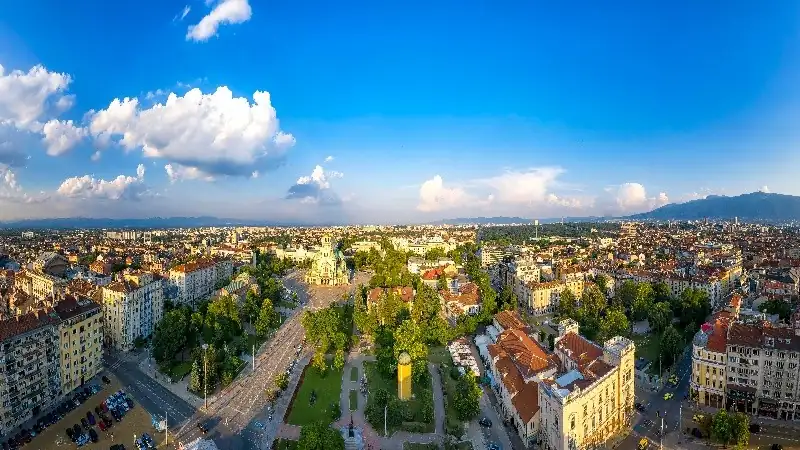
Most properties sold in Sofia are apartments. Price per square meter ranges from $1,884 to $3,500. Modestly priced apartments are available for $80,000 to $110,000, while luxury units can be had for $700,000 to $1.75 million.
Rental yields in Sofia are neighborhood-dependent but generally fall within the 4% to 6% range before taxes.
Varna
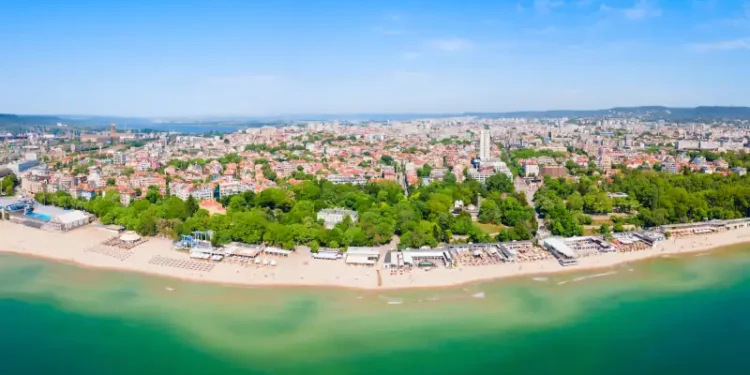
Varna is located on the Black Sea and is an important port and seaside resort. The city is located on a series of terraces amid orchards and vineyards, and it boasts over 20 kilometers of sandy beaches.
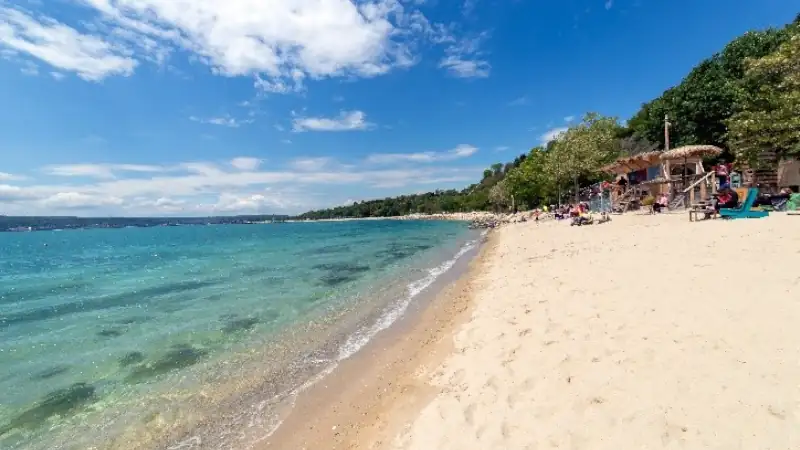
Varna is the third-largest city in Bulgaria. It’s home to five universities and is a burgeoning services and technology hub.
Rental yields align with the 4% to 6% national averages. However, because of the popularity of Varna with Bulgarian and, increasingly, European tourists and sunseekers, short-term rentals could generate higher returns.
Average property prices are $2,315 per square meter with prices rising to $3,500 per square meter in popular areas like the city center and the Greek Quarter.
Varna is attracting people from around the world with its beautiful coastline and affordable property prices. For example, a 50-square-meter, one-bedroom apartment in a new development in the Kabakum Beach area of Varna is listed at $91,000.
Bansko
Bansko in the Pirin Mountains in the southwest corner of the country is ideal for active people who enjoy the outdoors. It’s popular with digital nomads and seasonal travelers.
A two-hour drive from Sofia and its international airport, it’s one of the top ski resorts in the country.
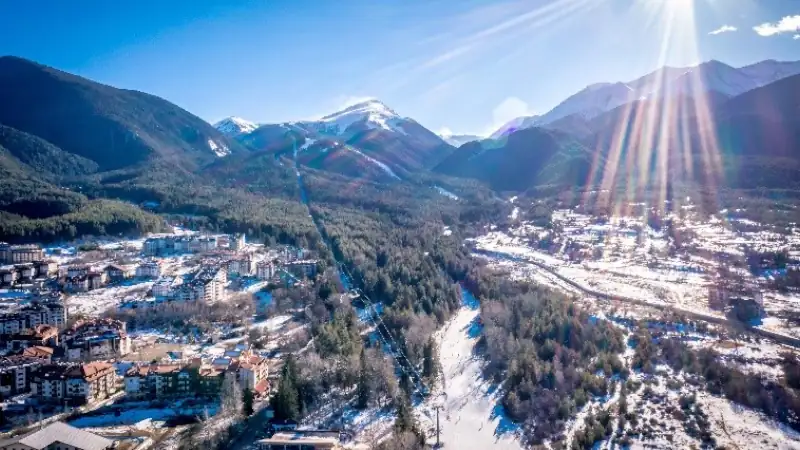
For summer recreation, it has a well-developed network of hiking trails and an Ian Woosnam designed golf course at the nearby Pirin Golf and Country Club.
Rental yields in Bansko near the gondola station in town are in the 8% to 10% range, higher than the national averages.
A one-bedroom, 61-square-meter apartment in Bansko near the ski lifts is listed at $122,000. A three-bedroom, 195-square-meter chalet near the ski hill and in the Pirin Golf development is available for $580,000.
To smooth travels and successful property buys,