






Our world is alive with opportunity.
I make the getting-started point as I understand that, sometimes, in our current world, we can doubt it.
Specifically, our world is alive with opportunity for a rich, rewarding, adventure-filled, and sometimes very affordable life in a place that is welcoming, beautiful, friendly, and safe.
The challenge is not improving your circumstances by moving to a new country. That’s the given.
The challenge is choosing the country, because every aspect of your new life will follow from that choice.
Start by taking a look at the world map, focusing on the regions—Europe, Asia, and the Americas.
That’s what I’ve done in my new book, Where To Retire Overseas, within its 400+ pages you’ll read a lot about your top options in Latin America. That’s because it’s nearby to North America, where most readers are likely to currently reside, and because it can be cheap and sunny, two things most would-be expats and retirees abroad prioritize.
But there’s a world beyond these Americas that can also offer good weather and a low cost of living, as well as, in some cases, some things you won’t find elsewhere.
Asia boasts a number of the most cost-friendly places anywhere to call home right now. Pockets of Thailand, Vietnam, Malaysia, and the Philippines can be absurdly cheap.
Living on this side of the planet, you’d also have access to some of the world’s most beautiful beaches. Your life would be full of the exotic, the unexpected, and the adventuresome.

Golden Bridge, Da Nang, Vietnam.
That is to say, the culture shock would be significant. For some, this reality is thrilling and invigorating. For others, it’s intimidating, even terrifying.
Used to be that many foreign retirees in Asia didn’t legalize their status. Historically—in some cases because it seemed easier and in others because formal residency programs weren’t an option—expats in this part of the world lived lives built around the border run. They’d leave the country where they were living but not legally resident briefly then return with a renewed tourist visa.
I’ve never recommended the approach. It’s fundamentally insecure and risky. It can also be costly paying for all the associated traveling back and forth across a border—sometimes even more costly than the process of establishing legal residency. Definitely, border running comes with a greater hassle factor than I’m up for.
Today the strategy is also not really possible. More and more countries, including across Asia, are cracking down on the practice. Meantime, more countries in Asia now offer formal legal residency options.
The biggest practical downside to choosing Asia is geography. Thailand, Malaysia, Vietnam, etc., are literally on the other side of the world. You’re not hopping back and forth between your new home in Asia and your old one in North America for your grandkids’ birthdays.
It can make sense to approach Asia not as a full-time choice but as part of a retire-overseas plan that allows you to enjoy the benefits of Asia (super cheap and super exotic) part-time.
How about a couple of months in Da Lat, Vietnam, or Chiang Mai, Thailand, where your retirement budget would stretch far indeed, followed by a few months in France, say, or Italy?
Which brings us to Europe. Many would-be expats and retirees abroad dismiss Europe as too expensive. This is not necessarily the case.
Sure, a retiree on a modest budget probably can’t afford Paris or Florence, but have you considered southwestern France, where life is quintessentially French but, as well, surprisingly affordable, or Pisa, about an hour from Michelangelo’s hometown and dramatically less costly?
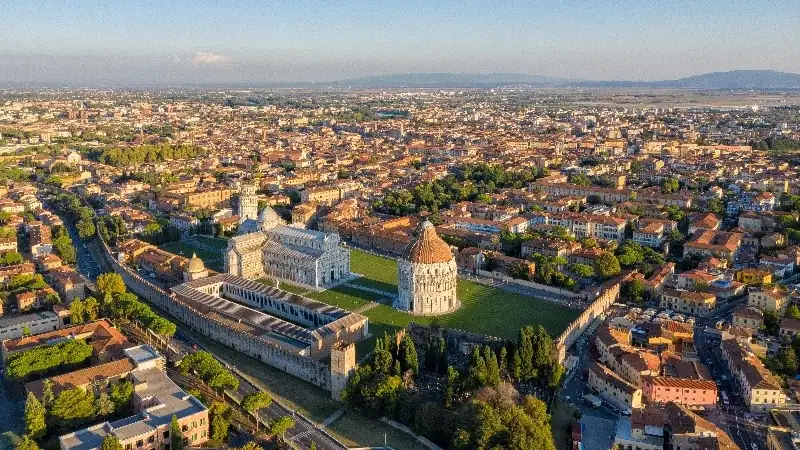
Pisa, Italy
One of the big advantages of Europe, compared with other regional new-life-overseas options, is the opportunity it affords for what might be referred to as “high culture.” Every country in the world has culture, no question, but not everywhere has world-class museums, opera, and live theater. If you’re interested in a life that includes cultural offerings of that variety, you should be looking to the Continent.
Which is not to say it’s impossible to enjoy an old-world Continental lifestyle anywhere else.
Some cities in South America offer a fair imitation—Buenos Aires, and Medellín, Colombia, to name two. Both are cities of open-air cafés, museums, theaters, art galleries, and antique shops.
And both, you’ll note, are in South America, not Central America. The differences between these two regions, even between Panama and Colombia, next-door neighbors, can be striking.
I’m speaking generally and could name exceptions to every point, but, again, generally speaking, South America offers what I’d call more polished options and can be a good place to look if what you want is culture on the cheap.
Central America, by contrast, is, most everywhere, rough around the edges. These are small, developing countries with non-existent budgets for things like art museums. The standout exception is Panama, which increasingly competes at a more international level in all regards, including when it comes to things like cultural entertainment.
Romantics like me in Central America focus on the potential for what could be rather than the reality of what sometimes is.
Others find Central America frustrating, disappointing, even appalling. Garbage and poverty can be facts of everyday life.
On the other hand, this sun-blessed region can be but a quick plane hop away and an affordable and user-friendly place to establish foreign residency.
Pluses and minuses, give and take…
Until next time,