





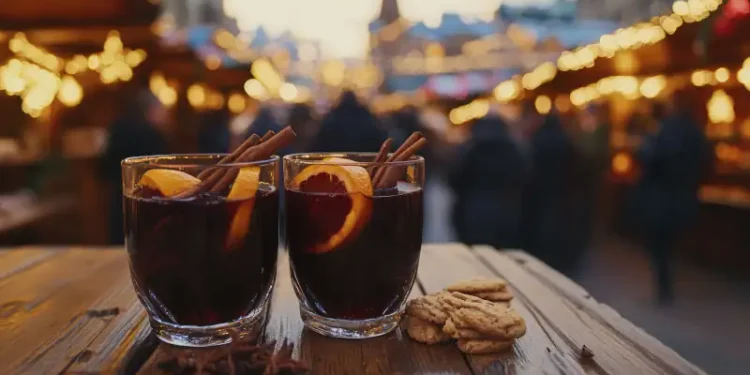
At this time of year, Europe’s culinary traditions have shifted from bright summer wines and chilled spritzers to the kind of deeply comforting, warmly spiced drinks that feel like a hug in a mug.
Whether you’re traveling through festive markets, entertaining at home, or simply craving a cozy drink by the fire, here are some of Europe’s most beloved seasonal beverages—the soul‑warming elixirs that make autumn and winter in Europe taste like nostalgia.
Mulled Wine Across The Continent
Perhaps no drink evokes the spirit of European winter more than mulled wine…
In Germany and Austria, Glühwein reigns supreme: steaming mugs of red wine infused with cinnamon, cloves, star anise, citrus peel, and sugar. The scent drifts through Christmas markets, mingling with gingerbread and roasted chestnuts.
One theatrical specialty in Germany is the Feuerzangenbowle, where a sugar cone soaked in rum is set aflame on top of the mulled wine, dripping its fiery sweetness into the warm spiced wine below.
In France, the tradition takes a more refined form in vin chaud, often made with lighter-bodied wines like Beaujolais or Côtes du Rhône, and sweetened with honey rather than sugar. The balance favors the wine’s character, lightly spiced with cinnamon, orange zest, and whole cloves.
Up in Scandinavia, you’ll find glögg (or gløgg, glögi), a richer, more fortified version. Red wine is simmered with cardamom, ginger, cinnamon, and cloves—but the Scandinavian twist comes when it’s revved up with vodka or aquavit and served with almonds and raisins hidden in the glass.
Spiced Ciders Of Northern France
While wine dominates the warm-drink scene in many parts of Europe, cider holds a special place in the apple-rich regions of France—especially Normandy and Brittany. Here, spiced or warm cider (cidre chaud) comes into its own as the temperature drops.
Rather than grape wine, local gourmands pour gently warmed apple cider infused with mulling spices—cinnamon, cloves, perhaps a hint of nutmeg—for a comforting, fruity alternative that feels lighter but no less cozy.
In England, variations of mulled cider also flourish, especially around autumn and winter fairs. It’s an earthy, slightly tangy counterpoint to the heavier mulled wines, often paired with rustic cheeses, apple tarts, or hearty puddings.
Alpine And Italian Comforts: Hot Chocolate, Coffee, And Egg Liqueur
Head into Switzerland, Belgium, or northern Italy, and you’ll find a different kind of warmth—not just through wine, but through chocolate and coffee-based creations.
In Switzerland and Belgium, rich hot chocolate is a way of life once the leaves fall, often made with whole milk or cream and served thick, frothy, and indulgent.
In Italy, particularly in ski resorts, the warming drink of choice is Bombardino. This decadent concoction combines brandy (or rum) with a silky egg-liqueur like Advocaat (Vov or Zabov), often served hot and topped with whipped cream. Variants include the “Calimero” (with coffee) or “Pirata” (with rum)—perfect for sipping after a day on the slopes.
Chestnut And Woodsy Liqueurs: A Taste Of The Forest
Chestnuts are a fall and winter favorite in many parts of Europe, not just as roasted street snacks, but as rich, mellow liqueurs that celebrate the season’s mellow sweetness.
In France, distillers produce liqueur de châtaigne, made from slow maceration of native chestnuts. Varieties range from light and velvety to deeper, whisky-infused blends.
From Corsica comes a particularly elegant chestnut liqueur, crafted by drying local chestnuts and macerating them in alcohol to yield a round, slightly nutty, subtly smoky spirit.
Meanwhile, in the Ardèche region, the traditional Castagnou mixes chestnut liqueur with white wine (usually Viognier or similar), offering a softly sweet, slightly tart aperitif that feels pure autumn, glassed.
There are creamier interpretations, too: liqueurs made with chestnut cream are popular, such as the 17% ABV chestnut crème from Cherry-Rocher, which is delightful on its own or mixed into wine for a dessert-style twist.
Pairings And Regional Comfort Food
These drinks don’t stand alone, they come alive when paired with their regional pairing foods that define the season.
At a German Christmas market, a mug of Glühwein pairs beautifully with Lebkuchen (gingerbread) or roasted chestnuts.
In France, enjoy your vin chaud alongside pain d’épices (spice bread) or a slice of galette des rois in the cooler months.
Swedish glögg begs to be served with pepparkakor (spiced ginger cookies), and in Finland, it can accompany the julbord (Christmas buffet) or risengrynsgrøt (rice porridge).
For the chestnut liqueurs, try them as digestifs after a meal, or drizzle over vanilla ice cream or marron glacé (candied chestnuts)—a wonderfully indulgent way to taste the seasonal woods.
Why These Drinks Matter
These traditional drinks are a celebration of Europe’s culinary heritage, and, as travelers or expats, these specialties connect us with local traditions that have been refined over centuries.
Winter drinks are about the warm, spiced, deeply soulful flavors that come with the season. They’re not just drinks, they’re cultural experiences, bridges across landscapes and traditions, and beautiful reminders that as the world cools outside, our hearts and mugs can stay wonderfully warm.
These comforting beverages are communal and often ritualistic—shared at markets, prepared at home, or offered by friends. Crafting them at home (with mulling spices, good wine, dried fruits, or liqueurs) brings a slice of European hospitality into your own kitchen.
Bringing The Flavors Home
If you’re inspired to recreate these warm, seasonal flavors in your own home this season, here are a few simple ideas:
Host a mulled wine night: Simmer a pot of Glühwein or vin chaud, ladle it into mugs, and offer dried fruit, almonds, and cookies on the side.
Mix a chestnut cocktail: Combine chestnut liqueur with white wine or a splash of brandy, then sip it slowly while wrapped in a blanket.
Make hot cider: Gently heat apple cider with stick cinnamon, a few cloves, and a star anise for a non-wine-based warm drink.
Go Alpine: Blend Advocaat and brandy to make a classic Bombardino, top with whipped cream, and serve after a chilly evening.
Wherever you are, I wish you a cheers, santé, prost, cin cin, or skål for the holiday season!
Bonne route,
Kat Kalashian
Editor, In Focus: Europe