Articles Related to France

The winners are...

#1: Coronado, Panama

Where to Retire Overseas

Monthly budget: $1,800
Monthly rent: $600

Panama caters for foreign retirees like no other country in the world right now. Day-to-day living here is affordable, the approach to taxation is favorable (depending on your circumstances, it's possible to live and run a business here tax-free as a foreign resident), property prices remain reasonable, even a bargain outside the capital city, and the country boasts perhaps the world's most generous incentive program for retirees. It uses the U.S. dollar as its currency, meaning no exchange-rate risk for retirees whose retirement income is also denominated in greenbacks.

Further, Panama is an international banking center and the best place in the world to start and run an international business. As the gateway to the Americas, Panama's geographic position makes it an important hub for both commerce and travel. This is part of the reason why, while other Latin American countries depend heavily on the U.S. economy, this is not the case with Panama. The country stands on its own legs, has a solid economy, and thrives as a major center for foreign business and investment, attracting investors from the region (especially Venezuela and Colombia) and around the world.

Panama City is unique in Central America, the only legitimate city in the region, being remade in real time right now thanks to myriad public works projects, including the expansion of the Panama Canal. Panama also offers some of the most advanced medical care facilities in the region, with many Panamanian doctors U.S.-trained. The more remote your location, the farther you'll be from the best facilities, but Panama City's hospitals are first-rate.

My top recommendation for where to retire overseas in Panama in 2013 is Coronado, a beach community on the country's Pacific coast about an hour outside the capital. Life here could be comfortable, convenient, and turn-key, as this area is home to one of this country's most established communities of foreign retirees.

#2: Languedoc, France

Where to Retire Overseas

Monthly budget: $2,000
Monthly rent: $800

Whenever readers ask for my recommendation for the best place in the world to retire, budget considerations notwithstanding, I recommend France. It's the world's best example, I believe, of getting what you pay for. There are reasons France sees more tourists than any other country in the world, almost 80 million of them annually. To accommodate all those tourists, the infrastructure of this country, from the airports to the train system, from the restaurants to the hotels, has to be top notch and it is.

France is not only perhaps the best place in the world to live, thanks to its food, wine, architecture, history, museums, parks, gardens, and cultural and recreational offerings, but it's also, thanks to its reliable tourist trade, one of the best places to think about parking some capital. A rental property in France, especially in Paris but elsewhere in the country, too, is about as recession-proof a real estate investment as you're going to find.

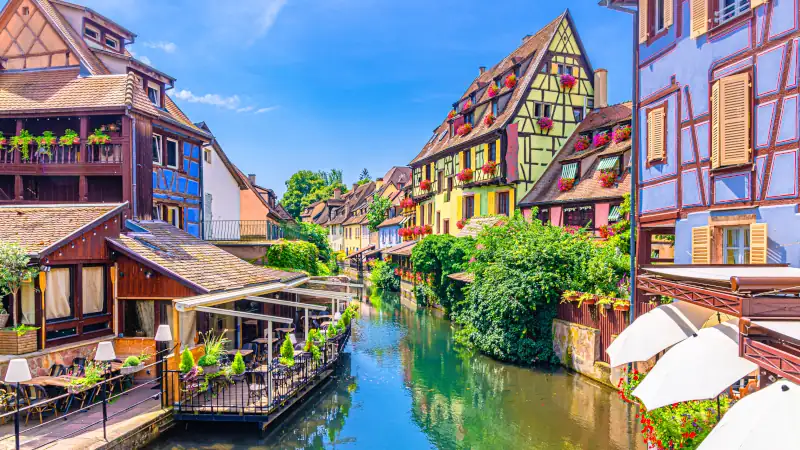
Specifically, for retirement in 2013, I'd recommend the "other" South of France. Not Provence (which, yes, is pricey), but west of there, in the Languedoc-Roussillon region, between Provence-Alpes-Cote d'Azur to the east, the Midi-Pyrenees to the west, and the Auvergne to the north. Spain is a few hours' drive to the south. Not everyone is cut out for life in the Tropics or the developing world. If you prefer Old World living, this is perhaps your best option right now. This region is colorful, eclectic, always changing, never following a formula, and very open to retirees. This is wine country, with a long history and a lot of heart.

#3: Ambergris Caye, Belize

Where to Retire Overseas

Monthly budget: $2,000
Monthly rent: $800

Warm and welcoming, independent and private. Those four perhaps seemingly contradictory adjectives best describe both Belizeans and their country. Belize is also one of the safest countries in the world, despite what you may read about it. In some neighborhoods of Belize City, gang members and drug dealers do the things that gang members and drug dealers do, but those are small, contained areas. In most of the rest of the country outside Belize City, crime is nearly non-existent. Belize was a colony of Britain until 1981, meaning the people here speak English. They also value their freedom, as it's relatively new.

In the nearly 30 years that I've been spending time in this country, I've joked that "the good news from Belize is no news from Belize." This is a sleepy Caribbean nation with but 330,000 people and three highways. On the other hand, little Belize offers a whole lot of what many retirees are looking for -- a chance to start over on sandy, sunny shores. Prices for a bit of sand on Ambergris, the most developed of Belize's islands, are not cheap but cheaper than elsewhere in the Caribbean, and it is this island, home to the country's biggest expat community, with the services to cater to it, that I would recommend to any retiree dreaming of retirement on the Caribbean Sea this New Year.

Legal residency is easy to obtain in Belize, and foreign residents pay no tax in Belize on non-Belize income. I would not recommend Belize if you have a serious health concern or existing medical condition. Health care facilities and standards are improving but limited.

#4: Cuenca, Ecuador

Where to Retire Overseas

Monthly budget: $1,300
Monthly rent: $500

Lots of overseas retirement destinations tout the fact that they're just like the United States, that, retired there, you could settle into familiar surroundings. You won't hear that about Ecuador. Each day you spend in this country, you know you're in a different and wonderful part of the planet.

Ecuador is also one the world's best place to retire overseas on a budget and to live better for less. The cost of living is low, and the cost of real estate is near rock bottom for Latin America. The health care is high quality, honest and inexpensive.

Specifically, I would recommend Cuenca, Ecuador, a beautiful colonial city with a fresh, spring-like climate 12 months of the year and a large and growing expat community that is one of Latin America's most diverse and well-blended. Ecuador has other colonial cities, but Cuenca is the cultural heart of the country, with an orchestra and active art, theater, even tango traditions that you can often enjoy free.

Perhaps the biggest draw to Cuenca is its cost of living, which is low in an absolute sense. The falling dollar has caused prices to go up sharply for overseas Americans in many countries where goods are priced in the local currency. This won't happen in Ecuador as long as the country continues to use the U.S. dollar as its currency. Real estate, too, is an absolute bargain. You can buy a small condo for less than $40,000.

#5: Chiang Mai, Thailand

Where to Retire Overseas

Monthly budget: $1,100
Monthly rent: $400

Thailand is arguably the cheapest place on earth to live well. Expat friends in this part of the world have long tempted me with tales of $1 Pad Thai lunches and $11-a-night hotels (including breakfast and free WiFi).

My top recommendation for retirees considering Thailand in 2013 is Chiang Mai, about 435 miles north of Bangkok, in a fertile river valley surrounded by mountains. Chiang Mai, home to more than 17,000 foreign residents, enjoys a more temperate climate than other parts of Thailand and is an area rich in history with a culture distinctly different from that in central and southern Thailand.

Big pluses for Thailand include health care, which is both very good and very cheap international living options. Downsides include the distance from North America.

Kathleen Peddicord

P.S. The world's top retirement havens for 2013 numbers 6 through 10? I'll share glimpses of those best choices later in the week.

Meantime, today, we make our way from New York to Chicago, for leg three of our holiday travels Stateside this year. I’ll be in touch again tomorrow from the Windy City...

P.S. What else this week?

  • Our four Christmases in Paris were all about the lights. Each year, starting in November, Boulevard St. Germain, just a few blocks from our apartment in this city, is strung with tiny white lights. The trees, the building facades, they're covered with them. Each morning and again each evening as I'd walk Jackson, aged 4 through 8 at the time, to and from school, we'd linger at the intersection of rue du Bac and Boulevard St. Germain as long as possible, looking up and down, up and down, slowly, working to fix that magical view in our memories. "It's a fairy land," 4-year-old Jack declared it one morning. I see it still...


  • Ann Kuffner writes:


For those of us who grew up in snow country, it seems odd to be walking around in T-shirts and flip flops on Christmas Day. But, having lived here on Ambergris Caye for seven years now, I've come to appreciate that Belize offers a unique collection of blended Christmas traditions. More than 70% of Belizeans are Christian, so the majority of residents celebrate the birth of Christ. However, the country is also home to more than 10 different ethnic groups. The result is the most multicultural holiday celebrations I can imagine...

  • Lee Harrison writes:


The bang drew my attention; followed by a rattling engine noise that sounded like a 1960s-era lawnmower within five minutes of its mechanical death. Turning around, the vehicle making its way down the street was indeed a relic, but not a lawnmower. It was a reddish-brown 1971 Ford Pinto, headed straight for the park I was walking in.

The Pinto pulled up to the curb and stopped, its engine rattling to a halt. A man and a woman in their late-50s both squeezed out through the passenger-side door and opened the trunk to reveal a bushel or so of carrots and a few dozen large oranges. The lady removed the carrots and oranges from the trunk, while her husband lifted a large car battery onto the ground, which he proceeded to rig up to a pair of vegetable juicers mounted on a wooden stand.

Two minutes later, I was drinking a large, frothy glass of garden-fresh carrot juice...a great way to start the day.

And in this large, leafy park, the couple in the Pinto is not alone. An entire flotilla of fresh fruit and juice vendors has assembled on the south end, where a crowd of local residents has gathered to sample the day's offerings.

The temperature has just reached a comfortable 70 degrees at 7:30 a.m., and it's another typical sunny morning in Bucaramanga (pronounced boo-cah-rah-MAHN-ga), Colombia...

  • Expat Mike Sager is a former stockbroker and financial consultant who followed a dream...to launch a new life overseas. Today, Mike makes his home on the Ecuadorian coast, where he lives an enviable life on an enviable eight-mile stretch of Pacific beach.


Here's how Mike describes it:

"I get up in the morning, make a big mug of coffee, and head out to my deck overlooking Pacific Ocean. I call it my 'office.' I answer a few e-mails and then plan the day. Do I go boogie boarding...or for a ride on my motorcycle? Maybe I should call one of my fellow musicians to jam...or just sit there awhile, taking in the view and the sound of the waves below and breathing in that fresh ocean air...

"Almost all of us have a dream about how life could be...how retirement could be. But far too often, our ideas collect dust until one day, far off in the future, we ask ourselves, 'What if I had done it?'

"'What if I had pursued that dream I had long ago?'

"I promised myself that I was not going to let that happen to me...

PLUS—From resident global real estate investing expert Lief Simon:

Last year, I bought an apartment in downtown Medellin, Colombia. The price was great (less than US$700 per meter), and, despite having spent much more than I intended on the renovation (friend Lee Harrison refers to this as the "Spousal Factor"), I could resell the unit today (18 months after the purchase) for a profit of at least 50%. And I could likely find a buyer quickly, as this is an active market. I bought the apartment partly as a rental and partly for personal use. One Medellin rental manager who has inspected the property now that it's been renovated and furnished projects rent and occupancy rates that would translate to a net yield of 11% or 12% per year based on the purchase price (and including the monthly HOA fee).

Not a bad return, especially as it doesn't include any potential appreciation. Of course, not everyone has the time or the inclination to manage a renovation or a rental property in another country, and not everyone wants to put as much money into Colombia as it takes to buy and furnish an entire apartment.

That's why I was excited when one of my real estate contacts in Medellin, Rich Holman, told me about a project he's put together. It amounts to a very reasonably priced first step into this market that comes with the added bonus of a Colombia residency visa.

One way to establish residency in Colombia is to invest 100 times the monthly minimum wage in a private company. At today's minimum wage and exchange rate that works out to about US$35,000. Of course, finding a private company looking for investors at that level isn't easy, so the reality is that gaining residency in Colombia this way isn't normally a realistic idea unless you're ready to invest a much greater amount.

Rich and his partner Joe Greco, however, have put together an offer using a building that one of their real estate investors bought and renovated in Medellin. The three-unit building is in the Zona Rosa in this city's tourist epicenter. Fully furnished, the units are being prepared for short-term rental.

The idea is simple. Investors can buy a share of the company that owns the building for, not coincidentally, US$35,000, thereby qualifying you for a residency visa in Colombia. The units then will be rented out, and owners will receive their shares of the net rental income after rental and property management fees have been covered.

Projected net yields are 4% to 6% after Colombian taxes (my projected net yields above for my rental scenario are before Colombian taxes, which can be as high as 33%). That's a decent yield especially when you consider that the main benefit of the investment is residency in Colombia. This is also an opportunity to get your feet wet as an investor in Colombia with a modest amount of capital.

If you were to buy an apartment in Medellin and furnish it, the minimum total amount of capital required would be around US$100,000. (One reader found a great apartment last year for US$75,000 and furnished it for another US$10,000, but that was last year.)

As an investor in the project, you enjoy a discount if you'd like to stay in one of the units. Further, the cost of your residency application is included in the investment amount, meaning this is a fully turn-key opportunity.

I think the yields Rich and Joe are projecting are probably conservative. These guys put together a similar project last year (for investment only; there was no residency component). The rental returns for that effort are beating their projections. As they own a real estate company with a rental management arm, they have a steady flow of rental inquiries from tourists, businessmen, and investors. They also have experience managing rental properties in this city.

Along with the yields, investors should see some capital appreciation of the underlying asset. While Medellin real estate prices have increased over the last few years by as much as 10% a year, prices are still very reasonable on a global scale. In addition, the local economy is growing nicely. Therefore, I expect property values to continue up.

The bottom line is that you won't find many real estate investments in this price range, and you won't find an easier residency option for Colombia. And you can reserve a unit with a fully refundable deposit of but US$500. For more details, on real estate in Medellin, Colombia, get in touch here.

  • What’s Your Pleasure? Read more about how Asia, Europe, and the Americas all offer very appealing but very different top option when it comes to deciding where to retire overseas.

    Image credit: Myukie, Keg1036, Asteiner, Francesco Bailo & Lester Mathias Andersson

    Read more...
     

    That small improvement in the dollar exchange rate makes up for some recent price appreciation in the Medellin market. Prices are still excellent in Medellin on a global scale, but they have been increasing steadily the two-plus years that I've been active in this market.

    You can still find apartments in the best neighborhoods of Medellin, in move-in condition, for less than US$1,000 a meter. Compare that to Paris, where I've been for the past week. Checking in a local real estate office, as I tend to do wherever I travel, I saw an apartment in one of this city's best neighborhoods listed for what amounts to over US$15,000 a square meter at the current euro-dollar exchange rate.

    To put that in better perspective, a 126-square-meter (about 1,300-square-foot) apartment in the El Poblado area of Medellin is currently listed for US$115,000, while a 120-square-meter apartment in the 7th arrondissement in Paris is listed for US$1.9 million.

    Of course, Medellin isn't Paris. Back in Paris, though, after having gotten used to a full-time maid, a full-time driver, and paying US$1 per item for dry cleaning in Latin America, I'm reminded that there are trade-offs. You could easily retire on the US$1,785,000 price difference between the cost of buying best in Medellin and the cost of buying best in the City of Light.

    As an investor, you're better off in Medellin, too. Even though you can buy an apartment in a good area of Paris for much less than US$15,000 a square meter (perhaps half that in an area that would still make sense for rental), the expected rental yield would be much less than in Medellin. Perhaps 4% net in Paris versus a minimum 8% net in Medellin.

    Of course, you have the perceived risk factor of Medellin, but, taking a pure investment perspective, you also have more opportunity in Medellin than in Paris or most any other location I could think of. The Colombian economy is growing, the country is stable, and right now they are buying a bunch of dollars, weakening their currency a bit.

    Drug lords and FARC aside, Colombia has a bright future and a growing middle class. It's that middle class that will be pushing up real estate prices over the next several years. That makes Medellin not only a market where you can get an excellent rental yield, but, again, one of the few in the world where I believe you can expect some capital appreciation as well.

    We'll be in Medellin in three weeks for our Live and Invest in Colombia Conference. Come visit us and take advantage of the currency dip that's expected over the next several weeks.

    Lief Simon

    Editor's Note: Today's essay is republished from Lief's Offshore Living Letter. Published twice-weekly, the Offshore Living Letter covers the offshore, investment, tax, and asset-protection beats. It comes direct from Lief Simon's laptop, wherever he's traveling in the world, to your in-box...and it's completely free. If you're not receiving it yet, you should be. Sign yourself up here.Continue Reading:

    Read more...
     

    Today, the city of Carcassonne, capital of the Aude department in the Languedoc-Roussillon region of France, has two parts to entice full- or part-time residents and investors--the medieval Cité (a UNESCO World Heritage Site) up on a plateau on the right bank of the river Aude and the Bastide Saint Louis below the Cité on the left bank. The Bastide, commissioned by Saint-Louis in 1260, was built in an easy-to-navigate grid pattern. Though the medieval Cité is where the majority of tourists head, the Bastide is where the majority live. In fact only 47 people live permanently in the Cité.

    The whole area has much to offer tourists and residents alike. Within the Cité there is, of course, the medieval castle and St. Nazarius Basilica, but there are also beautiful boutiques, artists' workshops, Michelin-starred restaurants, and glorious hotels to explore, such as the Hotel de la Cité. The Bastide has a wealth of architectural styles centered on the Place Carnot (where a produce market is held three times a week), with its pretty fountain, street-side cafes, and restaurants. There are one-off and brand-name boutiques, museums, an impressive library, a daily indoor market at Les Halles, and the Canal du Midi, the Bastide's own UNESCO World Heritage Site.

    Just 10 minutes' drive from the center is a stunning 18-hole golf course, and a natural leisure park with freshwater swimming, hikes, and picnicking. Within an hour from Carcassonne you can be sunning yourself on the sandy beaches of the Mediterranean, and within 90 minutes skiing in the Pyrenees. There are thousands of acres of vineyards producing many award-wining wines, the wilderness of the Black Mountains and the Corbières hills to explore, awe-inspiring medieval castles to visit, the cosmopolitan city of Toulouse an hour west along the freeway, and Spain just a hop and a skip across the border.

    Tourism is thriving in Carcassonne--often too thriving for locals who move out during the summer, renting their apartments to visitors. Given the attraction of the Cité, the Bastide, and the surrounding area, property prices are very reasonable. Fully renovated apartments range from about €50,000 for a studio to €200,000 for a six-bedroom property. Houses in Carcassonne center are harder to find but are available from about €200,000. If you extend your search to 5 kilometers out from the center, there's a far greater choice, everything from new-build villas to renovation projects. Rents start at about €350 per month for apartments and from €600 per month for houses.

    If you are drawn to the Old World and history, have a love of wine and good eating, have a relaxed temperament, and like to get out and explore, Carcassonne could be an exciting place for you to consider.

    I'll have a full report on life in this glorious region of France in next month's issue of the Overseas Retirement Letter.

    Lucy CulpepperContinue Reading:

    Read more...
     

    We have porches, backyards, and driveways, and we fill every square inch of every room, every cupboard, and every storage shed with stuff. We keep two cars, lawn equipment, garden implements, boxes of old clothes, plastic tubs of mementos, hardly-ever-used appliances, the latest electronic gadgets, and on and on. We expand to fill the available space, and, typically, the space available is a lot.

    Not so in Europe. Euro-city living isn't spacious. It's compact. In Paris, for example, you don't live in a house but an apartment. An apartment with no basement, no attic, no laundry room, no mud room, no family room, not a single walk-in closet, and maybe one or two bedrooms.

    Under these circumstances, it doesn't take much to fill the available space. Europeans don't mind. They don't buy a new pair of shoes until the old ones wear out. They don't invest in a new coffee maker until the current one is kaput. Maybe they have a car, but more often they keep a bicycle. No need for a lawn mower or a weed whacker. No room for three or four televisions.

    Our move from Waterford, Ireland, to Paris, France, took us from a 5,000-square-foot house on 6 acres to a 112-square-meter (1,200-square-foot) apartment. The adjustment, at first, was a shock. We'd sold much of our furniture and household belongings with our home in Waterford. Still, I had to do some creative organizing to fit our family of four into our seriously downsized quarters.

    We squeezed in with not a square meter to spare. Sure, I would have welcomed a roomier closet in the master bedroom or a playroom for Jack. Honestly, though, after a while, we wondered how we'd ever occupied so much space as we had during our Irish country living adventure.

    We found, over time, that we didn't miss the stuff we'd off-loaded during our move...and we didn't miss the area it had occupied either.

    We learned to live not in our apartment, but in our city, as Europeans do. Within a 15-minute walk of our place were five parks. These were Jackson's backyard, where he met his playmates from school, where he and Lief played catch, and where we enjoyed picnics nearly every weekend the weather allowed. Within a 10-minute walk of our apartment were eight cafes. We'd stop for tea in the morning, a drink on the way home, or a snack after running errands on Saturday afternoon.

    Neither did we miss our car. Paris is the world's most walkable city, and, when your feet give out, the Metro will take you anywhere you want to go for 1.70 euro.

    We didn't miss yard work or spring-cleaning the attic. We didn't miss reorganizing closets to make room for yet more plastic tubs of things we couldn't possibly part with. It was an unexpected but liberating side effect of Euro-city life.

    And it led to another unexpected benefit that Lief embraced whole-heartedly: We (well, I) spent less money. Some of our fixed costs increased, but our discretionary spending was reduced dramatically. I learned to buy with judgment, rather than on impulse. Every purchase had to pass the where-will-I-put-it test?

    Formerly a hobby shopper, I had no choice but to reform.

    Though, I admit, not completely.

    Leaving Paris for Panama City, we decided to make our apartment there available for rental. When the French rental manager we engaged came to inventory the contents of the place, I walked her room to room, cupboard to cupboard. She grew increasingly quiet, finally noticeably unhappy.

    "You will have to get rid of many of these things," she said at last. "These knick-knacks. All the extra kitchenware. All those CDs and DVDs.

    "You have too much stuff. Some of it will have to go."

    Kathleen PeddicordContinue Reading:

    Read more...
     

    Or, for about the same money, I noticed today, you could buy an entire French town to renovate and restore. I made the mistake of telling Kathie about this over breakfast this morning...

    It's the town of Courbefy, which is returning to the auction block for a second time May 21. The town was put up initially for auction last month but got no bidders at the reserve price of €300,000.

    Courbefy was abandoned in the 1970s. Since then, several groups have tried to turn it into some kind of tourism destination, with no luck.

    With the press coverage the upcoming second auction has been receiving, this one could be more successful. Many potential buyers have been showing interest, including one Paris group that is considering the offer as a land buy. They want a place to raise cattle...meaning they'd tear down many of the 19 old buildings standing (or near-standing, I guess) on the 20 hectares the town occupies. What a shame that would be.

    France has plenty of options for the would-be renovator, as does Italy. Most are in the countryside, but not necessarily far from a town or city. Our stone farmhouse in Istria, Croatia, waiting to be renovated, is about 30 minutes from the main town on the coast but only 5 minutes to the nearest town with a shop and a restaurant. This kind of setting can be appealing for a quiet retirement.

    Of course, a renovation project is a lot of work, which is another benefit in retirement...it gives you something to do. And doing this kind of work in the foreign country you've chosen for retirement can be a great way to become part of your new community. You'll get to know the local tradesmen and vendors, and, immediately, you'll have a circle of acquaintances who likely will become friends. This is how Kathie and I initially made new friends when living in Waterford and Paris.

    Renovating our house in Ireland years ago gave us the opportunity to get to know much of Waterford County beyond where we were living. We traveled around in search of workshops and stores in Waterford and beyond, discovering parts of this country that, otherwise, we might never have known. The same thing is happening in Medellin, Colombia, where we're currently renovating an apartment. We've traveled all over Medellin and the surrounding towns in search of antique shops, lighting stores, furniture craftsmen... Again, the renovation project is helping us to penetrate quickly from the tourist to the local community.

    The inventory of old historic properties for renovation is great in Europe, especially in France and Italy, but not exclusively so. Colonial towns in Latin America also offer interesting options...in Casco Viejo in Panama and Granada in Nicaragua, for example...in Cafayate (for small town) or Buenos Aires (big city) in Argentina...in the old town of Montevideo in Uruguay...

    Not necessarily historic but nevertheless interesting options are to be found, sometimes at very appealing price points, in places that have experienced dramatic growth in the last 30 years. Our apartment in Medellin is a good example. It's in a building that qualified as high-end when it was erected 35 years ago, but, since, the place had been allowed to deteriorate. Most of the apartments in the building, including ours, haven't been updated since they were built. They need complete overhauls, but the as-is price points make the proposition interesting from an investment point of view. Panama City and Puerto Vallarta offer similar options.

    Lief SimonContinuing Reading:

    Read more...
     
    Start
    Prev
    1
    Powered by Tags for Joomla
    Enter Your E-Mail:

    Search

    Readers Say

    "This was a 10! Great event. Awesome job by the Live and Invest Overseas team!"

    Edward T., United States
    "The honesty and realism of your information shines through. I am looking forward to continuing reading your offerings for a long time."

    — Carol C., United States

    Kathleen Peddicord

    Kathleen Peddicord is the founder of the Live and Invest Overseas publishing group. With more than 25 years experience covering this beat, Kathleen reports daily on current opportunities for living, retiring, and investing overseas in her free e-letter.

    Her book, How To Retire Overseas—Everything You Need To Know To Live Well Abroad For Less, was recently released by Penguin Books.

    Read more here.

    SIGN UP TO OUR FREE E-LETTER

    Sign up for the Overseas Opportunity Letter

    Receive our editor's latest research reports...absolutely FREE!

    letters The Best Places For Living And
    Investing in the World for 2013