



Here, the weather is warm, with more than 3,000 hours of sunshine per year, and English is spoken widely thanks to the booming tourist trade.
In this region you can take your pick of bustling coastal cities, resort towns, and quiet inland villages. Faro—home to the international airport—is the regional capital, while other towns such as Portimão, Lagos, Albufeira, Tavira, Lagoa, and Silves are popular with expats. Smaller villages such as Carvoeiro, Ferragudo, and Moncarapacho offer a more traditional way of life.
There’s also an impressive list of things to do here, including both highbrow culture (museums, art galleries, and historic towns and sites all around) and an abundance of outdoor activities, from fishing and hiking to four-wheeling and skydiving, plus Europe’s best selection of golf courses, boasting more than 800 holes…
Little wonder this sun-kissed spot was ranked the #1 place to live in Europe in our 2026 Overseas Retirement Index.
This isn’t the world’s cheapest place to call home, but it’s a bargain compared with elsewhere in Europe and one of the best places in the world today to enjoy a safe and enjoyable retirement on the ocean.
For a couple, a monthly budget of around $3,000 is a good guide but of course this will depend on where in the Algarve you choose to call home and how you choose to live. The minimum wage in Portugal is €870 (around $1,010) per month and the average salary is around €1,800 (around $2,087) per month so people can and do live here for a lot less.
In the central Algarve, about 12 miles west of Faro Airport, lies “The Golden Triangle” an upscale enclave encompassing the ritzy resorts of Vale do Lobo and Quinta do Lago, along with the bustline town of Almancil. Settle in this part of the Algarve and you’ll both live and spend well. Monthly rentals start from around $2,300.
For more budget-friendly options consider the lively coastal city of Portimão in central Algarve or head east to the fishing town of Olhão or the charming riverside town of Tavira—a former Overseas Retirement Index winner. In each of these spots monthly rentals can still be found for under $950.
Shop like a local at the markets for your fresh meat, fish, fruit, and veggies and you’ll make big savings. German chains Lidl and Aldi are also great for budget basics.
When it comes to dining out, you can enjoy a simple breakfast or lunch for around $10. You’ll find restaurants offering “prato do dia” (dish of the day) for around $12. It’s usually a main course and drink but can also include dessert and coffee.
Portugal is home to one of the world’s best health care systems. The hospital network has modern, well equipped units, and many English-speaking doctors work in both public and private facilities.
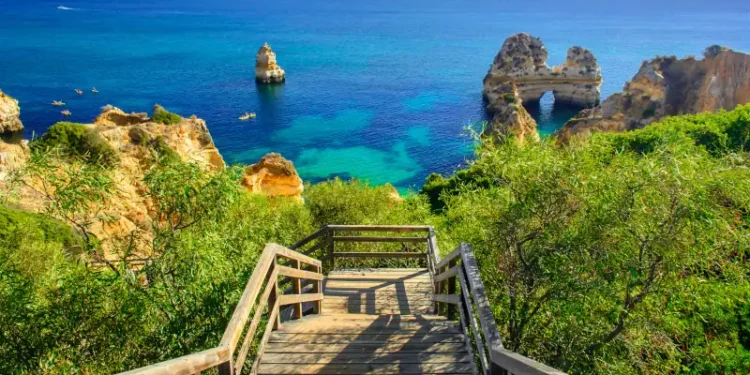
The Algarve is all about the great outdoors. Its more than 150 miles of Atlantic coastline is punctuated by jagged rock formations, lagoons, and extensive sandy beaches, 85 of which have earned coveted Blue Flag award.
For golfers, the Algarve has more golf courses per capita than anywhere else in the world. Green fees at more affordable courses will be around $50 for 18 holes off-peak running to $300 at swankier spots.
Thanks to its fantastic weather, beaches, golf, friendly and English-speaking population, and solid infrastructure, the Algarve is home to thousands of expats from around the world. Making friends is easy, both with the locals and the expats.
Portugal doesn’t have a retiree-specific visa, but it has an independent means visa (the Passive Income Earner’s or D7 Visa) that retirees use to live in the country long-term. The basic requirement is showing that you receive enough passive income to support yourself while living in Portugal.
Be prepared to show about $1,500 per month in income (the official amount is lower, but $1,500 gives you a better chance of having your application approved). The D7 grants a two-year residence permit that you can renew.
Sincerely,