





Portuguese festivals are accompanied by at least one story or legend. My husband Jeff and I have to admit… we love these stories.
It took six years to figure out the story about the festival celebrated every year in our northern Portuguese municipality. For some reason the legend eluded us.
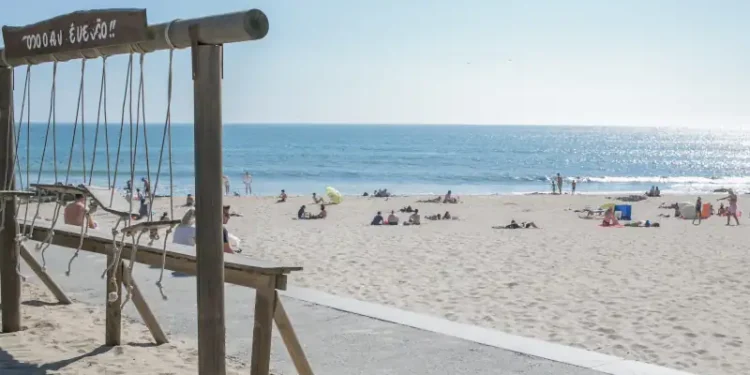
We live in a coastal neighborhood of Matosinhos… a suburb of Porto. Matosinhos throws a festival from mid-May through the first week of June… three weeks of celebration. The name of the festival is Festa do Senhor de Matosinhos. It’s one of the big Portuguese municipal festivals. There are lots of carnival rides, food, drink, music, and fireworks.
But… whenever we asked about the origins of the festival, locals simply told us it is a “religious festival” with not much more explanation. We never got the rest of the story. We heard about carnival rides, fireworks, fartura (fried dough pastry) vendors, beer booths, food vendors, the huge craft fair, floral decorations at the church, pilgrims visiting, and processions. All of these activities for three weeks. But why?
None of our friends could tell us the whole story. Jeff and I did a little digging. We found out that there indeed is a good story associated with this festival.
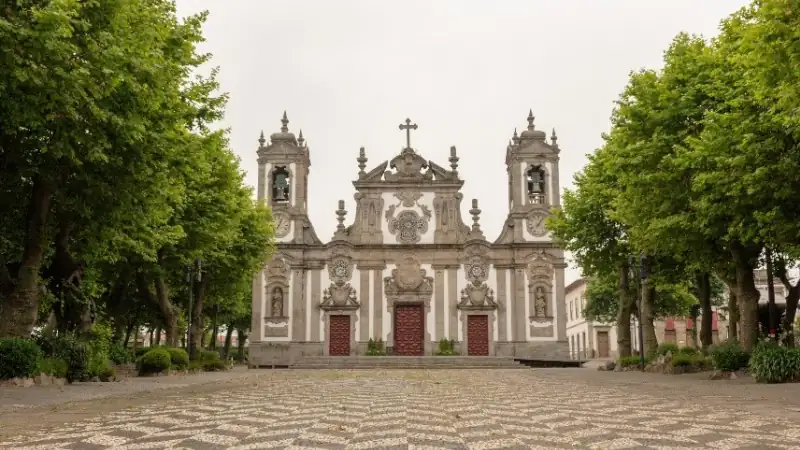
First of all, we found out that Senhor de Matosinhos translates as the Lord of Matosinhos or Matosinhos’ Christ. The phrase refers to the crucifix that is in the biggest church in Matosinhos, the Igreja Paroquial do Senhor Bom Jesus de Matosinhos.
This story goes back to the time when Christ was crucified in Jerusalem. One of the Pharisees of the Sanhedrin, who defended Jesus during his trial, was Nicodemus. He was at the crucifixion and was one of the people who took Jesus down from the cross and placed him in the tomb.
Nicodemus was a woodworker and was a devout follower of the teachings of Jesus. It is said he carved five crucifixes. Before the apostle James traveled to the Iberian peninsula he convinced Nicodemus to toss the crucifixes into the Mediterranean to avoid persecution by the Romans and Jews. James believed the crucifixes would be found by the faithful in other lands and be installed in new churches. They drifted for over a century.
On May 3 in the year 124, the statue, said to be the oldest carved by Nicodemus, washed ashore on the beach of Espinheiro in Matosinhos. It arrived perfectly preserved but missing its right arm. The crucifix was placed in a small church near the beach.
For 50 years, locals tried and failed to carve a matching arm for the statue.
One day, an old woman collected a piece of driftwood on the beach and threw it into her fireplace. The wood miraculously refused to burn and repeatedly jumped out of the flames. Her mute daughter suddenly spoke, declaring it was the missing arm of the statue. When taken to the shrine, the piece fit perfectly.
In the 10th century, the miraculous statue was placed on the back of a donkey to determine its home. The donkey walked until it finally stopped at a specific spot, which is where the Sanctuary of Bom Jesus de Matosinhos stands today.
The statue is considered one of the oldest existing crucifixes in Portugal. The awe-inspiring wooden figure… housed in a stunning church redesigned by the famous Italian architect Nicolau Nasoni… remains the focal point of the massive annual pilgrimage and festival held over three weeks in May and June.
The specific spot where the statue originally washed ashore is marked by the Senhor do Padrão monument, a domed shrine located by the coast where local fishermen leave candles to protect those at sea.
Jeff and I sure love these Portuguese legends… stories. When you are in northern Portugal add Festa do Senhor de Matosinhos to your list. Now you know the story.
A vida é boa (Life is good),
Joch Woodruff
Contributor, Overseas Opportunity Letter