





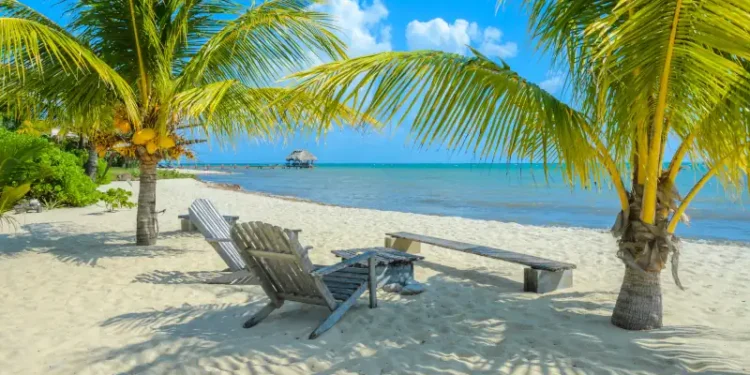
For me and Belize, it was love at first sight.
From the first morning I arrived in Belize City, nearly 40 years ago, climbed down from the plane onto the runway, threw my backpack over my shoulder, pulled on my sunglasses, and walked across the tarmac in the direction of the country’s one-room international airport, I was smitten.
It was nothing I could put my finger on. Just a feeling. Like falling in love. You know it when it hits.
Belize City could be described as the Calcutta of the Caribbean. That description is not undeserved, but it refers not to Belize but to Belize City and not to the heart and soul of this country but to some parts of the town where, unfortunately, its international airport is located.
Infatuated as I was by the experience of being in Belize, even I, young and naïve as I was, recognized that Belize City wasn’t a place to hang out. This hasn’t changed in the decades since, but it didn’t matter to me then and it isn’t the point now.
What won me over from that first visit was the raw, natural beauty of the place, the simple, sweet charm of life here, and the resilience of the Belizean people. I connected straightaway.
On that first visit, I met a handful of Belize expats with whom I’d developed friendships I treasure. Visit by visit, in the years to follow, they helped me to get to know this country founded by pirates, for pirates, where independence and free thinking are prized above all else.
These are qualities that I, too, value a great deal. Instinctively, putting my feet on the ground in this country for the first time, I knew that Belize and I were made for each other.
Belize is the quirkiest place I know. Belize City’s roadways are built around a system of roundabouts (thanks to her British colonizers), but shops alongside them sell rice, beans, and tortillas ground by hand.
Everyone you meet speaks English (it’s the country’s official language), but this belies the stories of their origins.
The 400,000 people populating Belize today are descendants of migrants from Britain, yes, but also and more so the surrounding Central American countries. You’ve got Mexicans, Guatemalans, Hondurans, and Nicaraguans mixing with current-day generations of the Maya who originally inhabited this land, the pirates who came later, the Mennonite farmers who began arriving on the scene in the 16th century, the British who ruled until 1981, and each other.
Belize is a country of freedom-seekers. The pirates came to ply their pirate trading out of view. The Mennonites came from Germany and the Netherlands so they could be Mennonites without anyone bothering them. The British came so they could bank in private. And the folks from the surrounding countries who’ve sought out Belize in recent decades typically have made their way across this country’s borders in search of safety.
Today, now, a new population of freedom-seekers is finding its way to these shores:
Us.
Belize is a nation of independent thinkers and doers, a country where you make your own way and where, while you’re doing it, no one thwarts your efforts.
Including the Belizean government. This is a poor country. The government doesn’t have enough money to get up to any real trouble. And, if they tried, Belizeans wouldn’t allow it. The focus here is on local-level government—addressing the crime problems in certain neighborhoods of Belize City or trying to dissuade the Guatemalan banditos who occasionally wander into Belize in search of a couple of good horses to steal.
Check Your Worries At The Border
Arriving in Belize, stepping off the plane, and making your way to the one-room arrivals hall of the airport, you have a sense still today, just as I did 40 years ago touching down in Belize for the first time, of leaving the rest of the world behind. Belize and her people operate according to their own rules and mind their own business. The troubles, uncertainties, and worries that seem all-consuming Stateside and elsewhere in the world fade here. You’re faced with a land that remains a frontier, undeveloped and oozing potential.
Belize is one more thing—one of the world’s most user-friendly options for establishing foreign residency. You can just show up.
Where The H#&% Is Belize?
Belize has been attracting expats in the know from the U.K., the United States, and Canada for decades. Still, many would have trouble pinpointing the country on a map and a lot of folks think it’s an island.
It’s not, of course, though it features a handful of Caribbean islands offshore Belize City. Shops in the airport sell T-shirts that ask, “Where The H#&% Is Belize?” The good news is that the country is close to the United States and accessible.
Belize is easy to get to, and, once you’re here, it’s easy to get around and do whatever you’d like to do. The country is compact and the language is English.
The Many Faces Of Little Belize
Don’t be fooled by its size. You can get from one end of Belize to the other in a half-day by car or a half-hour by plane. The country’s domestic air travel system is its most developed infrastructure.
Despite this, Belize has many faces.
Belize City
First is Belize City—poor, underdeveloped, and, in parts, unsafe. I don’t mind the place. Beneath the gritty surface, I detect a long-faded charm. Or maybe I project one. Either way, I enjoy passing through, but I know that, for many, the best part about traveling to Belize City is leaving Belize City.
Caribbean Coasts
Belize is perhaps best known and best loved for its Caribbean islands, especially Ambergris Caye, the largest and most developed, boasting both long beaches of soft, white sand and an established and growing community of expats and foreign retirees. This is the Caribbean at its best.
Belize’s long mainland coast is marked by two points of particular interest. South of Belize City is Placencia; north is Corozal.
Placencia has grown up in recent years to become the mainland’s best-appointed beach town, catering to tourists and now sporting the trappings that come with them. Corozal boasts easy access to Chetumal, across the bay in Mexico, which can be a big advantage in case of medical emergency. On the other hand, day-to-day, you might feel remote here. Maybe that’s a plus for you… maybe a minus.
The northern coast around Corozal sees about 50 inches of rain a year. The southern coast, Placencia and south, can see three times that much. Maybe that bothers you… maybe it doesn’t.
Cayo
Inland is the Cayo District, a dramatically different region where life revolves around not the sea but the river. For some, river views don’t substitute for ocean vistas; others prefer them.
In other words, each region of Belize has its pluses and its minuses. Island living is always more expensive than life back on the mainland, meaning Ambergris is the most expensive lifestyle choice in the country. Most expensive and also most developed and turn-key.
Cayo offers an opportunity to enjoy a healthy, fulfilling, back-to-basics, and self-sufficient lifestyle, thanks to its abundance of fertile land, water, and sunshine year-round. Cayo is also Belize’s most affordable lifestyle choice.
Infrastructure
The British left great legal, educational, and governmental foundations in Belize but not much in the way of physical infrastructure.
Considerable investment has been made in recent years to improve this country’s roads and bridges. Still, though, to put things into perspective for you, Belize has just a handful of highways.
The most significant artery in the country is the Western Highway, which connects Belize City (the largest city), Belmopan (the capital), and San Ignacio (the largest town in Cayo).
Not only road infrastructure but infrastructure in general is limited in Belize. This is a small country where the infrastructure is most kindly described as “developing.”
No infrastructure, limited services and amenities, and little market demand (meaning limited product supply) could be interpreted as negatives. However, in Belize, particularly in Cayo, these things are a big part of the appeal. Once you get to Cayo, you don’t mind that there’s no infrastructure.
You don’t mind that the culture is more concerned with conservation than consumerism.
You don’t mind… or, if you do, you’re not happy.
If you’re shopping for a lifestyle supported by the diversions and distractions of a big city, Cayo is likely not for you and maybe nowhere else in Belize is either.
I began a love affair with Belize over 30 years ago that has deepened into one of the most important relationships of my life.
I know Belize well, better than anyone else you’re likely to meet. I know the real Belize… and I love her just as she is.
Until next time,
Kathleen Peddicord
Founding Publisher, Overseas Opportunity Letter