















Become A Resident—It’s Easy
Sept. 17, 2008
Panama City, Panama
PLUS:
n No Currency Restrictions,
No Foreign Ownership Restrictions, Zero Taxes On Outside Income, Plus A
Second Passport In As Little As One Year…
n The World’s Easiest Foreign
Residency Just Got Easier Thanks To Your Friends At Sugar Loaf…
n You’ve Gotta’ Thin Slice Your
Overseas Retirement Options…
n “There’s
Nowhere Near As Much Construction Near The Beach…They’ve Run Out Of Space!”…
n Keeping Away From The Main
Drag On Portugal’s Coast…
n The
World’s Largest VA Hospital Outside The U.S….
AND:
n A Fellow Reader
Offers To Help Launch Your New Life In Panama…
----------
Launch Your New Life ----------
"What in the world is a nice retirement-aged couple from Vermont doing in
Granada, Nicaragua?”
Jay Snyder gets this question all the time. Here’s how he responds…
Dear Overseas Opportunity Letter Reader,
Uruguay is one of the two most appealing places in the world
to establish foreign residency (the
other is Panama).
As a resident of Uruguay, you enjoy all kinds of benefits. Uruguay is one of
those
zero-tax jurisdictions international tax guru
Chris Rusch has been telling you about…plus, after five years of legal
residency (three, if you're married, or as few as 12 or 18 months if you’re a
resident retiree…see below), you can apply for Uruguayan citizenship and acquire
a Uruguayan passport.
Uruguay attorney and investment and tax advisor Juan
Federico Fischer explains:
“Uruguay is one of the best offshore havens in the world right now. It
imposes no currency restrictions—so money can flow in and out of the country
with no withholding taxes, waiting periods, or conversion to local currency—and
no restrictions on foreign ownership of property.
“You can avoid exchange risk by keeping funds in the country in foreign
currency (U.S. dollars and euro are most common). In fact, more than
three-quarters of the funds on deposit in Uruguayan banks are held in dollars.
“Personal income tax was introduced in Uruguay last year, but this change in
the tax code has no affect on you as long as you earn no money locally. In other
words, as a foreign resident of this country with no local income, you have no
local tax liability. Only income generated in Uruguay is taxable in Uruguay.
Foreign-sourced income and assets abroad (a U.S. pension, for example, dividends
or capital gains earned by stock in a Japanese company, interest from a CD in a
European bank, rental income in Australia…) are tax-free. You don’t even need to
report their existence to the Uruguayan authorities.
“Furthermore, Uruguay is one of the easiest places in the world today to
establish foreign residency…and, that accomplished, one of the easiest places in
the world, as well, to obtain a second passport.
“Here’s what you need to apply for foreign resident status in this country:
your birth certificate (stamped by the Uruguayan consulate in your country of
birth), a clean police record, and proof that you can support yourself.
“You fulfill the clean police record requirement simply by presenting a
certificate from the police in your country of origin and any other country
where you have resided during the past five years. If you’re a U.S. citizen, you
can request your U.S. police certificate in Uruguay, at the local Interpol
office.
“You fulfill the income requirement by proving that you have annual income of
at least US$6,000--from a pension, a mutual fund, lease income from assets
inside or outside Uruguay, dividends of any kind, earned income, etc.
“This is the requirement Uruguay immigration authorities pay most attention
to, and this is the point about which there could be some back and forth if you
don't get the proper advice, as you work to prove the authenticity and permanent
or semi-permanent nature of each income source (done through a Uruguayan
notary/lawyer's certification).
“Uruguay does not require that you own property or have investments in the
country to establish residency. At the same time, owning property does not
eliminate the income requirement.
“Once you’ve got your documents together, you enter Uruguay as a tourist,
then you file your paperwork from within the country on a pre-arranged date at
the immigration authority. As soon as you’ve made your application, you’re ok to
stay in the country indefinitely, while your file is being reviewed and
processed. You can even request a national identification card, which allows
passport-less travel to Argentina, Brazil, Chile, and Paraguay.
“You’re also permitted, from day one of your application, to import your
household goods (not including a car) into the country duty-free. There could be
some small risk in this, I guess. If your application for residency were denied,
you’d have to export all your things when you leave the country…
“The chances that your residency application will be denied are small,
though. Again, the process is straightforward. As long as you can meet the
income requirement, and don't have a criminal record, you will never have a
problem.
“Then, five years after you’ve filed for residency, you’re eligible to apply
for citizenship. You do this at Uruguay’s Electoral Court, where you must show,
with the help of documents and witnesses, that you have made a permanent
connection with the country and that you have not been absent from Uruguay for
more than six straight months during your five years of residency. The
citizenship process is remarkably quick. Typically, citizenship is granted
within three months of your request.
“Uruguay allows for multiple citizenships, so you don’t need to give up any
other nationality when you become Uruguayan. The key benefit of Uruguayan
citizenship, of course, is the
Uruguayan passport, which allows for visa-free travel throughout all Latin
America and part of Europe.
“Furthermore, if you’re a resident retiree, you can get your
passport in 12 to 18 months. The requirements, though, to be a resident retiree
are greater than those for a regular resident. Your income must be from a
recognized pension, and it must be at least US$18,000 per year. And you must own
property in the country with a value of at least US$100,000.
“As a resident retiree, you are allowed to bring your car into the country
with you duty-free, in addition to your other belongings. I don’t recommend
this, though, as the associated bureaucratic delays make the process expensive.”
Kathleen Peddicord
P.S.
Juan, of course, can walk you through the process of establishing residency
in Uruguay. Or, better, you can establish residency in this country at no charge
and with zero hassle. For a limited time, David James, our friend at
Sugar Loaf, the private community being built near Piriapolis, just
outside Punta del Este, will do it for you, gratis. It’s part of a very
appealing special offer he’s making. Through the end of November, you can travel
to Uruguay and stay in the country as David’s guest for a week to get to know
the place and to take a look at what David’s creating at Sugar Loaf. Then, if
you decide to become part of the emerging community here, David will take care
of your residency paperwork, no charge…as a kind of welcome-to-the-country
gesture.
You can read more about the opportunity here.
P.P.S. Does Uruguay make sense for you as an overseas retirement haven? I
don’t know. You’ve got to make the determination for yourself.
Here’s what you need to know to think through the idea:
In fact, you can’t (and shouldn’t) choose Uruguay…or Panama…or Mexico…or
Nicaragua…or Italy…or Thailand…
You could, however, determine that Granada, Nicaragua, is the ideal place for
you to enjoy your retirement years…or that you’re more at home and happy in
Abruzzo, Italy, than anywhere else you’ve ever spent time.
You’ve got to slice a place very thin to get a clear understanding of the
opportunities for living, retiring, and investing it offers. Maybe you can’t
stand the heat in Panama City. So get out of the city…and head for the
mountains…to El Valle, maybe, or Boquete. Maybe you’re turned off by the
high-profile gringo community in Chapala, Mexico. Avoid it…by looking instead to
Oaxaca.
Where should you consider in Uruguay? Our correspondent Christian MacDonald
has lived himself in this country and traveled it from end to end. He’s
identified one town, in particular, that he says offers one of the best options
in the world for sophisticated seaside retirement. He reports in full (where,
why, and how) in the first issue of our new Overseas Retirement
Letter.
----------
Free Live & Invest Seminars ----------
How To Buy In Latin America’s Top Havens
Free seminars in Canada this October. Speak one-on-one with real estate
investment experts about where and how to pursue your dreams of living,
retiring, or owning a second home in Latin America and the Caribbean.
TODAY:
Lynn Mulvihill, Editor-in-chief of our about-to-be-launched
Overseas Retirement Letter, is just back from a family holiday on
the Algarve:
“I could see a lot of change since we were here six years ago. There's
nowhere near as much construction, at least not near the beach. They've run out
of space!
“Last time we were in Albufeira. This time we were farther west, in Praia da
Rocha. Actually, we were between two resorts (Praia da Rocha and Praia do Vau),
which was perfect. We were away from the noise, and our beach was much less
crowded (loads of room for baby Neal to crawl around and eat sand).
“Prices for eating out seemed much the same as when we were here last. We
spent an average of €25 for dinner for two...though we got stung for €60 for a
red snapper dinner one night. I hadn't had it since Nicaragua...and I can tell
you it wasn't worth it! Nicaragua is the place for red snapper…
“You see lots of properties for sale for upward of €500,000+ now, but I
caught some apartment listings for around €80,000. I’ll send notes on these
later.
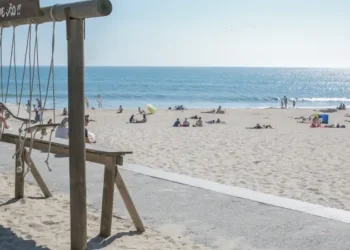
“I love the beaches in this part of the world. Where we were, it was a
92-step descent to the beach, but it was worth it. The red and yellow sandstone
cliffs are brilliant against the blue sky...much more impressive than the flat
beach at Praia da Rocha that you access by easy boardwalk.
“Seemed there were mostly locals on our beach and few umbrellas...so I think
we did well to stay away from the main drag.”
FROM THE MAILBAG:
“Thanks for all of the information in your newsletter. I have really learned
a lot. And I read the recent questions about VA benefits overseas
with interest. I may be able to shed some light on the subject for my fellow
readers.
“The Philippines capital of Manila has one of the world’s
largest VA hospitals outside the United States. U.S. servicemen and -women and
Philippines guerilla fighters from WW2 were for many years the predominate
patients of the VA health system in this country. With the aging of the WW2
vets, the VA in Manila was in trouble.
“However, today, with the increase of retirees from the Korea and Vietnam
conflicts and, especially, young veterans from Iraq and Afghanistan, the VA in
Manila is exploding. I am seeing very young veterans with disabilities from the
current wars in Iraq and Afghanistan taking their VA checks and retiring to the
Philippines, where they enjoy free VA benefits and a low cost of living.
“Great weather, people, beaches, mountains, and one of the only pension visa
programs in Southeast Asia. With an exchange rate of about 47 pesos to the
dollar, this country is a real bargain.
“As General George said, we will come again. Young retirees are coming back
to this former U.S. colony for free VA health care. You should write a real
article in your daily newsletter, instead of the South America/Central America
news. Think outside of the box.”
-- Rick B., Philippines
***
“I have purchased a single family home (not in a gated community), gone
through the pensionado visa process (new regulations as of Aug. 26),
and shipped two large breed dogs back and forth from Toronto to Panama
if anyone has questions on those issues.”
-- Rob B., Panama