




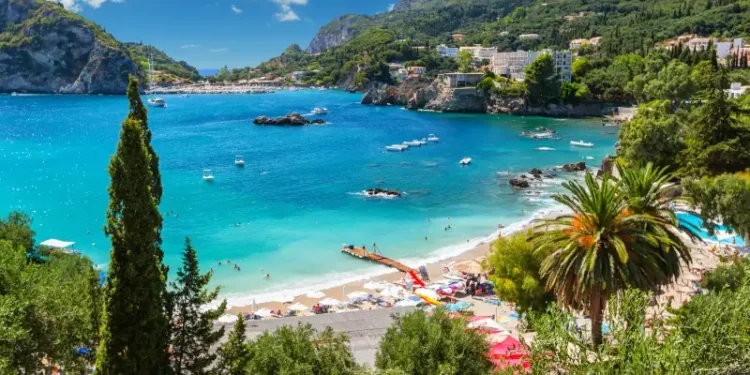
Corfu is amazingly green, sheathed in the silvery green leaves of olive trees as well as Mediterranean cypresses, pine trees, leafy shrubs, and flowering plants. With all the vegetation, the scenery looks more like Lake Tahoe than the dry and dusty scenery of your typical Greek island.
The island is flat and low-lying in the south, undulating in the center, and mountainous in the north. Despite its small size (only 40 miles and 20 miles wide at its thickest part), Corfu is home to a huge number of jaw-dropping land formations. Because it’s made up of sedimentary rock, it’s constantly being shaped by the elements, creating wind-sculpted cliffs, stalactite-laden caves, craggy bluffs that drop down into the ocean…
Serving as backdrop for all this dramatic scenery is the dazzling aquamarine of the Ionian Sea, arguably some of the most beautiful water on this planet.
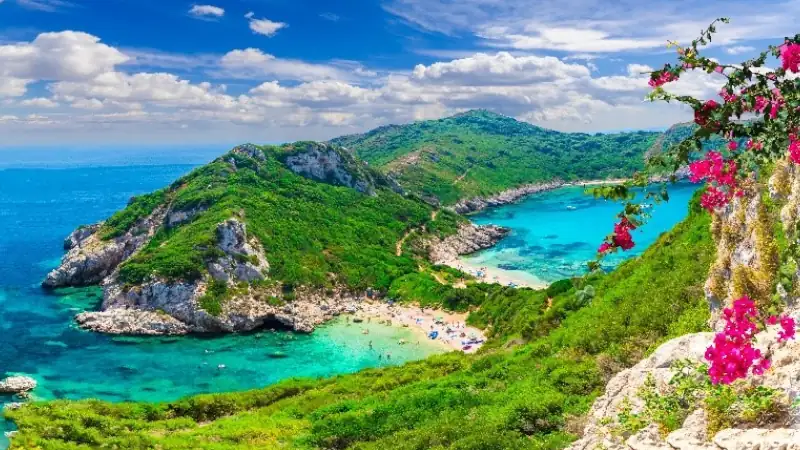
The island has 135 miles of coastline and 57 beaches—some sandy, others pebbly; some developed, others completely isolated. Living here, you can take advantage of proximity to the sea regardless of where you settle on the island. Glorious ocean vistas are around every corner, and enjoying the sea every day, whether boating around the island or simply going for a dip, is the way of life.
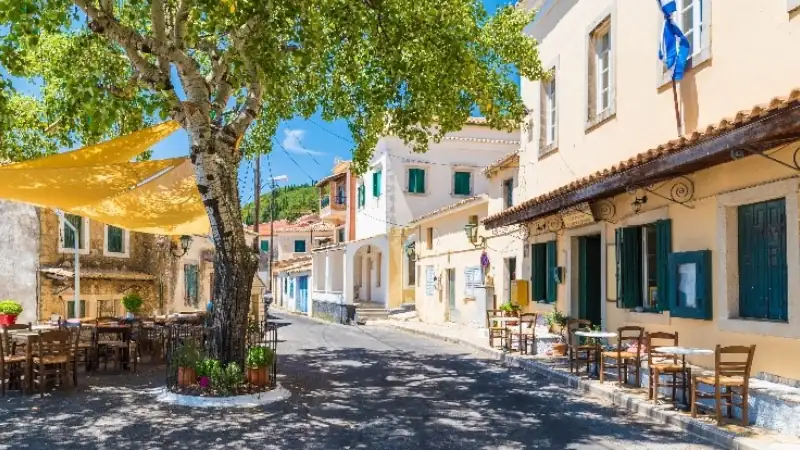
At its core, the island remains traditional. You get a sense of the authentically Corfiot way of life at its many charming villages, particularly the inland mountain ones, where life is still carried out the same way it was a couple generations ago.
Children still play in the streets… Nuns don their black habits and make their way to church in the early hours of the morning… People gather in the town square after dark to chat with their neighbors… It’s a very safe, simple way of life—the type of place where you can leave your front door unlocked and not worry about a thing.
Often cited as Greece’s greenest island, Corfu is a place of bountiful produce, with various fruits and vegetables grown locally and vineyards turning out award-winning wines.
The local grapes are unique to the Ionian Islands and pair perfectly with the cuisine, which is some of the healthiest, most delicious on the planet. In short, what people love about Corfu is its stunning natural environment, friendly locals and wholesome way of life, delicious cuisine, interesting history and culture, and low cost of living.
Corfu Town is the major metropolitan area on Corfu… if you can call a city of roughly 40,000 metropolitan. Much of Corfu Town is walkable, particularly in the pedestrianized historic zone. So, too, are Corfu’s 22 villages: you can easily walk to most places you’d want to go—the beach, the grocery store, the bar…
If you want to venture beyond your immediate village and have the most flexibility possible, you’ll want to have your own means of transport. Having a car is the best way to get around, although lots of people drive mopeds and quads, too.
From ordering in restaurants to asking for directions to having conversations with locals, you’ll have no problems communicating in English in Corfu. It’s a well-established tourism destination with historical ties to the U.K., so there is a strong basis for speaking English here.
Some Greek islands have a reputation for being expensive, even over-priced for what they offer… Corfu isn’t one of those islands. Here you can enjoy a high standard of living for a low cost, especially considering it’s in Europe and a major beach destination.
Your lifestyle will determine exactly how much you pay, but about $1,500 a month should be enough for a couple to live comfortably…
Renting a two-bedroom apartment costs about $450 a month; for a house, you’ll pay between $485 and $545 a month, though you’ll have to negotiate for a long-term contract. Most rental agents prefer to keep their rentals unoccupied during summer months so that they can make more money off of short-term rentals during the tourist season.
Sincerely,
The Editors Of Live And Invest Overseas