





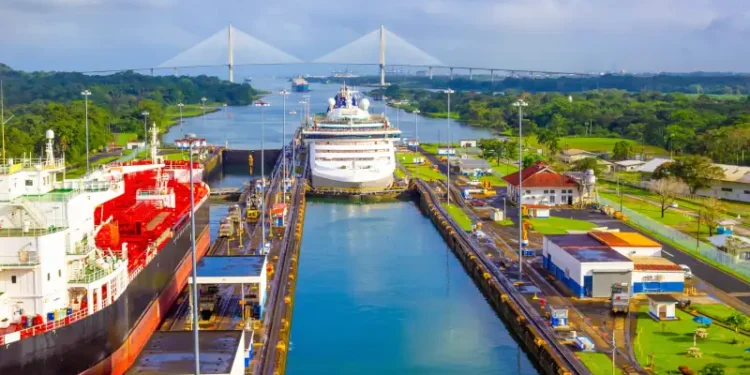
Below are some of the latest developments that caught our attention this week…
New Cancer Center Will Bring Advanced Treatment To Western Panama

Credit: Telemetro Reporta
Cancer patients in western Panama will soon have access to advanced oncology care closer to home, eliminating the need for many to make frequent trips to Panama City for treatment. Construction is moving ahead on a new Oncology and Nuclear Medicine Unit at the Hospital of Bugaba in Chiriquí, which will become the first public facility outside the capital to offer specialized cancer services of this kind.
The new center will be equipped with a state-of-the-art linear accelerator for radiation therapy and nuclear medicine technology, allowing patients from Chiriquí, Bocas del Toro, and surrounding provinces to receive lifesaving treatments without the time, expense, and physical strain of long-distance travel.
The facility is expected to serve up to 45 patients and represents a major expansion of health care access in Panama’s interior.
During a recent inspection of the project, President José Raúl Mulino said the goal is to provide cancer patients outside Panama City with the same level of care available in the country’s leading hospitals. He also announced that two physicians from Bugaba are already undergoing specialized training to operate the advanced equipment. Once completed, the new oncology unit will mark an important step in decentralizing Panama’s health care system and improving access to specialized medical services for thousands of residents in the western provinces.
Fuel Prices Drop Again Starting July 10
Drivers in Panama will see a slight break at the pump beginning July 10, as the National Energy Secretariat has announced a new reduction in the maximum retail prices for gasoline and low-sulfur diesel. The updated prices will remain in effect nationwide through 5:59 a.m. on July 24, as part of the country’s biweekly fuel price adjustment system.
Under the new pricing schedule, 95-octane gasoline will cost $1.173 per liter, a decrease of $0.005 per liter. 91-octane gasoline falls to $1.107 per liter, down $0.003, while low-sulfur diesel sees the largest reduction, dropping $0.016 to $1.088 per liter.
Panama adjusts fuel prices every 14 days using a formula that takes into account international fuel markets and logistics costs. Officials say the system is designed to ensure stable fuel supplies while allowing local prices to reflect changes in global energy markets.
Panama’s Return To Maritime ‘White List’ Wins Praise From Shipping Industry

Panama’s maritime sector is welcoming the country’s return to the Paris Memorandum of Understanding (Paris MoU) White List, a prestigious international ranking that recognizes ship registries meeting the highest standards of maritime safety and regulatory compliance.
The Panama Maritime Chamber praised President José Raúl Mulino, the Panama Maritime Authority, the Ministry of Foreign Affairs, and other government agencies for helping the country move off the Gray List and regain White List status.
According to the Chamber, the recognition strengthens confidence among shipowners, operators, insurers, financial institutions, and charterers that use the Panamanian flag. It also enhances the reputation and competitiveness of Panama’s ship registry—the largest in the world—and reinforces the country’s standing as a leading global maritime and logistics hub.
The Chamber noted that Panama earned its improved ranking through stronger oversight of its ship registry, stricter compliance with international maritime standards, enhanced vessel inspections, and modernization of its maritime administration.
New Program Launches To Turn Local Communities Into Certified Tourism Destinations

Panama has approved a new law designed to boost community-based tourism and spread the economic benefits of travel beyond the country’s traditional destinations. Law 541 creates the “Paradises of the Isthmus” (Paraísos del Istmo) program, which will allow communities with outstanding historical, cultural, natural, environmental, and culinary attractions to earn official certification as tourism destinations.
The initiative aims to generate jobs, encourage local entrepreneurship, and promote sustainable tourism by bringing together the national government, local municipalities, private businesses, and community organizations. Rather than simply marketing these areas, certified communities will receive support to develop tourism plans, improve infrastructure, preserve their cultural heritage, and provide training for local residents. While the law does not offer tax incentives, it does make institutional and financial assistance available to participating communities.
The legislation is intended to help unlock the tourism potential of Panama’s interior by creating authentic visitor experiences while ensuring that local residents benefit directly from tourism development. Supporters say the program will encourage responsible tourism, strengthen local economies, and preserve the country’s unique cultural and natural heritage for future generations.
Copa Airlines Begins Rolling Out Starlink Wi-Fi Across Its Fleet
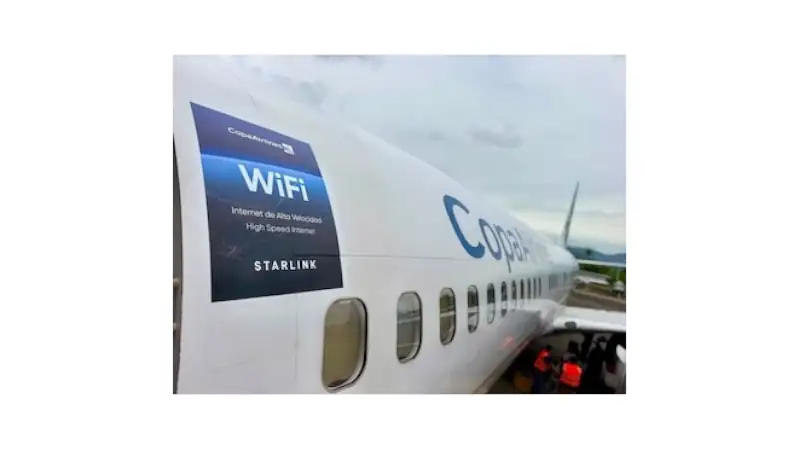
Copa Airlines has begun the gradual rollout of Starlink high-speed Wi-Fi across its fleet, becoming the first airline in Latin America to offer the satellite-based internet service.
The first aircraft equipped with Starlink entered service on July 4, marking the start of a phased installation that is expected to cover the airline’s entire Boeing 737 fleet by the first quarter of 2027.
The new onboard internet service will provide passengers with fast, low-latency connectivity from gate to gate, allowing them to browse the web, stream videos, send messages, participate in video calls, play online games, and work remotely while in flight. The service is expected to be free for ConnectMiles loyalty program members, while pricing details for other passengers will be announced closer to launch.
The rollout is part of Copa’s broader strategy to enhance the passenger experience and strengthen Panama’s position as a regional aviation hub. By adopting Starlink technology, Copa joins a growing number of global airlines investing in next-generation in-flight connectivity, while setting a new benchmark for air travel in Latin America.
Sincerely,