



One of the most vibrant aspects of Portuguese traditions is the festa. Literally translating to party, really, the term covers a wide scope of events that are significant in Portuguese culture.
Most festivals take place between late May and mid-September. It’s elementary math: warm weather = festas.
Each festa shows a different side to the heart of Portuguese culture, but there are many common aspects. They’re the perfect opportunity to immerse yourself into Portuguese tradition and spirit.
Best of all, they’re free and open to all.
Of course, many of these events are raucous, with loudspeakers blasting music, fireworks at all hours, kids throwing firecrackers at your feet, water being thrown from all sides… and sometimes even odder traditions, like being hit on the head with a plastic hammer or being pelted with flour…
If that doesn’t sound like the kind of atmosphere you’d go for, you probably want to avoid being in town for a festa.
But as you plan your trip to Portugal or think about exploring more of your new home country, you should include one or two festas in your itinerary to really get a true feel of local atmosphere.
My book, Living in Portugal: Your Guide To The Good Life In The Old World, dives deep into festivals, food culture, culture quirks, top dishes to enjoy, best sights to see, and the top locations we recommend for seeking a new life here.
I really peel back the layers of all aspects of Portuguese culture thanks to local friends and expats, as well as nearly 15 years spending time in Portugal myself.
Below are just a few of the obscure and lesser-known festivals around the country to whet your appetite…
So pack your bags, bring your appetite, and get ready to dive into the world of Portuguese festas!
Travel Back To Roman Times
May: Emperor Caesar Augustus founded three cities in the northwest of Hispania, one of which was Bracara Augusta, now called Braga. In the 4th century, it even became the capital of the Gallician province. To celebrate this illustrious past, Bracarra Romana is held every year. The city recreates its Roman past, complete with a Roman fort, food and wine stalls, merchandise, musicians, dancers… and even Roman chariot races. For five days in May, the city and all its inhabitants and visitors dress up for the occasion—don’t be caught without a costume!
A City-Wide White Party
September: The first week of September is when Braga delivers its largest festival of the year—Noite Branca, or “White Night.” Everyone wears white clothing, and stages are erected on most street corners, as well as in public squares and municipal gardens. Live bands, DJs, and other musical acts perform through the night, with new acts every hour. Thousands of people come to dance the night away… On the last of the three nights, an estimated two million people show up bedecked in white and ready to dance.
The Oldest Carnival Celebration
February: The Carnival celebrations of Podence are one of the most important events in the north of the country, and they’re presumed to have pre-Roman roots.
In Podence, the stars of the show are masked characters called caretos, which in 2019 were classified by UNESCO as Intangible Heritage of Humanity. Caretos wear colorful woolen suits with rattles at the waist and red, yellow, and green fringes. Their faces are covered by masks made of leather, brass, or wood, and they carry staffs.
On Tuesday and Sunday, the caretos take to the streets, dancing, running, and jumping, teasing and taunting visitors and young women in particular.
Originally, caretos were boys and young men. However, due to the desertification that started mostly in the 1960s, the recovery of this tradition was only possible when women also started wearing colorful suits.
Portugal’s Original Jazz Fest
July: The Cascais jazz festival, now called Ageas Cooljazz, has been held since 1971 and was the first jazz festival ever held in Portugal. For its inaugural lineup, it welcomed Miles Davis, Dexter Gordon, Phil Woods, and The Giants of Jazz: Thelonious Monk, Kai Winding, Art Blakey, Sonny Stitt, Al McKibbon, and Dizzy Gillespie. It still puts on a hit show that packs a stadium every year with hit artists like Chaka Khan, Diana Krall, and Seal and headlining in recent years.
A Living Museum In A Castle
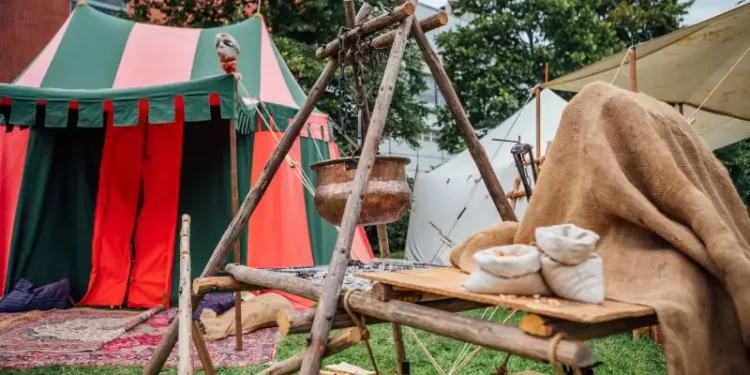
July: For 10 days in July every year, Óbidos is transformed for its Medieval Fair, which will have you absorbed in a living museum populated by hundreds of actors posing as noblemen, beggars, mule-drivers, jugglers, musicians, jesters, dancers, and more.
The town’s castle and surrounding walls are the perfect backdrop for this roleplay, which will also feature jousting tournaments, medieval dinners, and a market, where you’ll find medieval costumes and accessories as well as things like traditional homemade medical remedies.The food stalls offer authentic Middle Ages fare and serve it in clay dishes, and weapons and tools are displayed and demonstrated. Animals will also be on display, including horses, donkeys, falcons, and snakes.
The Best Samba Festival In Europe
July: Sesimbra, a charming town on the coast near Setubal, welcomes thousands of visitors each July to come to watch the famous samba parades. The MegaSamba festival has become a key samba event in Europe, and it becomes more international every year, uniting composers, singer-songwriters, percussionists, choreographers, dancers, Mestre-sala and Porta-bandeira couples, as well as other representatives of schools of samba from different parts of the world.
Step Back In Time In Algarve
August: In Silves, the event of the year is in August, when the town is transported back to medieval times for 10 days, with feasting, dancing, jousting, and shopping. The area around the Praça Al-Muthamid gardens is transformed into a tented area and includes games and events for families and children to enjoy, including traditional archery (watch out for stray flying arrows).
Each night, a professional drama troupe reenacts a different part of Silves’ history. The show covers the period from 1189 during the reign of Sancho I and the first Christian conquest of the city through to 1191 and the Muslim reconquest.
At 6 p.m. every day, the events commence with a procession through the streets, which starts from the Praça Al-Muthamid gardens and winds its way to the top of the town outside the cathedral.
The main event in the castle each evening is performances by medieval dance and circus theater groups. There are belly dancers, a medieval music group, a drumming group, troubadours, and Egyptian dancers, not to mention the traveling actors who wander the streets reenacting slavery, drunkenness, and general medieval life.
The streets are transformed into a series of market stalls, bazaars, and food stalls, selling all manner of crafts and homemade goods. You can even exchange your euros for Xelbs, which were the local currency at the time. With an exchange rate of 1:1, it’s a shopper’s paradise.
You’ll learn about many more events and so much more in Living in Portugal, for example, where to go…
- To be hit on the head and burn your feet…
- To see thousands dressed as devils…
- To watch students burn their garb…
- To be brought to tears by a serenade…
- To be part of a 400-year-old party…
- The one time a year the public can peek behind palace doors…
Bonne route,