





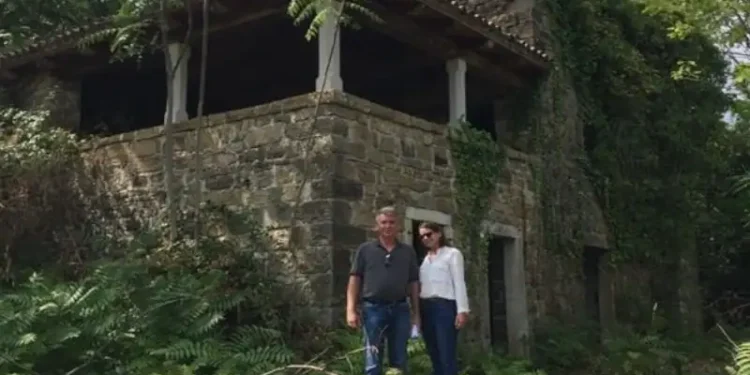
When a project turns out to be more work than anticipated, our construction crew at Los Islotes has a saying…
“Salio la bruja!”
Along came the witch.
I have been building, renovating, and remodeling properties overseas for 30 years. I’ve encountered my share of witches.
I take on these projects in fits and starts. Sometimes I need a rest.
It’s been a while, so, this year, Lief and I planned three renovations.
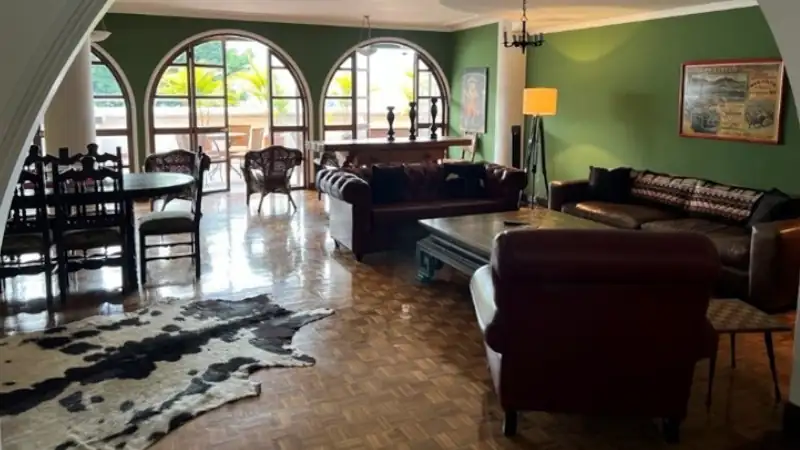
Finally, we wanted to add a bathroom to our house in Woodstock, Illinois, in time for a family visit this summer. Our granddaughters will be in residence for the country’s 250th birthday celebrations this July, their first-ever 4th Stateside.
Straightforward projects, we thought… but, ah, turned out, witches, all.
I’ll spare you the particulars. Bottom line, each project is taking longer, costing more, and causing greater brain damage than expected.
I’m not surprised. In my experience, this is how it goes.
I’ve lost count of how many renovations I’ve managed, but nearly every one has been long distance.
In 2002, Lief and I bought three apartments in Buenos Aires, all requiring complete renovation before they could be put up for rental. The work was handled by an architect contact in that city. We didn’t see the apartments until a year after the rehabs had been completed because they all rented quickly on annual leases.
The architect had sent pictures on a weekly basis to update us on the progress of work along the way. Material selections and furniture choices were agreed via email. The process was seamless and we were happy with the results, but I wouldn’t recommend the approach. We were lucky. You couldn’t count on a happy outcome this way.
Ideally, you should visit at least monthly during any renovation. At critical stages, you should be present weekly or daily. If you’re not living where the property is located, add travel costs to your rehab budget.
Here are 11 more things I wish someone had told me before I undertook my first renovation overseas…
1. Location Is Still King
As with any real estate purchase, location is the number-one priority. It’s the only attribute of the property that you can’t change, and it’s especially important with a restoration project, especially if you intend to rent the place. Renters will overlook a multitude of sins for a good location.
With a city property, for example, walkability should be a priority. You want a location that’s nearby to restaurants, cafés, grocery shopping, and home supplies. Both potential resale buyers and renters will appreciate the convenience and the ability to stay in the property without having to invest in a car.
2. Identify Your Potential Resale Buyer or Renter
As when investing in any property for rental, do your best to imagine who your renter might be from the start, before beginning the restoration work. If your renter will likely be a traveling executive, you’ll make different choices than if you think you might be renting to families with children or vacation-goers. The differences have implications for both the work you do and the location you pick.
3. Check the Structure
Verify that the house is structurally sound where it counts. Problems with the foundation or structural members or termite-damaged framing can be too expensive to make right. The perfect fixer-upper has a solid structure but horrible curb appeal—an overgrown yard, peeling paint, and broken windows, for example. These are nickel and dime items that, when addressed, change the eventual value dramatically.
4. Set Your Budget in Keeping with the Market
Before making a purchase, be sure that values in the neighborhood where you’re considering buying are in line with what you imagine for your restoration project in its finished condition. Say you want to buy a house for $50,000, invest another $50,000, then ultimately resell the property for $150,000 (a reasonable expectation for profit margin). Before committing to the purchase, make sure other homes in the neighborhood are selling in that price range.
When making an offer on a fixer-upper that you intend to resell, start by estimating the price you’ll eventually ask for the finished product at resale time. Then estimate the restoration costs (with help from local contractors if necessary). Add the total restoration costs to the purchase price to confirm that you’re below the eventual asking price you imagine.
A good rule of thumb is for your total investment (purchase price and renovation costs) to be at least 20% less than your imagined resale price. This means you could resell immediately upon completion of the renovation for a profit without having to wait for the market to appreciate if you decide you don’t want to.
5. Spend on Items That Produce a Return
It’s easy to overspend on non–value-adding items. A modern kitchen, granite or ceramic counters, painting, and updated bathrooms are worth the money. These are things that make a difference in photographs, which are key in attracting renters, and that usually add more value at resale time than you spend on them.
On the other hand, custom bookcases, high-end cabinetry, specialty hardware, and even a swimming pool—while nice upgrades—are expenditures that may not make sense depending on who you’re planning to target for rental. A beautiful gourmet kitchen can be worthwhile in a rental property in an upscale neighborhood of Panama City, Panama, but not in a town like Loja, Ecuador, where everyone has a maid who does the cooking.
Inevitably, you’ll invest in some little luxuries along these lines, things that matter to you and that will make the place comfortable for your use. But keep track of these indulgences to be sure they don’t erode your eventual return too dramatically.
6. As Much as Possible, Go Local for Materials and Methods
In the United States and Canada, wood is cheap and plentiful. This is true in some other countries, as well (Belize, for example), but not all. In most of Latin America, lumber is expensive and rarely used as a bulk building material. To keep costs down (and also to ensure a solid home), plan on using masonry. Save the wood for trim. Local craftsmen in Ecuador, for example, build kitchen cabinets out of brick and ceramic tile then finish with wooden doors.
Try not to be too directive until you’re familiar with how things are done locally. Each renovation project is a chance to learn new methods for construction. Fieldstone driveways, adobe and rammed-earth construction, and homemade clay tile roofs aren’t typical in the United States, but they’re the norm in many other countries, meaning these can be the most affordable options as well as the techniques local craftsmen are most familiar with.
7. Have All the Money You Need Before You Start the Work
Be sure you have the time and money to complete the project assuming it’s going to take longer and cost more than you’re projecting. It always does.
8. Vet the Contractor
Take the time to investigate his track record and reputation before committing. Your contract is only as good as the person with whom you enter into it. In addition, insist that your contractor present you with a detailed itemized bid based on the architectural plans that includes everything from window and door frames to iron railings and zinc-plated screws.
9. Invest in Plans
Don’t skimp on the architectural plans. You get what you pay for. We worked with one of the most expensive in Panama to draft the design for the house we built on this country’s Veraguas coast…
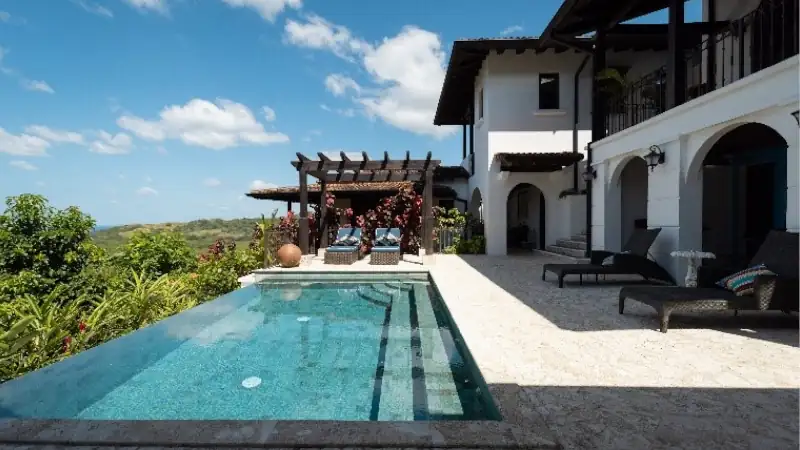
We could have saved a few thousand dollars at least by using someone else, but we’ve seen how wrong things can go when the plans aren’t fully thought-through and painstakingly detailed.
When working in a foreign country with workers of varying levels of experience and expertise, it’s a risk to leave anything open to interpretation. The crew on the ground has no choice but to improvise. We promise you that their improv will not meet your expectations.
10. Consider the Geography
If you’re building at the coast, remember the toll that sun and sea air take. For our house at the beach in Panama, Lief and I have used local hardwoods for finish details and treated the wood with wax, knowing that we’d have to reapply the wax finish often. It will be a constant part of the maintenance of the property.
We invested in oversized rain gutters because, during the rainy season in this part of this country, the rain falls in torrents, and we built in extra insulation beneath our red clay-tiled roof to help control air-conditioning costs.
11. Always Hold Back Partial Payment
Don’t pay in full up front for anything. You know this. It’s common sense. However, we’ve gotten into trouble when we’ve listened to workers’ hard-luck stories. Pay something to get the work in question under way, something more at agreed-upon progress benchmarks, and the final amount after all punch list items have been addressed. Don’t be tempted to compromise on that plan.
Until next time,

Kathleen Peddicord
Founding Publisher, Overseas Opportunity Letter