



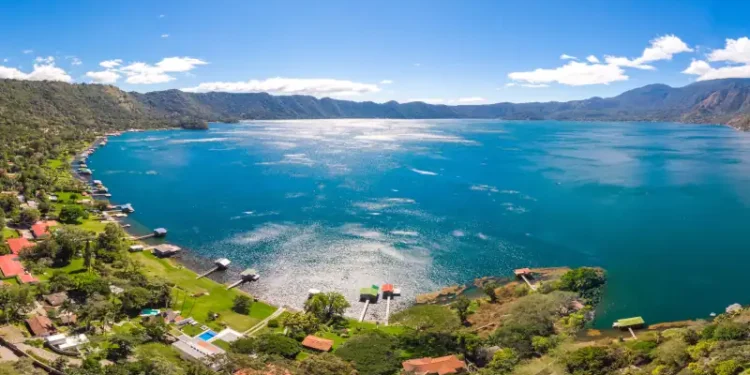
About the same size as New Jersey and wedged between Guatemala and Honduras, lies the smallest country in Central America: El Salvador.
Once famed for civil war, gang violence, and being the murder capital of the world, this little country’s fortunes have changed dramatically in recent years most notably since 2019 when businessman and one-time mayor of the country’s capital, San Salvador, Nayib Bukele, swept to power as president with 53% of the vote.
Bukele’s policy of mano dura—iron fist—drove an aggressive zero-tolerance policy on gang activity. Tens of thousands were jailed and today El Salvador is one of the safest countries in Latin America. The country’s homicide rate is 1.9 homicides per 100,000 people which is about on par with Canada. For the U.S., it’s 4.7 homicides per 100,000 people.
While his regime hasn’t been without controversy—something Bukele embraces, calling himself “the world’s coolest dictator”—he’s not going anywhere anytime soon. Still in his early 40s, he was re-elected in 2024 with more than 84% of the vote.
El Salvador offers lush landscapes, colonial charm, and modern cities. The climate is tropical, with warm temperatures year-round. English is widely spoken in business circles and expat neighborhoods. The cost of living is lower than in most of North America, and health care is accessible and improving—the $61.2 million state-of-the-art Hospital Nacional Rosales in the capital, San Salvador, was recently inaugurated.
El Salvador offers a number of residency options including a retirement visa, an independent means visa, a digital nomad visa, and a citizenship by investment program.
For retirees, the Pensionado Visa is the obvious choice. To qualify, applicants need to show a monthly pension of at least $1,100, though higher incomes are generally preferred.
To maintain the visa, holders are generally expected to spend at least 90 days per year in El Salvador.
Applicants must also provide proof of health insurance valid in El Salvador, clean criminal records from both El Salvador and their home country, and a local address for registration purposes.
While the Pensionado Visa is intended for retirees, holders are legally allowed to work or start a business if they wish, although additional registration or licensing may be required depending on the type of work or business.
The Pensionado Visa is granted for one year initially and, on renewal, for two years providing your residency obligations are maintained.
Stay diversified,

Lief Simon
Editor, Offshore Living Letter