



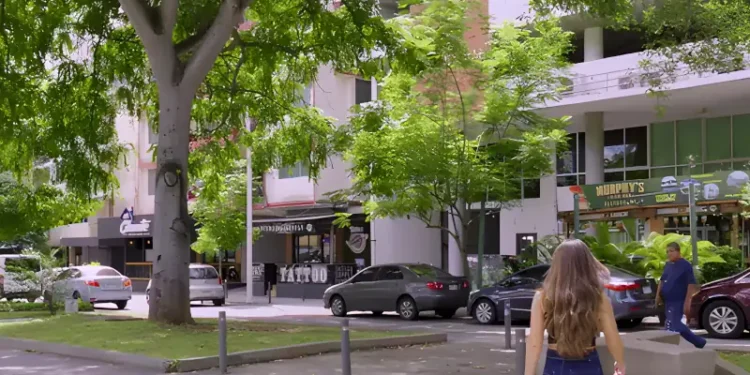
For anyone moving abroad, an area’s walkability is more than a nice perk. It is now—more than ever—an important factor in choosing where to live.
When you can walk to a café in the morning, go to a nearby grocery store, and meet friends for dinner nearby, all without a car, or just enjoy daily life on foot, it can exponentially change how a place feels.
For retirees, walkability means greater independence, especially over the long term. For younger families and remote workers, it can create a strong sense of community and healthier day-to-day life.
But Panama has a multitude of lifestyles in one little country, so walkability in each city, town, and neighborhood offers different things. A walkable neighborhood in Panama City is not the same as a walkable beach community or mountain town. Choosing your destination will depend on your priorities.
Panama remains a mostly car-dependent country, and you’ll need to consider your daily routines and needs. In many cases, sidewalks are not available or properly built, making it difficult for someone with mobility issues or families with strollers to use them. The humidity and heat in most of Panama can make you detest walking, and some communities that at first may appear walkable are actually very spread out.
All this said, Panama still has several areas where you can (mostly) manage without a car.
These are some of the best walkable communities in Panama for expats that seek convenience, closeness, and a small-town feel…
El Cangrejo, Panama City
A fan favorite among locals and expats, El Cangrejo is located in the heart of Panama City. This is a neighborhood for those who want to access the city’s conveniences without feeling trapped in a corporate environment.
This area has tree-lined streets, mostly mid-rise apartment buildings, cafés, bakeries, and small shops… giving the opportunity for residents to walk naturally. Most of the capital is car-oriented, but El Cangrejo prioritizes the pedestrian. Sidewalks are continuous and spacious, daily necessities are close together, and the density creates a vivid and active environment.
In El Cangrejo you will find pharmacies, gyms, coffee shops, convenience stores, restaurants, bars, salons, pet stores, clinics, and more all just in the same street or a few blocks from each other. By living here, you also have close access to the Metro system, which makes it possible to easily move around different parts of the city without driving.
The social aspect of the neighborhood is a big draw for people. It blends local Panamanian life with an international feel… you can notice by walking around that there is an interesting mix of cultures and lifestyles. Remote workers will enjoy the reliable internet, endless options for co-working settings, and easy access to services, compared to other popular but isolated destinations.
While living in El Cangrejo has plenty of pros, cons do exist. When you do want to use a car, traffic congestion can be intense. Noise levels can vary by street, but overall, it can be a noisy area. It’s still in Panama City, so walking can become difficult when it rains or humidity makes being outside unbearable.
Even with the tradeoffs, expats seeking a city lifestyle where having a car can be optional instead of necessary will find that El Cangrejo is a strong contender for where to set base.
Boquete, Chiriquí
Nestled in the highlands of the Chiriquí province, Boquete offers a community-oriented lifestyle in a compact mountain town center. You won’t find dense urban infrastructure… it’s more about the ease of daily life.
It’s home to some 25,000 people, over a fifth of whom are expats primarily from the U.S. and Canada, but a good number of Europeans, too. Living here you’ll never want for English-speaking company.
Boquete has a cooler climate than most regions of Panama, and this changes the walkability game immensely. Its springlike temperatures make walking a truly pleasant experience throughout most of the days, most of the year. Residents in town can stroll between cafés, restaurants, markets, and small shops while enjoying the surrounding mountains views and greenery.
Downtown Boquete is relatively small, allowing to run daily errands on foot. You can find restaurants, pharmacies, banks, grocery stores, and local markets concentrated within a manageable walking distance. The town regularly hosts farmers markets and community events that also encourage pedestrian activity and social interaction.
Boquete is perhaps the world’s best-known expat haven. The social component of life in Boquete has a big part in that. Residents are part of clubs, volunteer organizations, language exchanges, hiking groups, and more… and all these activities create opportunities to remain social without having to travel far.
This is an outdoor enthusiast paradise. Besides walking to get around daily life, walking here is also recreation. You can enjoy hiking trails, riverside paths, and mountain excursions, something that can’t be replicated in urban communities.
Boquete has its limitations. Downtown might be manageable on foot, but many homes and neighborhoods, especially those popular with expats, are located in the hills that surround the town. These are steep areas and can be all the way from 10 to 30 minutes away by car.
Basic health care is available in town, with various clinics and English-speaking doctors. But you’ll need to travel to David, about 40 minutes away, for the major hospital and specialists.
The large influx of expats and tourists have also risen prices. Boquete is no longer an ultra-cheap mountain destination, and housing prices have increased along with its popularity. Compared to prices in North America, it’s still a bargain for the lifestyle that it provides. Expats who are established here feel strongly that the quality of life, climate, and community justifies the higher costs.
If you’re someone seeking nature, comfort, and social connection, Boquete is one of the most appealing walkable communities in Panama.
Pedasí, Los Santos
Found in the Azuero Peninsula, this town has evolved over the past decade from a quiet fishing town into one of Panama’s best lifestyle destinations. Even though it’s growing in popularity, the town has preserved its laid-back character and small community feel.
When you enter Pedasí, the highway becomes the main street. It’s lined with row houses not typically found in Panama making for a tranquil, beautiful, and rather unique town.
Pedasi’s walkability comes from its compact scale. This is not a town built around gated communities and highways. The town center has a traditional plaza at its center, with restaurants, cafés, bakeries, small grocery stores, and local businesses located within a relatively short distance of one another.
You come here for a slow-paced life. Residents will walk or bike through town, and gather in the cafés, restaurants, and bars. You may even see some locals still traveling by horseback from time to time.
Another attractive feature of Pedasí beyond walkability is the beaches, of course. Surfing, fishing, whale watching, and island excursions are some of the activities that shape how you live here.
The social environment of Pedasí is more intimate and community oriented. You will start recognizing faces quickly and relationships can develop naturally because of shared routines and local events.
But while the center of town is walkable, some beaches and residential areas still require a vehicle. This is also a place where health care access is more limited than in the city or a town like Boquete. There is a small regional public hospital, but for major care you need to return to Chitré, or, better, to the private hospitals in Panama City. You could also drive to David in Chiriquí and receive care in one of the private hospitals there like Hospital Chiriquí or Centro Médico Mae Lewis.
Pedasí is a treasure in the raw for those who have fantasies of living on a tropical beach and can deal with the lack of infrastructure. The price you pay for seclusion and perfection is that it has not yet been entirely dragged into the 21st century.
But it seems that it is the carefree, tranquil life what most people love about living here.
Sincerely,