



I like eating in diners.
In the ’60’s I finished up high school, went to college, and secured my first professional theatre job. Eating in diners became my thing—sitting on a stool at the counter, figuring out what I could afford with limited pocket change, and striking up conversations with like-minded folks.
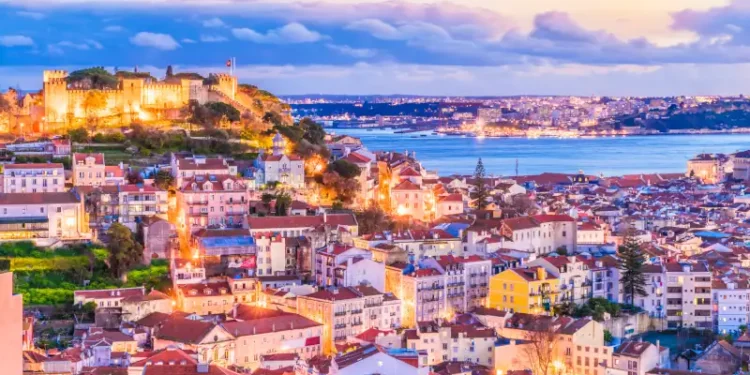
At the same time and across the Atlantic, Lisbon’s diner Galeto opened on Avenida da República—the main road connecting Humberto Delgado Airport with the city center.
Galeto caused quite a commotion. Lisboetas flocked to the huge snack bar, seduced by both the design—like a U.S. diner—and the menu, which was wildly innovative for Portugal in those days. You could say Galeto was a “Counter Culture Pioneer” in Portugal.
Locals were used to more conservative Portuguese fare. Suddenly they were introduced to breakfast items served until 12:30 p.m., club sandwiches, burgers, and even Brazilian Feijoada (black bean stew).
Eating at the long counters while perched on a fixed, comfy seat was quite different from sitting on a stool at an everyday tasca (traditional, family-run joints). Avant-garde décor, swift service, and long hours—Galeto was open from 7:30 a.m. until 3:00 a.m.—it felt like Lisbon was catching up with the dining habits in Europe or the U.S.
Actually, Galeto celebrated the culinary scene in Brazil. After developing successful restaurants in Rio de Janeiro, the founders—Portuguese immigrants to Brazil—decided to try something similar in their home country’s capital.
The new restaurant was named after their Rio restaurants’ most popular dish—the galeto—a small chicken grilled on charcoal. Italian immigrants brought the dish to Brazil. The six original founders imagined that galeto would be the signature dish of their new Lisbon restaurant and so named the restaurant Galeto.
But Lisboetas were more interested in the Bife à Galeto, a steak with an egg on top and surrounded by slices of ham and pickles served with a side of fries and esparregado (puréed spinach). The dish, named bitoque, was already popular in many Lisbon restaurants and tascas, so of course the owners included it on their menu. Bife à Galeto immediately became the best-selling menu item.
Initially the counter closest to the entrance faced the exposed grill that was meant for take-away chicken. In the ’60s, Lisboetas were not passionate about frango assado (grilled chicken) the way they are now. The owners quickly decided to change the layout. Galeto remained on the menu but no longer in sight.
When I first visited Portugal in 1979, Galeto was indeed the hotspot to visit. The Portuguese hosts of our State Department Tourism Trade Mission took us to dinner at Galeto after our first day of meetings in Lisbon. We walked the calçada sidewalks to the restaurant. Everyone was jovial, but my feet hurt. I foolishly wore fancy loafers all day.
Upon entering the restaurant the huge serpentine counter amazed me, as did the food. Our hosts pre-ordered the diner’s specialty, Bife à Galeto, and lots of bottles of wine.
Let me pause at this point in the story for an admission… I don’t eat eggs. I have avoided eggs since childhood. So I nonchalantly slid the egg off of my steak and guided it toward the edge of the plate. I figured I was discreet but our banking guru—a big, talkative guy from CitiCorp—offered to eat my egg. Our hosts never noticed. Embarrassing crisis averted.
Today chicken and steak are still on the menu. The most popular dish remains the Bife à Galeto made with a good sirloin, not an average cheap cut.
As I discovered in 1979 the counter is not the regular straight-line counter you might expect in a U.S. diner. It’s a zigzag of multiple counters, almost a maze, designed for clients to have a better experience and to facilitate conversation. How Portuguese is that
Owner Francisco Oliveira was 13 years old when Galeto opened in July 1966. He denies that he had a hand in Galeto’s success. He has worked at Galeto for about 10 years now. The original owner was his father, António Oliveira, who worked there until he died in 2016 at 78 years old.
Years ago the original six partners split up the businesses between Rio and Lisbon, with António taking control of Lisbon’s Galeto. Francisco inherited the objective of continuing the diner’s legacy. He is preserving its unique identity while making some structural renovations and equipment upgrades.
Lisbon’s City Hall classified Galeto as a Loja com História, a designation aimed at protecting historical shops and businesses. The architectural work of Victor Palla and Bento d’Almeida—a duo connected with the modernist movement in Portugal—is remarkable, from the winding counters to the wooden panels on the walls, and the black tiles with golden circles in the center.
Prior to Galeto, the pair had designed Lisbon’s Restaurante Noite e Dia (Night and Day). In the ’70’s they designed the diner-inspired interior of Confeitaria Cunha in Porto.
In the ’70s and ’80s, Galeto was a popular bohemian meeting place—actors, artists, musicians, and journalists congregated there. Galeto’s late night service was at a time when most other restaurants in Lisbon were closed. People looking for a bite to eat after going out to the movies or the theater frequented Galeto.
These days the clientele is still very diverse—from the prime minister to students and families with children.
Bife à Galeto and BrazilianFeijoada are still the two best-selling items of the diner. You will find other Portuguese dishes plus daily specials like grilled octopus or sea bass fillets. But specials don’t summon up fond memories of family excursions in the ’70s… or a Trade Mission dinner party the way the Bife à Galeto does. Galeto is still as much fun now as it was all those years ago. There are very few places in Lisbon where you can order breakfast until 12:30 p.m. or dinner into the wee hours.
Jeff and I have put Galeto on our bucket list for our next trip to Lisbon which is later this week for the Live And Invest In Portugal Conference. You might want to add it to your bucket list, too.
As we often exclaim in Portugal, “A vida é boa—Life is good.”
Sincerely
Joch Woodruff
Portugal Circle Liaison