


FREE 3-PART MASTERCLASS
Watch The Free 2027 Overseas Masterclass Today!
Simply enter your email address below and watch 3 unedited, on-demand streaming sessions with local lawyers & expat specialists.

What is infrastructure in Spain like? Spain’s train system is the most developed aspect; it’s one of the best in Western Europe.
Spain’s train system is the most developed aspect of its national infrastructure; it’s one of the best in Western Europe.
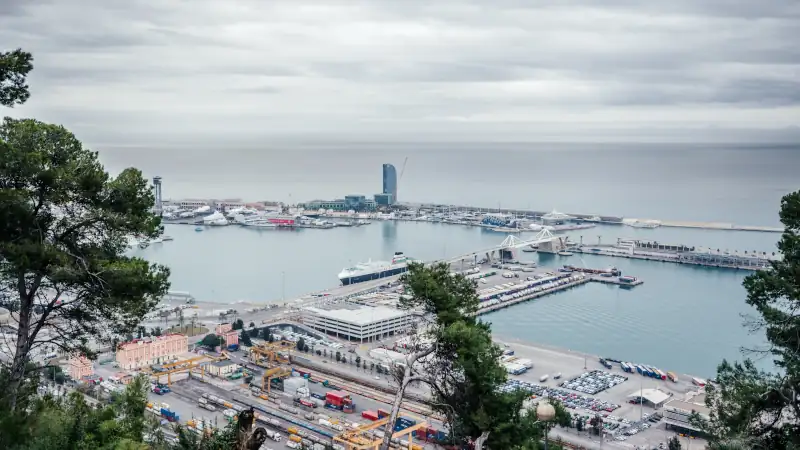
Spain also has highly developed coastal and maritime infrastructure, as the country’s economy depends heavily on merchant marine and fishing fleets.
Communications infrastructure is excellent, as in most of mainland Europe.
While Spain’s road system have nearly all been built since the 1980s, the roadways do not accommodate the current population and traffic is a problem throughout the country.
Right now, Spain is setting aside 468 million euros to make essential improvements on the upcoming rolling highway that will connect the country’s biggest port in Algeciras to Zaragoza.
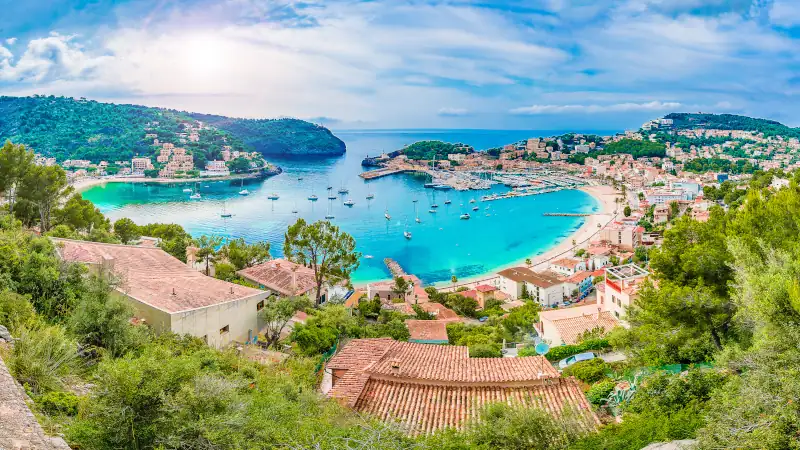
A huge advantage of living in Spain is the chance to explore Portugal, France, and beyond. Most importantly, with affordable prices.
Check live foreign currency exchange rates.
Whether by road, rail, or air, Spain’s infrastructure allows you to plan your European adventures easily, frequently, and affordably.
From Seville, you can be in the Algarve in less than two hours by car… From Barcelona, it’s just over two hours to the French Riviera.
The city of Madrid has high-speed train connections to 35 Spanish locations. In other words, approximately two-thirds of the Spanish population live within reach of a high-speed train station.
Plus, the Spanish high-speed network is constantly expanding.
For example, Madrid‑Murcia and Madrid‑Burgos sections were added in 2022.
The construction of the entire rail corridor from Almeria to the French border will be completed by 2025-2026, according to Spanish government estimates.
Spain is home to vibrant cities, coastal resorts on the Atlantic and Mediterranean, mountain retreats, and quiet country lifestyles.
Spain has a strong standing as one of the top ten countries in the world for having excellent infrastructures. For example, it has the largest high-speed train network in Europe, covering 3,000 kilometers.
Spain boasts the most extensive high-speed rail network in Europe, spanning over 3,000 kilometers. The Alta Velocidad Española (AVE) trains connect major cities like Madrid, Barcelona, Seville, and Valencia, reaching speeds up to 330 km/h (205 mph) .
Spain has one of Europe’s most robust digital infrastructures, with 95.2% fiber-to-the-premises coverage and 92.3% 5G coverage.
Spain’s public transportation includes high-speed trains (AVE), regional trains (Renfe), metro systems in major cities, buses, and trams. The Cercanías commuter trains efficiently connect suburban areas to city centers .
While Spain has invested significantly in renewable energy, the electricity grid has faced challenges. In April 2025, a major blackout affected Spain and Portugal, highlighting the need for further investment in grid resilience and infrastructure modernization.
Yes, Spain has a comprehensive network of highways and freeways, totaling over 17,000 kilometers. The country’s road infrastructure ranks among the top in Europe, facilitating efficient transportation across regions.
Spain has 50 airports, most offering direct international connections. Major airports like Madrid-Barajas and Barcelona-El Prat serve as key hubs for global travel.
Explore top living destinations, beach communities, highland havens, and city hubs across Spain.
Practical guidance for planning your life, move, retirement, property purchase, or investment in Spain.
I first dreamed of living in Europe during middle school and high school when my family hosted international exchange students from all over the…
Read InsightAI has no role at Live and Invest Overseas. Every time we allow AI into the conversation, we give up a little piece of your trust—and trust is the foundation of everything we do. Our strength is simple: real people speaking from real experience, in first person, telling real stories from the ground.
We will never publish AI-generated content. Not from ourselves, and not from anyone submitting to us. Our work is built on judgment, experience, trust, and what’s actually happening on the ground—not scraped summaries or recycled internet information.
When you read us, you’re reading lived experience. The stories, the insights, the perspective—that’s what AI can’t touch. And that’s exactly why we don’t use it.
Top Countries
Budgets
Resources
Real Estate
Conferences
Store
Free Report

© 2008 - Live and Invest Overseas - All Rights Reserved.