


FREE 3-PART MASTERCLASS
Watch The Free 2027 Overseas Masterclass Today!
Simply enter your email address below and watch 3 unedited, on-demand streaming sessions with local lawyers & expat specialists.

Infrastructure in Turkey is impressive for what is an emerging market, but will face challenges accommodating their exploding population.
Turkey’s infrastructure is impressive for what is still an emerging market. It faces some challenges accommodating their exploding population in coming years. However, Turkey’s infrastructure holds up against EU-member nations.
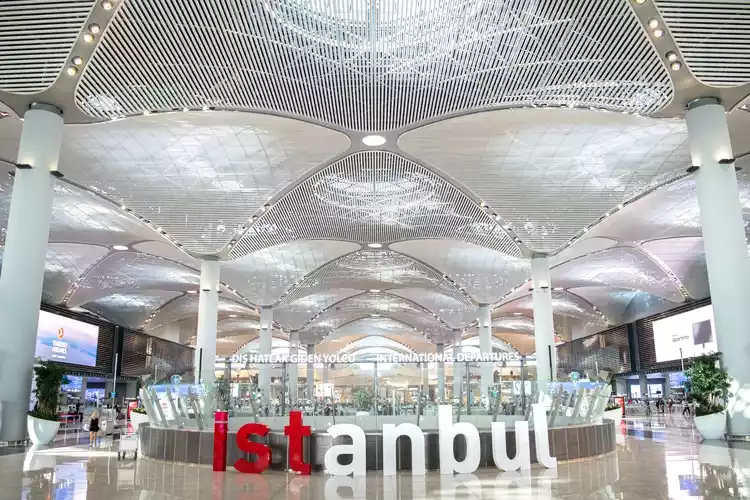
Turkey’s air infrastructure is well-developed throughout the country. For instance, the country has over 100 airports (about 20 of them are international).
As a result, Istanbul’s three major airports receive most of the country’s air traffic.
In 2013 Istanbul Atatürk Airport was named Airport Of The Year (Air Transport News) and Europe’s Best Airport (Skytrax World Airport Awards).
It also became the 10th most trafficked airport in the world, and the 5th busiest in Europe.
The trend in traffic through Istanbul is continuously on the rise; in 2014 Atatürk was the 4th busiest airport in Europe.
Turkey also has highly developed coastal and maritime infrastructure with 70% of its borders being coastline.
The country’s economy depends heavily on merchant marine and fishing fleets from its various surrounding seas.
Also, communications infrastructure is excellent, as is the national road system.
The national rail system is the least developed aspect of the country. You will find a bit of track laid throughout Turkey. But, only about one-fifth of it is electrified.
All the rails are state owned and operated. This makes improvement or expansion difficult.
In short, trains have been all but abandoned as modes of transportation in Turkey.
Istanbul is the largest city in Turkey, is the economic, cultural, and historical hub of the nation, and houses more than 14.4 million people.
Not surprisingly, much of the modern infrastructural innovation and improvement has been based in Istanbul, which now offers residents a metro, a tram, buses, ferries, taxis (both land and water), excellent roads and supporting traffic control infrastructure.
While interior regions of the country may not boast such outstanding infrastructure, major cities and coastal areas are well-serviced.
Check live foreign currency exchange rates here.
Yes, Turkey is a popular destination. Nearly 40 million people trek into the country annually. In 2023, 36.7 million tourists visited major cities and historic sites throughout Turkey—making it the sixth most visited place in the world.
Explore top living destinations, beach communities, highland havens, and city hubs across Turkey.
Practical guidance for planning your life, move, retirement, property purchase, or investment in Turkey.
Kathleen and I just came back from a scouting trip to Turkey, where we put boots on the ground to assess its lifestyle and…
Read InsightAI has no role at Live and Invest Overseas. Every time we allow AI into the conversation, we give up a little piece of your trust—and trust is the foundation of everything we do. Our strength is simple: real people speaking from real experience, in first person, telling real stories from the ground.
We will never publish AI-generated content. Not from ourselves, and not from anyone submitting to us. Our work is built on judgment, experience, trust, and what’s actually happening on the ground—not scraped summaries or recycled internet information.
When you read us, you’re reading lived experience. The stories, the insights, the perspective—that’s what AI can’t touch. And that’s exactly why we don’t use it.
Top Countries
Budgets
Resources
Real Estate
Conferences
Store
Free Report

© 2008 - Live and Invest Overseas - All Rights Reserved.