


FREE 3-PART MASTERCLASS
Watch The Free 2027 Overseas Masterclass Today!
Simply enter your email address below and watch 3 unedited, on-demand streaming sessions with local lawyers & expat specialists.


The Region of Abruzzo, Italy, is an affordable and overlooked part of the country. Great for cost of living, real estate buys, and more.
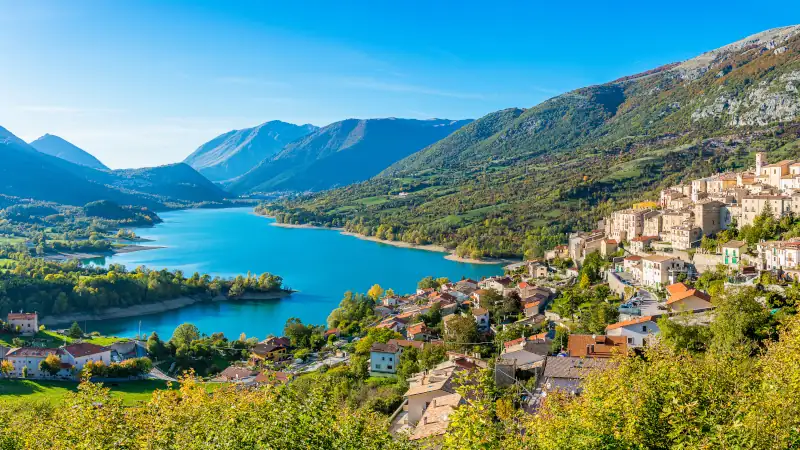
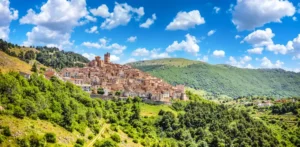
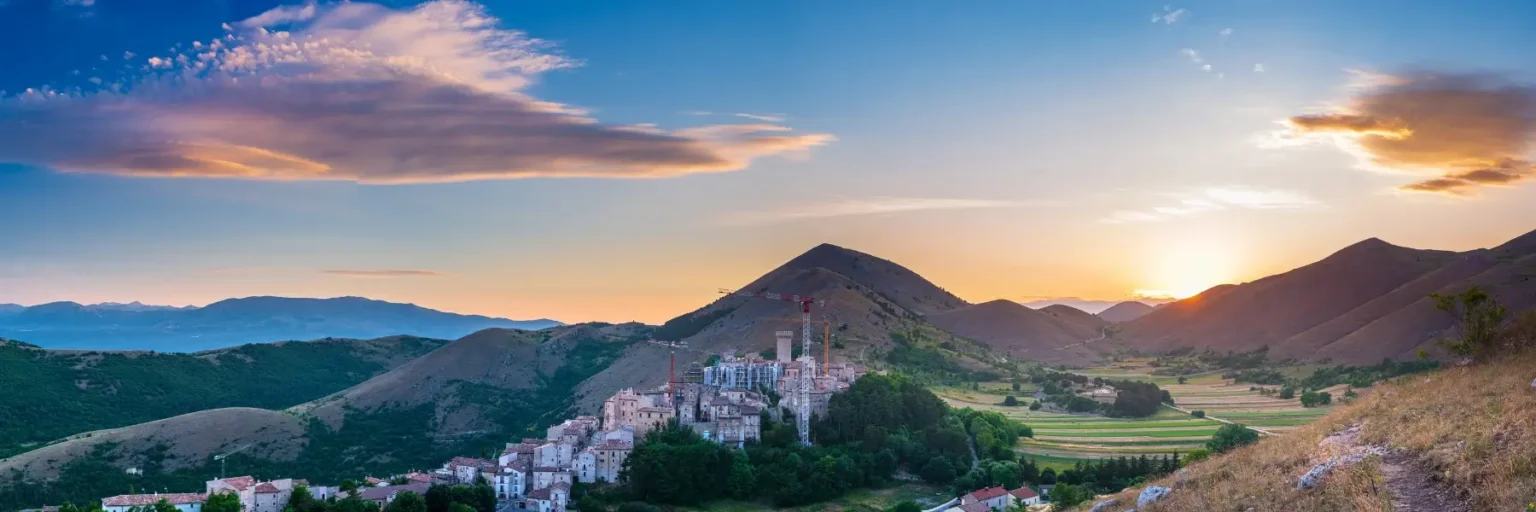
Abruzzo is a charming fairytale-looking region in Central Italy that’s mainly mountainous and overlooks the Adriatic Sea.
It begins to appear on the radar of travelers and expats due to the various recreational activities. From skiing and national parks to vineyards and UNESCO heritage sites.
Above all, it’s a place where you can explore the hilltops surrounding it and head down to the beach in the same day. Plus, it’s only two hours away from Rome.
For potential retirees and expats, the fact that a couple could live here for about US$1,200 is a huge sales point. No matter where you live in the States, this budget is likely half of what you pay right now.
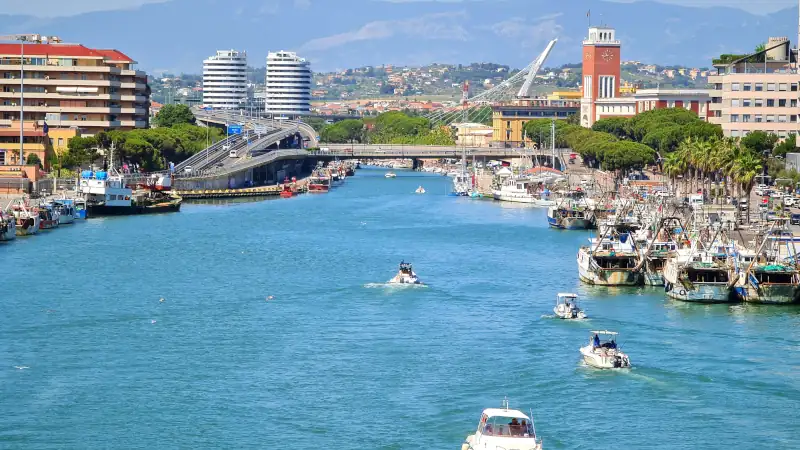
In the last decade, more foreigners have been settling down in Abruzzo. The towns of Casoli, Palombaro, Lanciano, Sulmona, and Penne have active English-speaking communities that are always ready to help newcomers and regularly organize get-togethers.
In the area around Avezzano, many international families have moved here to work for the big telecommunication companies in town. However, be prepared to pay more here—rent and property prices can be significantly higher in areas popular with expats.
Any expat based in Abruzzo will tell you that speaking Italian will make your life much easier. Even in the bigger cities, your chances of running into a local who will speak English with you are slim. Whether you’re shopping for groceries, dealing with your builder, visiting the doctor, or opening a bank account, expect all business to be conducted in Italian.
On the positive side, you’ll find plenty of good private teachers here who can help you to learn the language. Some town halls also run free Italian courses for foreigners.
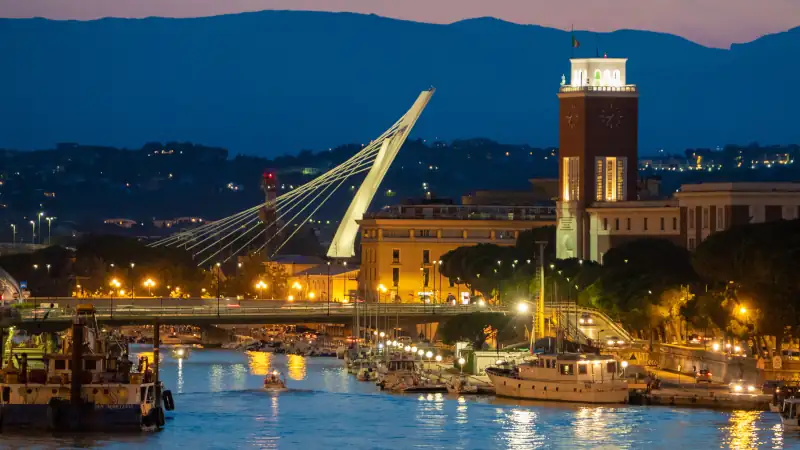
Abruzzo, Italy, is incredibly cheap by European standards. Rentals, groceries, transportation, and more can cost close to nothing.
Let’s look at rentals. In Abruzzo, you can rent a three-bedroom apartment in the city center for about €900 a month. That same three-bedroom apartment outside of the city center drops to €700.
So, if you’re a retiree and don’t need a large apartment, a one-bedroom apartment in the city center goes for €600 per month.
Want to make your rental costs even lower? Consider living outside of the city center: a one-bedroom apartment outside of the city center costs as little as €550 per month.
Your grocery budget will also be considerably lower than back in the States. Abruzzo, Italy, is a place where locals make pasta, wine, and olive oil, meaning these items are super affordable.
Above all, it comes down to what products you choose to buy: The more you trade imported goods for local ones, the lower your overall groceries cost will be…
A couple’s monthly budget for groceries could be as low as €300.
As for transportation, public services are dependable and affordable. For example, a bus ticket from Rome to towns in Abruzzo such as Pescara, Teramo, or Chieti is €10 to €14.
A train ride from Abruzzo to Venice will cost €43. If you enjoy walking, however, Abruzzo is an excellent place to get to know by foot plus, it’s free.
What are you looking for in your own search for a new home overseas? Tranquility? Like-minded people? Easy connections with European destinations? You can find all of this in Abruzzo. (On the other hand, if you prefer fast-paced, stressful city life, this is not the place.)
Get a clear breakdown of everyday expenses in Italy—including housing, utilities, groceries, transportation, and healthcare—so you can budget accurately before you make the move.

For a long time, Abruzzo remained isolated with poor transportation links to bigger cities and the rest of Europe. While rural areas are still notorious for poor public transport services, most parts of the regions are well connected.
Want to be near the main bus hubs, train stations, and the Abruzzo International Airport? Look toward Pescara—it has good train connections and numerous buses that will take you to major Italian cities.
Rome is four hours by train and just two-and-a-half hours by bus—only 20 euros for a return ticket. When you feel like a weekend escape, low-budget airlines fly to Milan, Turin, Catania, Brussels, Barcelona, Warsaw, Krakow, Düsseldorf, and London.
Smaller towns such as Sulmona, Tocco Da Casauria, and Torre de’ Passeri have frequent buses and trains to Rome. The main motorways cutting through the region are well maintained, and roads, in general, are in decent conditions (with some exceptions in the mountainous areas where landslides happen on a regular basis).
Abruzzo remains unblemished by mass tourism and major housing developments, so finding a place where you can wake up to the sound of birds chirping and spot deer grazing on a nearby meadow is easy.
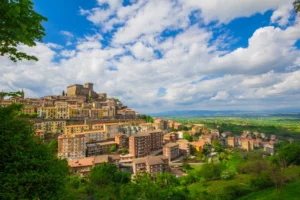
In the north and south, you’ll find scarcely populated areas with sleepy villages and farmhouses surrounded by acres of farm and olive groves.
The municipalities of Arsita, Bellante, Farindola, Villa Celiera, and Civitella Casanova are located near the majestic snow-capped mountain peaks of Gran Sasso and have vast stretches of unspoiled countryside, beautiful wildlife, and hiking trails.
Around here, you’ll need to embrace traditional living. Locals will want to know everything about you, give you advice on how to grow vegetables, and speak the dialect with you.
With castles and charming stone towns, Abruzzo has a very strong cultural presence in the lives of its locals. It’s also a place where you can go for a hike in the early morning and enjoy the sunset at the beach that same afternoon. Plus, if you’re a food lover, Abruzzo is known for its exquisite cuisine.
Here’s a list of things to do in Abruzzo, Italy…
Castle of Rocca Calascio sits at about 4,961 feet high in the province of L’Aquila in Abruzzo, Italy. However, what makes this castle unique is that it was built specifically for military purposes, it was never intended to house royals. In fact, it was meant to accommodate troops.
Its construction began in the 10th century, and though it was built with the military in mind as a defense and observation post.
Like the Castle of Rocca Calascio, the Stiffe Caves are also found in the province of L’Aquila.
This natural wonder is truly unique. These caves were formed by an underground river which re-emerged above ground.
The Stiffe Caves are one of the few examples of what’s known as a resurgence cave in Italy. Inside, visitors get to see waterfalls and rapid streams that’ll follow you during walking tour.
The Fountain of the 99 Water Spouts is one of the best known monuments in Abruzzi, Italy.
It was built over 700 years ago in the Piazza San Vito, in L’Aquila. Also, it features an irregular trapezoidal figure surrounded by carvings of men, women, and animals that spout water from their mouths.
The La Camosciara Natural Reserve is a large protected green area within the municipalities of Civitella Alfadena and Opi.
You can choose to either walk, bike, horseback ride, or ride the train to explore the park. The La Camosciara Natural Reserve has a large lake, waterfalls, and some wildlife.
If you love to ski or snowboard, Roccaraso is a great place to go.
Known as the Alto Sangro, this is one of the biggest ski areas in Abruzzo and in all of Italy. That’s 90 kilometers of slopes for you to go on. In other words, if you’ve never skied before, the Roccaraso Ski Resort has a ski school.
Roccaraso, in Abruzzo, is a good place to finally try skiing as you’ll have learning areas and English-speaking teachers available for you.
The Majella National Park is a 740 square kilometers zone, touching areas of Pescara, L’Aquila, and Chieti. Established in 1995, it was named a UNESCO Global Geopark in 2021.
The highest mountain within the park is Mount Amaro with an elevation of 9,163 feet.
Majella National Park has 500 kilometers of hiking trails for you. You’ll see cave paintings at Grotta Sant’Angelo and Grotta del Cavallone. Plus, check out the tourist centers dedicated to archaeological finds along with geology and fossils.
Whatever you decide to do while in Majella, remember that it’s a protected natural area. In short, there is wildlife present: Bears, wolves, eagles, and deer.
Get a practical overview of living in Italy—including lifestyle considerations, local routines, and what newcomers typically wish they knew before moving.
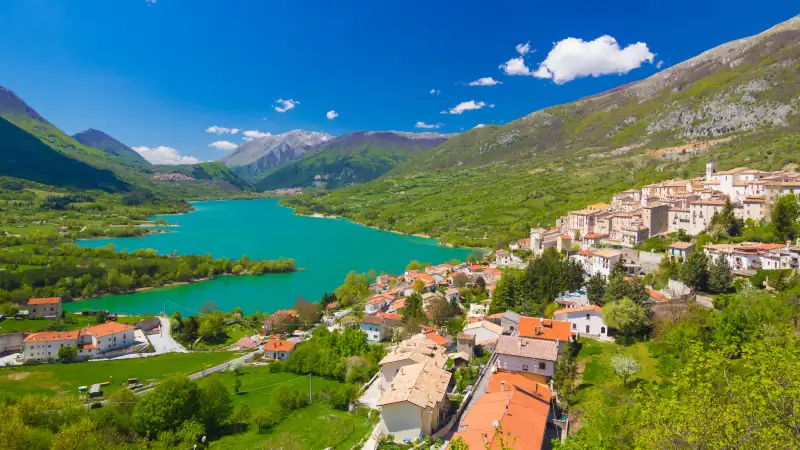
If you’re looking for a place to retire in Italy, Abruzzo is one of the best places you can choose. It’s unbelievably affordable, culturally rich, there’s diverse scenery, and your quality of life will improve greatly.
See what retirement can look like in Italy—including lifestyle considerations, practical planning tips, and what to expect as you explore your options.
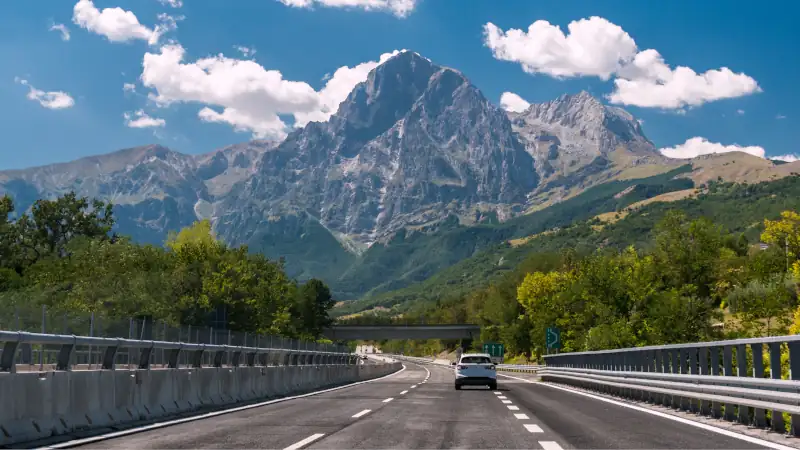
Moving to Abruzzo, Italy, might seem overwhelming, but it doesn’t have to be. Nor does it need to be all or nothing: If after you move something doesn’t seem right, you can always look back or try someplace new.
U.S. citizens need a visa to enter Italy if they intend to retire here called an Elective Residency Visa, Visto per Residenza Elettiva o Dimora. Apply for this visa at the Italian consulate in your state before traveling.
In short, the application process will take a while so we get started as soon as you can after making your decision.
See our full guide to Italy’s visas and residency options—so you can understand the main pathways, what typically qualifies you, and what to prepare before you apply.
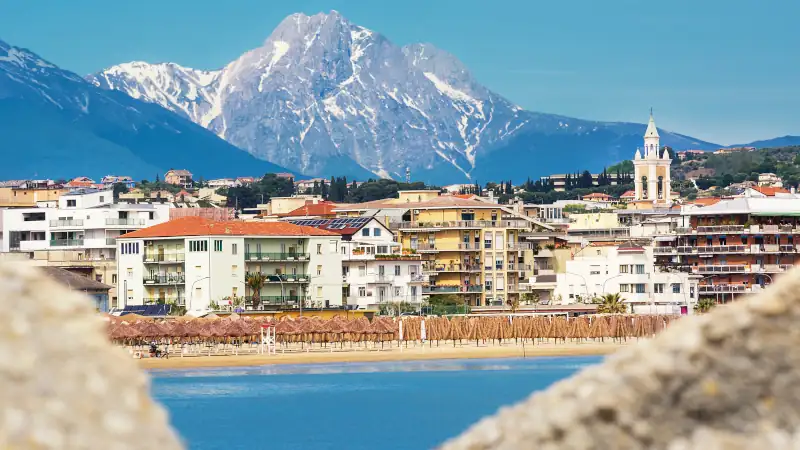
Abruzzo, Italy, has two distinct climates: Maritime and continental.
January is the coldest month in Abruzzo, Italy. That’s when the temperature can drop to 32°F. But, if you head down to the coast, the temperature will rarely drop lower than 46°F.
For instance, Abruzzo’s warmest months are June and July. In both the continental and maritime areas, the average temperature stays between 68°F and 75°F. On occasions the temperature can reach 86°F.
As long as you pack shorts and cotton tops for the summer and long sleeves, jeans, and a fluffy jacket for the winter, you’ll be able to fully enjoy Abruzzo, Italy.
Most importantly, winter in Abruzzo can be snowy and harsh in the mountains. For milder weather, look at the southern tip of the Chieti province.
The tranquil towns of San Buono, Scerni, Pollutri, and Furci are all within a 20- to 30-minute drive of the Adriatic coast—everyone has a small vineyard and snowfalls are rare here.
FREE 3-PART MASTERCLASS
Watch The Free 2027 Overseas Masterclass Today!
Simply enter your email address below and watch 3 unedited, on-demand streaming sessions with local lawyers & expat specialists.
We Value Your Privacy! We will not share your email address with anyone else, period.
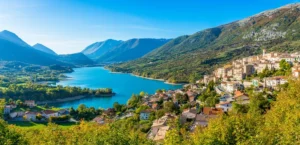
Abruzzo, Italy, is known as “the green lung of Europe.” It’s because of the three large national parks it has, one regional park, and the several natural reserves.
Depending on what you’re looking to do while in Abruzzo, the best time to visit can change. However, for the standard vacation trip to get outdoors and be adventurous, we recommend you visit sometime during late April to mid-May.
A couple could live in Abruzzo for about US$1,200 a month. This budget will vary depending on the lifestyle choices you make, but if you trade in a few more “luxurious” things, you can bring down your monthly budget considerably.
Yes. Abruzzo is about two hours from Rome.
Chances are you will find people who speak English in Abruzzo. However, we recommend you learn enough conversational Italian, if you do decide to retire here.
Explore top living destinations, beach communities, highland havens, and city hubs across Italy.
Practical guidance for planning your life, move, retirement, property purchase, or investment in Italy.
Official books, in-depth haven reports, conference home kits, and ongoing expert publications for Italy.
Italy home conference kit: Your ultimate guide to live, retire, and invest in Italy. Get 28 expert presentations…
Azure waters. Beaches speckled with colorful umbrellas. Breathtaking mountain views. In Italy, this description might bring to mind…
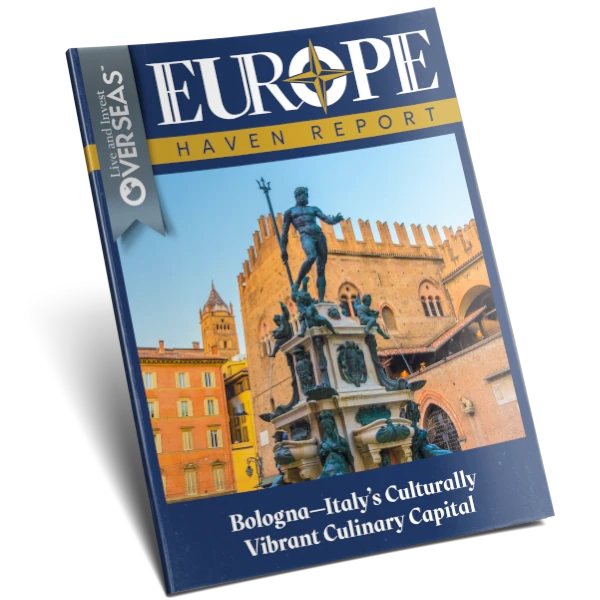
A surprising number of people know nothing about Bologna, Italy, beyond the food it’s so famous for: spaghetti…
Your complete guide to Milan—covering lifestyle, costs, property, healthcare, visas, and expat life in Italy’s fashion and financial…
Milan Italy expat lifestyle guide for retirement abroad. Discover the vibrant culture, cost of living, and healthcare. Buy…
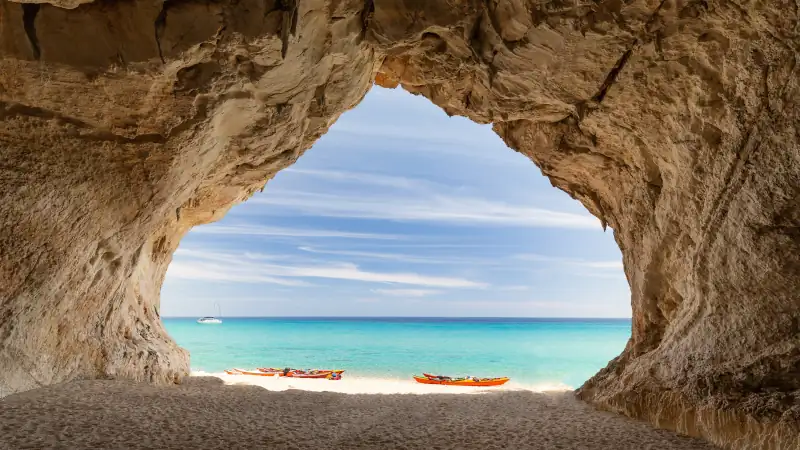
About 120 miles west of mainland Italy, in the Mediterranean Sea, lies the Italian island of Sardinia. Nestled underneath Corsica (a region of France),…
Read InsightAI has no role at Live and Invest Overseas. Every time we allow AI into the conversation, we give up a little piece of your trust—and trust is the foundation of everything we do. Our strength is simple: real people speaking from real experience, in first person, telling real stories from the ground.
We will never publish AI-generated content. Not from ourselves, and not from anyone submitting to us. Our work is built on judgment, experience, trust, and what’s actually happening on the ground—not scraped summaries or recycled internet information.
When you read us, you’re reading lived experience. The stories, the insights, the perspective—that’s what AI can’t touch. And that’s exactly why we don’t use it.
Top Countries
Budgets
Resources
Real Estate
Conferences
Store
Free Report
© 2008 - Live and Invest Overseas - All Rights Reserved.