































That is one way to look at it.
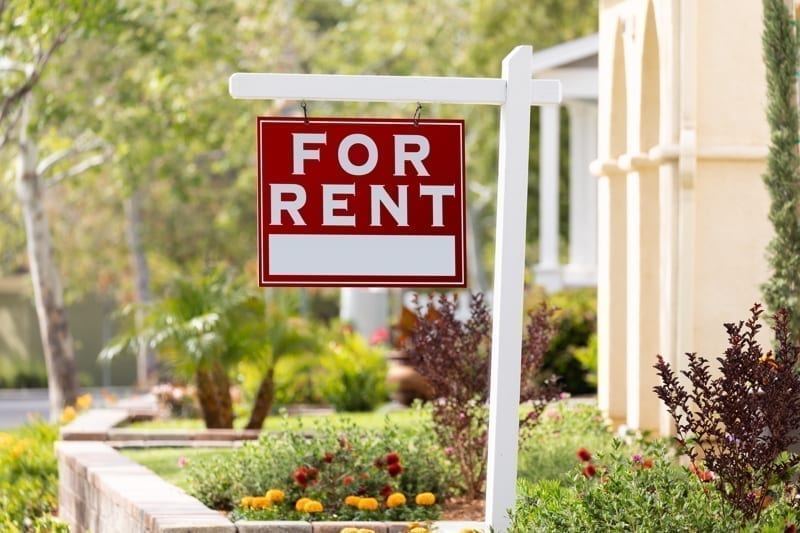
On the other hand, if you're into residential rentals in the States and in the States only, for example, the risks are not insignificant, given both the current market climate and the lack of portfolio diversification.
Over the years, many readers have told me similar stories. They had great portfolios of rental houses or apartments, they explain. All their properties were returning at breakeven cash flow or better. So they'd been systematically expanding their holdings within their target markets.
Then, in some cases seemingly overnight, the local market where they'd been investing shifted. Maybe the economy for the entire city turned, with jobs being lost and people moving away. Maybe the demand for local housing changed, with new neighborhoods opening up and fewer people wanting to be in the neighborhoods where the investors held their rentals.
The end of these stories is always the same. The investors lost everything, sometimes walking away from mortgages they could no longer cover. Once even just some of their rentals weren't occupied, they couldn't make their loan payments, setting off a domino effect that eventually affected their entire portfolios.
The fundamental problem is lack of diversification. All the holdings in each case were in single cities or regional markets. When bad times hit, the portfolios were wiped out. Even if these investors had diversified regionally within the United States, their portfolios overall could have been less at risk...at least until the recent U.S.-wide real estate market collapse.
On the commercial side, U.S. triple net lease properties are earning net yields between 6.5% and 8.5%. And you can find higher cap rates with lower quality locations. Of course, these kinds of property investments come with high costs of entry, with prices starting typically at around US$1 million. Even with bank financing you're looking at an investment of a couple of hundred thousand dollars. In addition, many of these properties are in what I consider risky locations. Sure, you may have a lease with a well-known national company, but that doesn't mean there's no risk of the business at your location closing. As many of these properties are purpose-built for a specific business, finding another one to take the space can take time.
I'm not saying you shouldn't include residential rentals or triple net lease properties in the States in your portfolio. These can still be good ways to earn respectable yields. What I am saying is that you shouldn't exclude international real estate from your portfolio because you think you'll net 1% or 2% less outside the States after transaction costs have been factored in.
Furthermore, remember the other side of your total return--potential capital gains, which can be dramatically greater in developing and emerging markets than you can expect them to be in the United States (especially right now).
Yes, transaction costs for real estate in many countries are higher than they are in the States. Leverage isn't available in most global markets (which can be a good thing in the long run in terms of risk but increases cash requirements). And you'll have to spend time and money traveling to the places where you invest (on the plus side, this is a chance to write off vacation expenses).
But you've got to keep the big picture in sight. The idea is to build your wealth in a manner that protects it long term.
International real estate can do that while also giving your family a layer of protection should things go south back home.
Lief Simon
Editor's Note: Lief Simon is Editor of Global Property Investor's Marketwatch, a global real estate investment service to guide you as you diversify your portfolio to include real property assets and reliable yields. Read more here.Continue Reading:
Read more...
June 17, 2011:
"Kathleen, I have applied for my pensionado visa in Panama and expect to receive it in the next month or so. In the meantime, establishing overseas financial contacts and putting financial arrangements in place is proving to be the more challenging piece.
"I believe that it is best to split up assets among various jurisdictions. To do this, I need help in these jurisdictions from various advisors. The difficult part of this is the ability (or inability) to get dependable references on these companies. I plan to attend your offshore conference this September in Panama City and hope to find the answers to these questions at that time.
"Time is awasting, and the provisions of the HIRE Act come into force Jan. 1, 2013. Anyone looking to do so needs to get their money out of the United States before then. This is particularly important for non-U.S. citizens (I'm Canadian).
"I look forward to your September conference."
--Mike G., Canada
Yes, diversification is key.
This will be one of the fundamental themes we'll focus on as part of the September event. Look forward to meeting you there.Continue Reading:
Read more...
-
What is the drive time from the nearest airport?
-
What is your access and right-of-way?
-
Is the property accessible year-round, including in the rainy (sometimes called the "winter") season?
-
Where is the nearest medical care facility? Nearest hospital?
-
Is there enough water and water pressure? Is there hot water?
-
What distance are you from day-to-day services (grocery stores, dry cleaners, pharmacies, banks, etc.)?
-
Will you need a car living in this place? Does your budget allow for a car?
-
What's included with the property? In Argentina and Panama, for example, when you buy a home, you buy bare, stripped walls and empty rooms--no lighting fixtures, no appliances.
-
Can you buy title insurance for the property from a reputable title insurance company?
If you're buying into a private development, also confirm:
-
How will security be provided?
-
Is there a building requirement? What is it? Does it fit with your retirement timeframe and plan?
-
What construction and design standards are in place? Zoning is almost non-existent in Latin America. If you're buying into a private development, you want building covenants.
-
What is the current, existing infrastructure? Understand what's planned but understand, as well, that you're buying only what you see. Promised infrastructure doesn't always materialize.
-
Likewise, understand what amenities exist and what amenities are promised but, again, recognize that you're buying only what exists. If there's no marina when you buy, there may never be a marina, no matter what the developer's brochures and watercolor renderings may indicate.
-
What are the plans for a Home Owner's Association? What will the monthly fees be? Are these enough to cover the developer's responsibilities? You don't want to pay high HOA fees, of course, but neither do you want to invest in a development where the developer has so underestimated his costs that the HOA fees don't cover them. The result can be that essential maintenance and services (for example, security) are reduced.
-
Is the development company financially sound? Do they have a track record? What else have they built?
If you're buying land with the intention of building your own home:
-
Will you be in the country during construction? If not, how will you manage the building process from thousands of miles away? Who will oversee the work for you?
-
What's your timeline and budget? What are your contingency plans if the project takes longer and costs more than you're planning? (It will. Take my word for it.)
If your plan is to live in the place only part of the year:
-
Who will look after the property while you're away? At what expense?
-
Will you be able to rent the place out while you're elsewhere? If you buy somewhere with a reliable rental trade, you could earn enough in rental income during the months you're living elsewhere to cover the property's annual carrying costs.
The markets of Latin America, the Caribbean, and Asia are unregulated. When it comes to the purchase of real estate, this is the Wild West. Anyone can be a property agent, and sometimes it will seem as though everyone is.
In places like Nicaragua, Panama, Ecuador, and the Dominican Republic, every guy you meet in a bar is going to try to sell you a house...or a beachfront lot. Assume that he's not a licensed agent. And don't take for granted that he owns or legally represents the piece of property in question.
Don't be scared off by this fact, simply accept it. Make no assumptions and take nothing on faith. You don't have the safety nets that you have when buying real estate in the United States, for example, nor the process checks and balances.
Your best defense is your own attorney. Engage one who speaks fluent English and who has experience helping foreign buyers navigate the local property purchase process. Don't use the attorney of the seller or the developer you're buying from. His attorney works for him. You want to find an independent attorney who works for you.
The best way to accomplish this is through expat referrals. Ask every expat you meet in any country where you're considering a real estate purchase if he's bought himself. If he has, who was his attorney? How did he find his attorney? And was he happy with his attorney's work?
In addition, invest in title insurance. It's available now most places where you'd want to buy. It's a safeguard that is well worth the cost (typically about 1% of the property purchase price). I recommend First American Title, www.firstam.com
Lief SimonContinue Reading:
Read more...
Oct. 29, 2010
"Kathleen, it is legal to own gold and real estate inside the U.S. That is, what's your point in making the point that it's legal also to own gold and real estate outside the States? I don't get it."
--John C., United States
Yes, of course, it is legal to own gold and real estate in the United States. It's also legal for someone to file a frivolous lawsuit against you in the United States and, as a result, to get a judgment against your gold and real estate...along with any other assets you hold inside the country.
Keeping all your assets in the States is, literally, keeping all your eggs in one basket. The risk is you could lose them all, to some silly lawsuit or even to the U.S. government (remember Roosevelt confiscated everyone's gold).
My point was (and is) that diversification is key to protecting your assets and, further, that it is not illegal (as, unfortunately, some fear) to do so.
These are the ideas and opportunities we'll address in detail, with the help of experts, at our upcoming Emergency Offshore Summit. Full details of the program we're planning are here.
***
"Kathleen, is there a way to get money from your retirement pension and pre-tax 401(k) moved to an account in another country, say, Belize, without paying the U.S. tax penalties for early withdrawal?"
--Steve H., United States
Yes. You can set up a self-directed IRA and invest the funds outside the United States without penalty. Again, this is an issue that we'll address fully during our Emergency Offshore Summit in December.Continue Reading
Read more...
----------
Dear Live and Invest Overseas Reader,
Every real estate market has layers and levels. You can buy at the local level, which generally means a sometimes much lower price but also lower quality and higher density. You can buy in the established part of town. You can buy in a new development. Or you can buy on the edge, way out in front of everyone...in the path of progress.
The Puerto Vallarta area where I'm scouting this week has all of these levels of opportunity, making it one of the few markets I know that qualifies as truly for everyone.
The real estate agent touring us around has helped us to get the lay of the land...
Immediately south of Puerto Vallarta has been developed over decades and is pretty much done from a new development point of view. However, a surge in land buying very far south by developers probably means a new round of construction in that region in the next few years.
Along this part of the coast, south of P.V., you find a wide range of high-end condos and multi-million-dollar houses overlooking the beach. The feel in this area is more residential, although resorts dot the coastline.
The Riviera Nayarit, the area that has my interest right now, lies north of P.V., just over the state border between the state of Jalisco (where you find Puerto Vallarta, the airport, and the cruise ship dock) and that of Nayarit. Crossing this border, you come first to Nueva Vallarta, a densely developed area of hotels and condos, golf courses, and a marina.
Past Nueva Vallarta, development density lessens. At Punta Mita, there's a Four Seasons resort and a number of villa and condo developments. We're staying in between Nueva Vallarta and Punta Mita, in La Cruz de Huanacaxtle, at a villa community called Vallarta Gardens. The property includes around 50 villas, several swimming pools, a clubhouse, and a restaurant. The units are built so you could rent out the entire house or individual rooms.
Past Punta Mita, development density lessens again. Of note is the town of Sayulita, a tourist destination that has managed to retain its "Old Mexico" charm. Lots of restaurants, small hotels, and B&Bs right on the beach. This is the kind of town that Americans have been coming to Mexico to find for decades.
The coast continues, beach after beach, bay after bay, to Playa de Tortugas and then on to San Blas, where the "Riviera" officially ends. It's a long stretch of the stuff that, as Will Rogers pointed out, nobody's making anymore of.
And the Mexican government has a plan to make it more accessible. They're intending to widen the road and to build a new international airport. Meantime, the governor of Nayarit has been working aggressively to promote tourism to his region's biggest asset. This year, he wooed a regatta that previously had been held in Acapulco. By offering incentives, he persuaded the regatta planners to hold their event in Nayarit instead.
In other words, the path of progress is heading north. And, because this market is so diverse, your options for positioning yourself to benefit are many. Go far north, and you're really ahead of the curve. Stay between Nueva Vallarta and Punta Mita, and you're in the current area of activity.
The variables to consider are proximity to P.V. town and the airport, age of construction, rentability, and, of course, cost. For what you could spend on a small condo on the water close to P.V., you could buy a villa with an ocean view about 30 to 60 minutes north.
I'll detail particular purchase opportunities at various price points for my Marketwatch members in the coming couple of weeks.
Meantime, the salient point for this market from an investment point of view is that, while tourism to Mexico fell off dramatically in 2009, it is up in 2010 and rising steadily.
However, even through the downturn, the hotels in Nueva Vallarta maintained their historically high occupancy rates. Again, I'll have particulars for my Marketwatch members, but, in my mind, Puerto Vallarta, especially certain areas of this wide and expanding market, is Mexico's most proven rentals market.
If you want to buy for yield, therefore (and, as I remind you often, this is the play to be making right now), P.V. is the place in Mexico to shop.
Beyond the investment angle, this area of Mexico, thanks to its beauty, accessibility, and interesting old town, is one of the few places I care to spend time in this country.
Lief SimonContinue Reading
Read more...
|