I'll let Lee take it from here:
"Comparing different retirement or investment destinations head-to-head is not only necessary, but fun and interesting, as well. It's the key to narrowing down your preferences among all of the world's choices. Both seasoned overseas buyers and novices benefit from this exercise.
"When I looked over our recently published top picks for 2012, two cities jumped out at me immediately from the Super Cheap category: Cuenca, Ecuador, and Granada, Nicaragua.
"I lived in Cuenca for years, own property in Granada, and have been to both of these cities in the past year. Throughout my visits to each, I couldn't help but draw comparisons. These cities line up naturally with one another, so, when comparing them, it's easiest to begin by looking at their similarities.
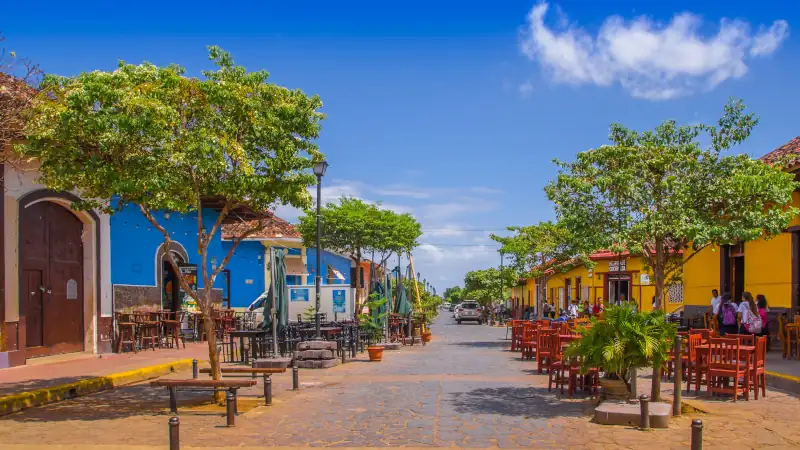
"Both Cuenca and Granada are beautiful and authentic Spanish-colonial cities, founded in the 1500s. In both cases the cost of living is about as low as you'll find anywhere. You can get by frugally on less than US$1,000 per month or live a comfortable lifestyle by North American standards for around US$1,500 a month or so.
"Real estate in both cities is well under the magic US$1,000 per square meter mark (US$93 per square foot), putting both these cities in 'bargain basement' territory. Transaction costs in both are low, as well.
"Both cities are in Third World countries, with all of the attendant institutional inefficiencies, corruption, and less-than-perfect infrastructure maintenance. But they also have low levels of government intrusion, low taxes, and few rules and regulations.
"Both Cuenca and Granada are home to sizeable, thriving expat communities of North Americans. There are far more expats in Cuenca than in smaller Granada, but I'd guess that the ratio of expats to locals is about the same in both places.
"Access to the United States is not bad from either city. Cuenca has a convenient international airport right in town, but virtually all flights to the United States connect through Quito or Guayaquil. Both these cities offer good connections to U.S. hubs, and flight time to Miami is just under four hours.
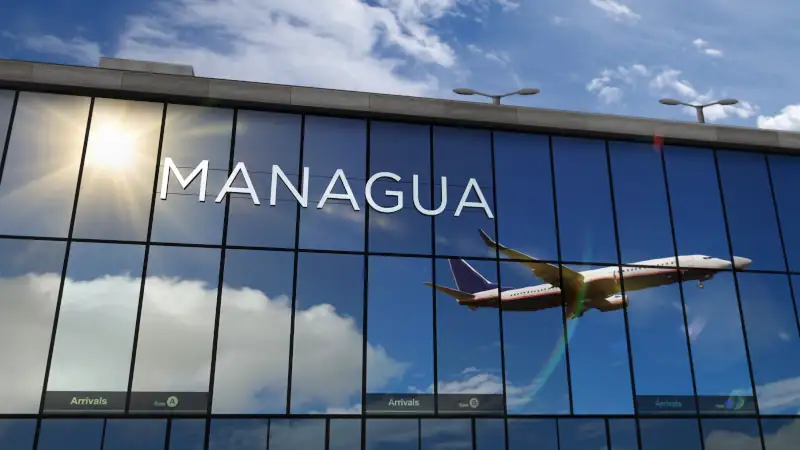
"Granada is served by the Managua airport, about one hour away, which also has good U.S. connections. Flight time from Managua to Miami is about two hours.
"Finally, residency is easy to establish in both countries, with low income and investment requirements.
"But that's where the similarities end.
"Cuenca is a large city of more than 400,000 people; more than four times the size of Granada. So Cuenca has the edge for big-city amenities, like theater, nightlife, and restaurants. It also has a new, upscale shopping mall and lots of modern health care facilities.
"Granada, by comparison, has more of a small-town, close-knit feel, where everyone seems to know everyone.
"Cuenca is located high in the Andes, at 8,200 feet above sea level (2,500 meters). So it offers spring-like weather, with highs rarely above the mid-70s and little seasonal variation. In five years of living in Cuenca, I can recall seeing 90° only once...and that spike broke a long-standing record. Granada, on the other hand, is warm all the time, with highs in the 80s to low 90s year-round.
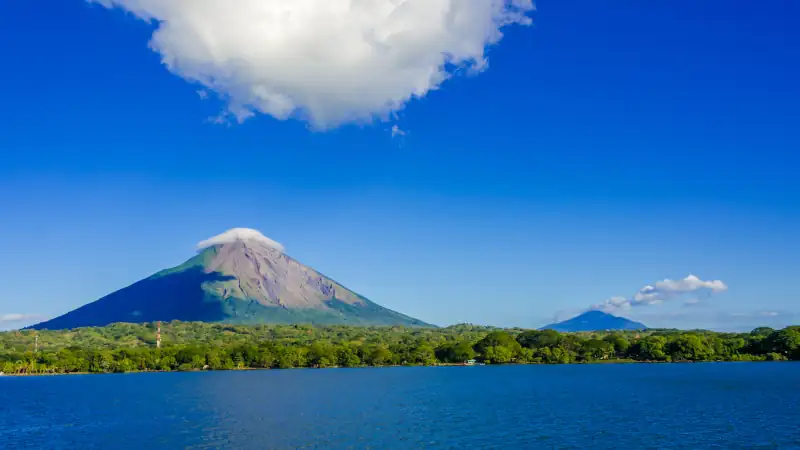
"Granada is on the shores of one of the world's largest lakes, meaning swimming and boating opportunities close at hand. You can even purchase your own private lake island. Nicaragua's Pacific beaches are less than two hours away.
"In Cuenca, the nearest beaches are almost three hours away, in Machala, and the nearest nice beach is over four hours away in Playas or Salinas.
"Shopping for real estate is a pleasure in both Cuenca and Granada, with lots of terrific homes available at reasonable prices. However, in my experience, each has its strengths when it comes to real estate.
"Granada is best for its amazing inventory of low-cost Spanish colonial homes. Their center courtyards are typically open-air and often contain swimming pools, something very unusual in Latin America. Also, the colonials in Granada tend to be fairly small, so they're great for one or two people, or a small family. To me, there's no better place to shop for this type of property.
"Cuenca has colonials, too, but they tend to be larger and expensive. Many are old homes for large families, 700 square meters or more...a lot for a retired single or couple to take on. On the other hand, Cuenca excels with its newer construction, offering a huge selection of modern condos at reasonable prices. So you can enjoy the Old World character of the historic center but live in a modern house or condo in First World comfort as near as a few blocks away.
"Comparing Cuenca and Granada, there's really no winner, as is the case with many city-pairs. The key is to understand your own priorities.
"I'd favor Granada to enjoy a traditional Spanish colonial home, in a smaller town with warm weather. I'd head to Cuenca for big-city amenities, cool, spring-like weather, and hundreds of modern housing choices.
"Either way, you're enjoying one of the finest colonial cities that Spanish America has to offer."
Kathleen PeddicordContinue Reading:
Read more...
In all these years traveling, living, and doing business around the world, a handful of countries have gotten under my skin. Nicaragua is one of them. From my first visit about two decades ago, this troubled country captured my imagination.
Nicaragua appeals to the romantic. It is a land of pirates and martyrs, heroes, warriors, and poets, fighting each in his way for what he believes. Leon is at the heart of many of the country's struggles, historically its quixotic center. As Correspondent Michael Paladin explains in his feature report on Nicaragua in this month's issue of my Overseas Retirement Letter.
"Leon is proud to be known as the place where the last of the Somoza dynasty finally ran out of bullets, bombs, and power in 1979. The red and black flag of the FSLN (Sandinista National Liberation Front) waves proudly over the monuments and the city hall, where, still, vendors hawk souvenirs of those valiant, bloody times..."
Geographically, Nicaragua is blessed, with two long coastlines and two big lakes, plus volcanoes, highlands, rain forest, and rivers. In this regard, it's got everything Costa Rica's got, all less discovered and developed and available for the adventurer and eco-traveler at bargain rates.
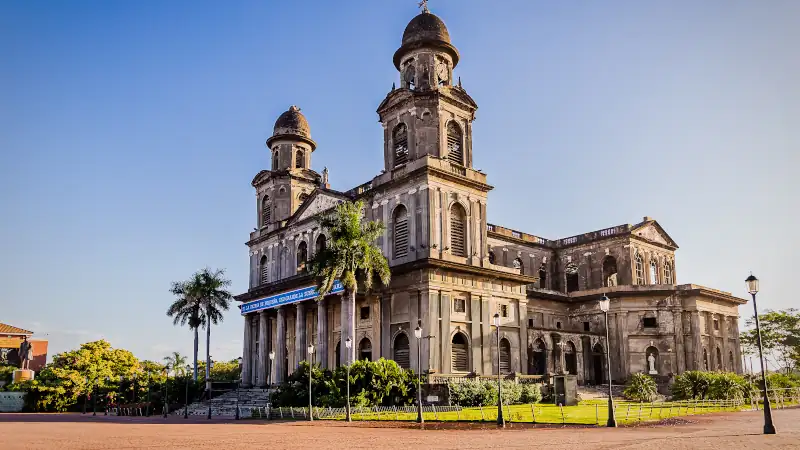
Architecturally, too, Nicaragua is notable. Its two sister colonial cities, Granada and Leon, vie for the title of Oldest City in the Americas. Whichever story you believe (that the Spanish conquistadores settled first on the shores of Lake Nicaragua at Granada or, perhaps, a few months earlier in Old Leon), Nicaragua is the big winner, with impressive colonial-era churches, public buildings, and parks to her credit.
Nicaragua is a colorful land, from its red clay-tiled roofs to its powder blue church steeples...from the yellow, green, red, and blue facades of its centuries-old haciendas to the pink and purple bougainvillea that cascades down its inland hillsides.
Perhaps, though, what struck me most that first visit 20 years ago and what has continued to draw me back to this country all these years since is the spirit of the Nicaraguan people.
My first visit, I met a young Nicaraguan man, maybe 20 or 22 years old. "When I was very small," he told me one afternoon, "the soldiers came for my family. It was the middle of the night. We were all asleep inside. The soldiers were in a pick-up truck. They stopped out front and came to the door. They woke us all up and told us that our house was needed for the revolution. In the name of the revolution, they told us, we had to get out.
"We all climbed into the back of their pick-up truck, and the soldiers drove us into the mountains. They left us there, my whole family. We had nothing with us. But my father made us a place to live...and we survived...
"That is our past," the young man told me in perfect English. "But it is not our future."
He had taught himself to speak English by watching American television ("mostly MTV," I remember him explaining).
Fast forward to today, and, unfortunately, Nicaragua continues to struggle politically. The civil war ended long ago, but ghosts from that era haunt still. Sandinista President Daniel Ortega, re-elected four-and-a-half years ago, says he's running again in the next presidential election, taking place this November. He's worked to adjust the country's constitution, which had disallowed a president to serve consecutive terms.
Again, still, investors are nervous. What if Sandinista Danny is re-elected yet again? Could it possibly make sense to consider an investment, or time or of money, in a country at risk of continuing at the mercy of this guy?
We're not fans of Ortega, and we were surprised when the Nicaraguans put him back at the command post in 2006. Rhetoric aside, though, he hasn't done anything to cause any real trouble. Michael Paladin has some further insights into Ortega's track record in his report in this month's ORL issue.
My take on Nicaragua at this point? Don't count it out. This is a land of potential, thanks to its abundant natural treasures and, mostly, its tested, battle-weary population.
I made my first property investment in Nicaragua about 16 years ago. I've made several others since. I continue to hold them all (true, the market in Nica is not very liquid at the moment...but I'm content in my position), and I'm open to investing further if the right deal comes along.
I'm with Nicaragua for the long haul. I hope that Michael's Overseas Retirement Letter review of three of its most interesting destinations will help you to understand why.
Kathleen Peddicord
Editor's Note: If you're an Overseas Retirement Letter subscriber, this month's issue should have landed in your e-mail in-box last week. If you're not yet an ORL subscriber, get on board here now.
Also, if you're an Overseas Retirement Circle member, remember that your monthly members-only Teleconference is taking place today at 1 o'clock Eastern Time. Live on the line will be Correspondent Michael Paladin and ORL Managing Editor Lucy Culpepper. This is your chance to ask your questions about Nicaragua directly of Michael and to listen to his behind-the-issue insights and travel tales. You should have received an e-mail containing instructions for how to dial into today's Teleconference. If you have not, or if you have questions about how to participate, please get in touch now with your VIP Member Director Karen Moseley. You can reach Karen here.
As always, the recording of today's Teleconference will be posted to your Overseas Retirement Circle members-only website following the call so you can access it for reference any time.Continue Reading:
Read more...
"Why? The mainstream press is catching on. MSN, the Lonely Planet Guidebook, U.S. News & World Reports, and other global press have been giving a lot of ink lately to this, the largest country in Central America.
"The yardstick of international popularity is the annual tourist count: In 2010, Nicaragua, for the first time ever, welcomed more than one-million visitors. By comparison, neighboring Costa Rica, the eco-tourism darling and longtime winner of this popularity contest, chalked up two-million tourists in 2010. While Costa Rica no longer makes sense as a retirement haven, its lack of political problems and strong pro-ecology marketing efforts have succeeded in keeping her in the eco- and adventure-travel spotlight for years.
"By contrast, Nicaragua has suffered serious bad press, dating back to the heavy-handed U.S. intervention during the 1900s, which finally ended with the signing of the peace accords in 1993.
"When the dust settled in Managua, after decades of battles between the FSLN (Sandinistas) and the remnants of the Somoza dynasty, the country was in dire condition. A major earthquake in 1972 leveled vast portions of the capital, which are only now being restored. This, accompanied by the siphoning off of great amounts of aid money and other treasure looted by the parting Somoza regime, doomed the new victors to working with an empty wallet and few sponsors. Facing the armed might and massive amounts of foreign aid given to the Contras by the Reagan administration, the Sandinistas welcomed the help offered by the Soviet Union, Cuba, and Venezuela. It was either that or give up on the revolution that had started with the assassination, in 1934, of Augusto Cesar Sandino, their iconic martyr.
"Sandino, labeled a bandit by the United States for his actions fighting a guerilla war against U.S. Marines between 1927 and 1933, was assassinated on the orders of General Anastasio Somoza Garcia, who seized power two years later. Nicaragua became a Somoza family fiefdom for the next 40 years.
"León, one-time capital of Nicaragua and long-standing liberal city, is credited as the epicenter of the rise of revulsion and revolt against Somoza's control. The unrest, a result of decades of presidential looting, peaked with the assassination of General Somoza in a restaurant in the city of León in 1956--by a poet disguised as a waiter.
"Somoza's sons, Luis followed by his namesake, Anastasio ('Tacho'), went on to drive the country over a cliff. Following their diversion of foreign aid, after the 6.3 quake in 1972, underground and nascent political groups coalesced and organized as the Frente Sandinista Liberación Nacional (FSLN). The university students of León took up the banner of the fallen martyr, Sandino. Armed with makeshift weapons, Molotov cocktails, and one battered armored vehicle, the FSLN withstood the onslaught of bombs--and suffered outright devastation of several cities--by the regime's National Guard. Their fight continued until the signing of the accords in 1993.
"Today, the image of an insouciant Sandino adorns many a T-shirt, coffee cup, and even a city wall. In Managua a newly built high-rise shows his outline in red neon, with his slouch hat at a jaunty angle, jodhpurs, high-top boots, and all. Hollywood or Madison Avenue couldn't have created a better image than this murdered martyr with his Indiana Jones floppy hat, crossover gun belt, and raised eyebrow of a hopeful but skeptical patriot.
"After the decades of war, devastation, and internecine political fighting, the people of this country are tired. After watching their neighboring countries grow, progress, and finally obtain a measure of peace and stability, the Nicaraguans are more than ready for their share of the good life. Give them a decent wage, a chance of education for their children, something more than the ever-present gallo pinto (rice and beans), and perhaps the Nicas will stop resenting the Ticas (the Costa Ricans next-door with all the goodies.
"Their semi-perennial President Daniel Ortega Saavedra is running again for office. Yes, he's barred by the Constitution for another term. And, yes, perhaps he did pay groups recently to spray graffiti on Managua's walls that read, 'Viva Daniel.' But perhaps, as well, Danny isn't all bad.
"Multi-national corporations have voted and taken up office space in the capital, and some roads, finally, are being repaired. Meantime, Claro, one of the in-country data network companies, has scattered its ubiquitous four-foot, tomato-red satellite dishes from one end of the country to the other.
"Information is the key to approval by the masses in this day and age, and Señor Ortega has given his country full access. The World Bank and International Monetary Fund are happy with his efforts to control inflation and moderate the economy. Yes, the CIA World Fact Book remarks that he accepts 'off -budget loans' from Chavez of Venezuela, but, bottom line, the country is working, tourists are coming, new and favorable residency laws for retirees are in place, and the sun is shining (though Ortega can't really take credit for that last one).
"Still, the country is the poorest in Central America and the second poorest in the Western Hemisphere. The literacy rates were dramatically raised when the Sandinistas first came to power but are still below 70% of a total population approaching six million. Unemployment, and the enigmatic metric 'underemployment,' are at 10% and 50% of the working population, respectively.
"Nicaragua today offers three appealing and dramatically differing choices for the potential retiree: the country's tourist jewel Granada; San Juan del Sur, one of the best surfing destinations in the region; and Leon, still off the beaten path but perhaps most interesting of all..."
Michael details the pluses and the minuses, the attractions and the limitations of each of these thin-sliced retire-overseas choices in his full report on retirement in Nicaragua in this month's issue of my Overseas Retirement Letter.
If you're a subscriber, your issue should have landed in your in-box yesterday. If you're not, get on board here now.
Kathleen PeddicordContinue Reading:
Read more...
April 19, 2011:
"Kathleen, I just read your US News article on Yahoo! I have been a subscriber of yours in the past.
"I am always amazed that you never seem to find Bolivia, particularly Santa Cruz de la Sierra. A wonderful place where I've lived in for years, much cheaper than any of the places you mention in this article. And life here is very good indeed. A taxi to almost anywhere in a vibrant city of 2 million costs about US$1, a bus ('micro') is about 17 cents. A full-time maid makes US$100 to US$125/month.
"Medical care is very good and extremely inexpensive. Prescription drugs don't take a prescription and, again, are very inexpensive. Food is incredibly good. I can fill a wheelbarrow at the market (pushed around by a boy for about 50 cents) with fresh fruits and vegetables for less than US$1. The price of gasoline, gas, and electricity are subsidized and cheap. Hard to beat!"
--Steven B., BoliviaContinue Reading:
Read more...
|