Next-Level Panama
I hosted my first Panama conference in 2001. I’ve hosted events in this country every year since. After two-and-a-half decades...
Live Better Overseas
for Less Than You Think
Enter your email to get your FREE guide instantly!
🔒 We respect your privacy. Unsubscribe anytime.
Home » The Best Countries to Live & Invest Overseas: Country Guide Hub » Nicaragua » Health Care in Nicaragua
Quality Health Care in Nicaragua
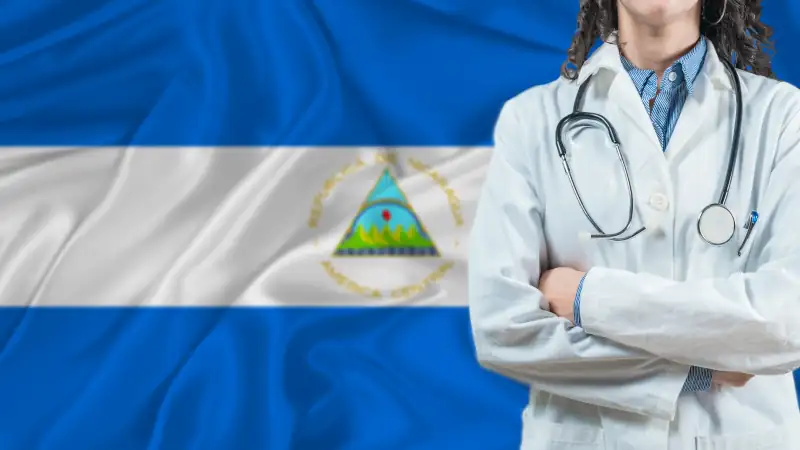
The health care system in Nicaragua is, as elsewhere in the region, a two-tier system consisting a wide network of public hospitals that would be considered substandard in the United States or Canada and private, for-profit facilities that are — in many cases — on par with those you would be accustomed to back home.
Most importantly, the level of service will depend largely on your location (better in the major cities than in smaller towns and rural areas), but the overall quality of the care is excellent, and comes at a fraction of the cost of what one would pay in the States.
Reviewed By Lief Simon
Lief Simon is the managing editor of Global Property Advisor, Simon Letter, and Offshore Living Letter. He has purchased more than 45 properties, investing in 23 different countries around the world.
Start Your New Overseas Life Today
A world full of fun, adventure, and profit awaits! Sign up for our free daily e-letter, Overseas Opportunity Letter, and we’ll send you a FREE report on the 12 Best Places To Retire Overseas In 2026
We Value Your Privacy! We will not share your email address with anyone else, period.
Many of the physicians in Nicaragua have medical degrees from schools in the United States, Mexico, Europe or Cuba and most of those in the major cities will speak English. Outside of the major cities and at public facilities, however, doctors and their staff may not be as likely to speak English.
An office visit to a general practitioner will generally cost about US$20, and only cash will be accepted. It’s not unusual for patients to have the cell phone or home numbers of their physicians and for the latter to make themselves available for consultation at just about any time.
The U.S. embassy maintains a list of recommended physicians who speak English around the country with their contact information.
Pharmacies are abundant in Nicaragua, primarily because they tend to the first option for lower-income people seeking medical care who cannot afford doctors’ fees.
Consequently, pharmacists take on a more substantial role in health care and are usually able to diagnose and recommend treatment for everyday maladies.
Prescriptions for most medications are not necessary, except in the case of narcotics.
Arriving in the country with a substantial supply of any medication, can raise eyebrows at customs and they have been known to confiscate the medication.
Make sure you travel with doctor’s orders, and have those orders translated into Spanish and notarized if you want to be absolutely certain you get it out of the airport.
Just about any medication available in the United States and Europe will be available in Nicaragua, and even some that are not approved by the FDA.
Often they will be generic equivalents, however, and be known by their scientific name instead of a brand name. And, they will also cost a fraction of what they cost in the United States — sometimes 20% of the U.S. price.
Each department in Nicaragua will typically have at least one public hospital, along with several clinics. Public hospitals do not charge for emergency services, but patients will be expected to pay for medications and supplies. In addition, there are private hospitals in the major cities such as Managua, Granada, and Leon.
The new Vivian Pellas Metropolitan hospital in Managua (opened in 2004) is considered the best and most modern such facility in Central America and accredited by the U.S.-based Joint Commission International Accreditation organization for its high standards for quality and service.
The hospital is open 24 hours a day and employs specialists in gynecology, cardiology, orthopedics, pediatric, internal medicine, neurology, urology, and ophthalmology. It also has a pain clinic, pharmacy, a maternity ward, laboratories, a burn center, and is planning to build cardiac and kidney centers.
Other notable private hospitals in Managua include the Salud Integral facility and the Bautista hospital.
Dentists are even more abundant in Nicaragua than physicians and many, again, have been trained abroad. In the major cities, they are more than likely to speak
English and charge a fraction of what one would pay in the United States or Canada. They will perform all sorts of services, including cosmetic work.
The Social Security Medicare program does not cover treatment in countries other than the United States and many health insurance policies do not provide coverage overseas either, so new residents are advised to inquire about local policies or sign up for one that specifically covers long-term foreign residents.
Some foreign residents of Nicaragua opt to “self-insure” and skip the high-priced international policies altogether in favor of local plans.
One option, for example, is the coverage offered by local hospitals themselves. The Pellas hospital offers two reasonably priced prepaid plans that offer substantial discounts on already inexpensive medical services for both emergency and standard hospitalization procedures.
Reviewed By Lief Simon
Lief Simon is the managing editor of Global Property Advisor, Simon Letter, and Offshore Living Letter. He has purchased more than 45 properties, investing in 23 different countries around the world.
Start Your New Overseas Life Today
A world full of fun, adventure, and profit awaits! Sign up for our free daily e-letter, Overseas Opportunity Letter, and we’ll send you a FREE report on the 12 Best Places To Retire Overseas In 2026
We Value Your Privacy! We will not share your email address with anyone else, period.
Emergency medical services in Nicaragua are generally free at public hospitals, while private health care requires payment. For instance, private hospitals often ask for cash payment upfront.
On the other hand, not knowing Spanish can make things harder for you.
I hosted my first Panama conference in 2001. I’ve hosted events in this country every year since. After two-and-a-half decades...
For anyone moving abroad, an area’s walkability is more than a nice perk… it’s an important factor in choosing where...
How do you know when you’ve found paradise? This question isn’t easy to answer, and responses vary person to person… For residents of Los Islotes, paradise...
Out of the hundreds of emails we get from readers every day, at least a dozen are to do with...

We Value Your Privacy! We will not share your email address with anyone else, period.
As seen in
Top Countries
Budgets
Affordable
Resources
Real Estate
Overseas Property Alert
How To Become Independently Wealthy And Fund The Lifestyle Of Your Dreams
Buying Real Estate For Cashflow
Discover tips and strategies used by global property investing veterans
Explore Our Latest Posts
Learn how to invest and purchase property abroad…
Conferences
2026 Live And Invest In Mexico Online Workshop
2026 Live And Invest In France Conference
2026 Offshore Wealth Summit
Contact Our Events Team:
Toll-Free U.S. and Canada:
1 (888) 627 8834
From Outside North America:
1 (443) 599 1221
Working Hours
Monday – Friday 08:00 am – 17:00 pm EST.
Reach us with your questions by email at: events@liveandinvestoverseas.com
Store
Overseas Havens Reports
Conference Kits
Lahardan Books
Services
Free Report
FREE Report
The 12 Best Places to Retire Overseas in 2026
Simply sign up for our FREE daily Overseas Opportunity Letter, and we’ll immediately email you our editors’ latest research report… absolutely FREE
We Value Your Privacy! We will not share your email address with anyone else, period.
Follow Us:
© 2008 - Live and Invest Overseas - All Rights Reserved.
From the desk of Kathleen Peddicord
Founding Publisher, Live and Invest Overseas