


FREE 3-PART MASTERCLASS
Watch The Free 2027 Portugal Masterclass Today!
Simply enter your email address below and watch 3 unedited, on-demand streaming sessions with local lawyers & expat specialists.

Find all you need to retire in Coimbra, Portugal including budgets for house ownership, rental, and even a penny pincher budget.

Coimbra is the capital city of the district bearing the same name and although it has a lot going on, it retains a relaxed pace.
Famous for its university, one of the oldest in the world, the city of students, as Coimbra is known in Portugal, has several qualities that make it the perfect fit for many expats.
As one of the oldest cities in Portugal, Coimbra comes with its own set of monuments and unique cultural traits, like a specific type of Fado (a Portuguese music genre).
If you’re considering Portugal as a possible destination for living, investing, or both, then there’s a strong possibility you’ve already done some research.
And, if Lisbon and Porto are too big for what you need, but you can’t picture yourself living in a tiny village, then Coimbra, one of the most important cities in Central Portugal, may be the spot for you.
The Mondego River, with its source in the hills of Serra da Estrela (to the east), runs through the city before reaching the sea in Figueira da Foz, about an hour’s drive from Coimbra.
Add to this the natural buzz of the university and the students, and you get a fertile ground for exhibitions, concerts, and culture in general.
And there’s more…
Coimbra’s central location on the Portuguese map makes it an ideal location if you plan on exploring the country either for leisure or for work.
–Kat Kalashian wrote:
“Positioned gracefully along the Mondego River in Central Portugal, Coimbra represents the intellectual and historical cradle of the Portuguese nation. As the country’s former medieval capital and home to the University of Coimbra—founded in 1290, making it one of the oldest continuously operating universities in the world—the city seamlessly merges academic prestige with everyday warmth.
“Crowning the highest hill of the historic center, the university complex includes the breathtaking Biblioteca Joanina, a baroque masterpiece completed in 1728 that houses over 70,000 rare volumes guarded by a colony of bats that preserve the ancient leather bindings from insects. In the cobblestone streets below, university students wearing traditional black capes (*capa e batina*) hurry between classes, creating an atmosphere that feels remarkably timeless.
“For retirees and expatriates, Coimbra offers the ‘Golden Mean’ of Portuguese living: with roughly 140,000 residents, it provides all the cosmopolitan amenities, cultural venues, and hospital networks of a major regional capital, but at living and housing costs that run 30% below Lisbon and 20% below Porto.”

Coimbra enjoys a privileged location more or less halfway between Lisbon (122 miles or 197 kms away) and Porto (72 miles or 116 kms away), both of which have international airports.
In terms of public transport, buses and trains are available. Not only do they serve the city and surrounding areas, but they
also connect Coimbra to other cities and towns in Portugal.
The city has two train stations, Coimbra (also known as Coimbra-A, Coimbracidade, or “Estação Nova”) and Coimbra-B. These serve the suburban areas around the city but also connect Coimbra to other parts of the country, via high-speed, regional, and intercity trains.
Getting around most of Coimbra can easily be done without a car, although it depends on what you need to do. Getting a car will prove useful for day trips, but parking in the city can be complicated, especially in the historical center.
One option worth trying is parking across the river, in the Santa Clara neighborhood, and then making the rest of the way on foot. Bear in mind that, like so many cities and towns in Portugal, Coimbra has its share of hills. Taxis and Uber are also available.
Right now, the city is working on the implementation of the Metrobus, a fully electric urban transportation system that will also have a dedicated channel. This will connect Coimbra to the neighboring municipalities of Lousã and Miranda do
Corvo, covering a total of 26 miles (42 kms) with 41 stops.
An added 7 miles (11 kms) of dedicated bike lanes are also in the works. These will be additions to the already existing bike lanes, most of which can be found along the margins of the Mondego River.
See our full guide to Portugal’s visas and residency options—so you can understand the main pathways, what typically qualifies you, and what to prepare before you apply.

| Expense | Monthly Costs | Notes |
|---|---|---|
| Mortgage | 3% to 4% | It’s difficult to get a mortgage unless you deposit comparable funds in a Portuguese bank account. |
| HOA Fees | €50 | Average cost, depending on the unit size and value as well as property amenities. |
| Property Taxes | €37.5 | About €450 annually. This price can have significant changes, depending on location. |
| Transportation | €63 | New cars range from €14,000 and up. Extensive coverage car insurance ranges from €500 per year (for a new car) and up. |
| Gas | €31 | For cooking and water heater. |
| Electricity | €100 | Based on a simulation. Electricity used for cooking, plus air conditioning, and heating in each room. House built between 1996 and 2000 (please note many modern buildings have electric blinds). Final value will also depend on the energetic efficiency of household appliances. |
| Water | €21 | Please note the water cost is not all the same across the country. |
| Cell Phone | – | Included with cable package. |
| Internet | – | Included with cable package. |
| Cable TV | €61 | |
| Household Help | €60 | For bi-monthly, four-hour visits. The standard rate is €7 per hour. |
| Entertainment | €300 | Eating out twice a week at a mid-range, local restaurant: €80 to €90. Local drinks twice a week in a local bar: €20 (€10 to €15 for a bottle of wine; €2 for a beer; €7 to 10€ for a cocktail). Movie theater trip twice a month: €36 (€6.50 each for seniors, plus snacks). |
| Groceries | €200 | The final value can have a big variation depending on where you usually do your shopping. |
| Gym Membership | €33 | Monthly membership at Go Gym Coimbra, allowing free access to a total of 10 different group classes. |
| Medical Appointment | €50 – €81 | Dental cleaning at Clínica Delille is €50 (without insurance). Private GP visit at Hospital CUF Coimbra is €81 (without insurance). National Health System charges tax only on visits (€4,50) and basic tests (upwards from €10). However, no dental or specialist services are available at the local health center. |
| TOTAL | €1,006.50 – €1,037.50 |
| Expense | Monthly Costs | Notes |
|---|---|---|
| Rent | €650 | Cost of an apartment (70 square meters, two-bed/two-bath roughly) in a desirable location. |
| Transportation | €63 | New cars range from €14,000 and up. Extensive coverage car insurance ranges from €500 per year (for a new car) and up. |
| Gas | €31 | For cooking and water heater. |
| Electricity | €100 | Based on a simulation. Electricity used for cooking, plus air conditioning and heating in each room. House built between 1996 and 2000 (please note many modern buildings have electric blinds). Final value will also depend on the energetic efficiency of household appliances. |
| Water | €21 | Please note the water cost is not all the same across the country. |
| Cell Phone | – | Included with cable package. |
| Internet | – | Included with cable package. |
| Cable TV | €61 | |
| Household Help | €60 | For bi-monthly, four-hour visits. The standard rate is €7 per hour. |
| Entertainment | €300 | Eating out twice a week at a mid-range, local restaurant: €80 to €90. Local drinks twice a week in a local bar: €20 (€10 to €15 for a bottle of wine; €2 for a beer; €7 to 10€ for a cocktail). Movie theater trip twice a month: €36 (€6.50 each for seniors, plus snacks). |
| Groceries | €200 | The final value can have a big variation depending on where you usually do your shopping. |
| Gym Membership | €33 | Monthly membership at Go Gym Coimbra, allowing free access to a total of 10 different group classes. |
| Medical Appointment | €50 – €81 | Dental cleaning at Clínica Delille is €50 (without insurance). Private GP visit at Hospital CUF Coimbra is €81 (without insurance). National Health System charges tax only on visits (€4,50) and basic tests (upwards from €10). However, no dental or specialist services are available at the local health center. |
| TOTAL | €1,569 – €1,600 |
| Expense | Monthly Costs | Notes |
|---|---|---|
| Rent | €500 | Cost of an apartment (one-bed/one-bath) in the cheapest part of town. |
| Transportation | €12 – €35 | €12 for the monthly bus ticket for the senior population (65+). €35 for the monthly bus and train ticket. |
| Gas | €31 | For cooking and water heater. |
| Electricity | €100 | Based on a simulation. Electricity used for cooking, plus air conditioning and heating in each room. House built between 1996 and 2000 (please note many modern buildings have electric blinds). Final value will also depend on the energetic efficiency of household appliances. |
| Water | €21 | Please note the water cost is not all the same across the country. |
| Cell Phone | €7.99 | Cell phone service for one phone with a pre-existing number with MEO. |
| Internet | €26.99 | Stand-alone internet fee (only available where fiber optic service is in place with MEO). Where no fiber optic service exists, a landline must be added for an additional €12.49 per month. |
| Cable TV | €34.99 | Most basic TV package with MEO. |
| Entertainment | €150 | Eating out twice a week at a mid-range, local restaurant. Lunch on weekdays is usually the cheapest option in local restaurants. |
| Groceries | €150 | All local-brand items only, shopping at markets and grocery stores. |
| TOTAL | €1,033.97 – €1,056.97 |
The city enjoys a privileged location more or less halfway between Lisbon (122 miles or 197 kms away) and Porto (72 miles or 116 kms away), both of which have international airports.
There’s two train stations which serve the suburban areas around the city and also connect Coimbra to other parts of the country, via high-speed, regional, and intercity trains.
Getting around most of Coimbra can easily be done without a car, although it depends on what you need to do. Getting a car will prove useful for day trips, but parking in the city can be complicated, especially in the historical center.
One option worth trying is parking across the river, in the Santa Clara neighborhood, and then making the rest of the way on foot.
Bear in mind that, like so many cities and towns in Portugal, Coimbra has its share of hills.
Taxis and Uber are also available.
Compared to Lisbon and Porto, Coimbra offers cheaper property, but some require serious renovation.
Walking around the city streets, you can easily notice a mix of styles, a natural consequence of the expansion of the city. For example, a two-story building from the late 19th century next to a four-story one from the 1950s.
Although some neighborhoods tend to be more expensive than others, the price range isn’t much different. The downtown and historical center are the most expensive and sought-after areas.
As a guide, you can rent a two-bedroom, one-bathroom apartment starting from 500 euros a month but, when looking for properties, remember the university and its students…
The academic year ends around May, which makes June and July an appropriate time to start a lease. Around late summer and early autumn, you can expect prices to go up (especially for rentals) because students will be looking for accommodation for the next year.
To rent a property, you need to sign a tenancy agreement (contrato de arrendamento). For that, you need to have a Portuguese fiscal number (Número de Identificação Fiscal, often abbreviated as NIF).
The contract must include specific elements like how much the rent is, the length of the lease, how much notice you must give before moving out, details about the property, and which conditions apply for breaking the rental contract.
The duration and expiry dates of a fixed-term contract must also be clearly stated in the document. In most cases, landlords do not ask for references.
–LIOS Editorial Team wrote:
“While international real estate headlines focus overwhelmingly on Lisbon, Porto, and the Algarve, savvy lifestyle investors look closely at Coimbra’s unique property dynamics. With over 25,000 university students—including a large and growing international student cohort—residential demand for rental apartments in central neighborhoods like Alta, Baixa, and Santa Clara remains extraordinarily steady.
“Unlike coastal resort markets that fluctuate wildly with summer tourism, Coimbra operates on structured 10-month academic lease cycles followed by summer language school and academic conference demand. Multi-bedroom apartments renovated for student co-living consistently generate gross yields of 6% to 8%, well above the 3% to 4% yields typical in Lisbon.
“Entry pricing in Coimbra remains accessible: modern two-bedroom apartments and characterful historic townhouses sell for €1,800 to €2,500 per square meter, allowing purchasers to secure prime riverfront or hillside property at a fraction of metropolitan prices.”
Get a clear breakdown of everyday expenses in Portugal—including housing, utilities, groceries, transportation, and healthcare—so you can budget accurately before you make the move.
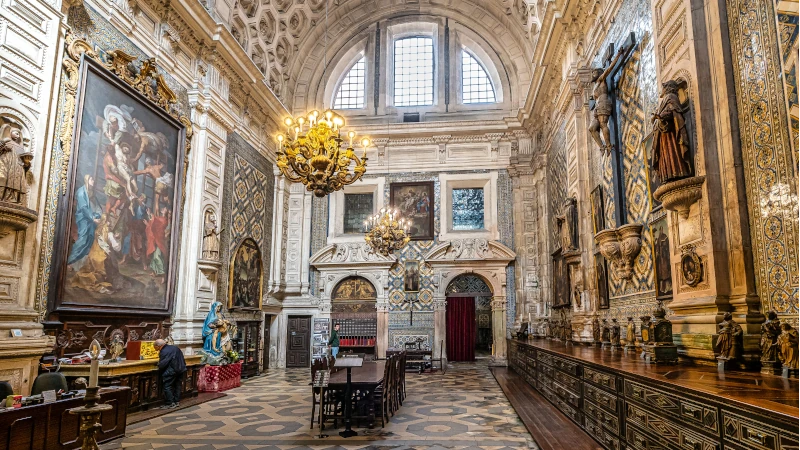
Although smaller than other cities, Coimbra offers quite a selection of activities. From exhibitions to concerts or outdoor events, there’s always something to do.
As you might expect, Coimbra has several museums. The most notable of them is the Machado de Castro National Museum. Aside from its impressive
selection of art, the building itself is a piece of living history, as the foundations are the remains of a Roman forum (and yes, you can visit them). The terrace overlooking part of the old city is the cherry on top.
Thanks to the university and its students, Coimbra has for centuries been a place where you can find food and drink from several parts of the country.
This is also one of the main reasons why you have both modern restaurants and traditional hole-in-the-wall places for snacks and light meals, with the
appropriate price range reflected in the final bill.
Rectangular-shaped pastries known as pastéis de Tentúgal (the name of a village near Coimbra) are popular here. These traditional sweets, filled with an
egg yolk and almond cream wrapped in a thin, crumbly dough, will satisfy your sweet tooth.
Like in any Portuguese city, you’ll have plenty of cafés and small shops to choose from in Coimbra. There’s also several shopping centers, retail parks, hypermarkets, and movie theatres.
One of the positives about living in Portugal is easy access to fresh produce, often straight from the farmer. The Mercado Municipal D. Pedro V is Coimbra’s main market, where you’ll find not only fruit and vegetables but also locally made products like cheese, smoked sausages, and bread.
–Kathleen Peddicord wrote:
“Coimbra is steeped in romantic folklore, none more famous than the tragic 14th-century love affair between Prince Pedro and noblewoman Inês de Castro. Today, visitors and residents can stroll through the romantic 12-hectare botanical gardens of Quinta das Lágrimas, where natural freshwater springs—the Fountain of Love and Fountain of Tears—commemorate their historic romance.
“Equally distinctive is Coimbra’s musical soul: unlike the melancholy fado of Lisbon sung by women in dark shawls, *Fado de Coimbra* is an exclusively male serenade tradition performed by university students and alumni wearing black capes. Sung in the open air beneath church arches and along riverfront terraces, these acoustic ballads express romantic devotion and student nostalgia with soaring vocal power.
“Crossing the pedestrian Pedro e Inês bridge over the Mondego, residents enjoy extensive green riverfront parks (Parque Verde do Mondego), riverside cafés, canoeing clubs, and scenic footpaths that make daily life in Coimbra feel deeply peaceful and grounded.”
Get a practical overview of living in Portugal—including lifestyle considerations, local routines, and what newcomers typically wish they knew before moving.
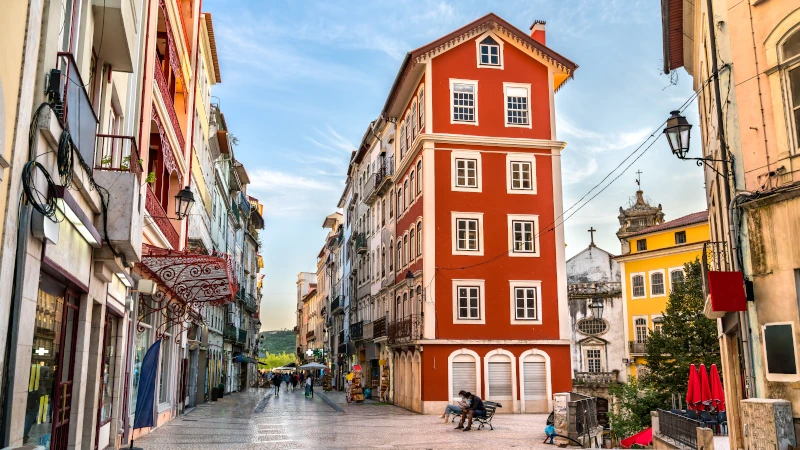
Like in any Portuguese city, you’ll have plenty of cafés and small shops to choose from in Coimbra, some more traditional than others.
If you can’t imagine retirement without a shopping center, you’ll be glad to know Coimbra has several of them, along with two retail parks. Expect to find shops for both Portuguese and international brands, as well as restaurants, hypermarkets, and movie theatres.
You’ll also find all the major supermarket chains common throughout Portugal: Lidl, Pingo Doce, Intermarché, Aldi, and Continente. SuperCor carries many high-end and gourmet products as well.
Decoration and home-improvement shops are also available. If you’re looking for traditional crafts or independent stores, make sure to check out the city’s downtown.
One of the positives about retiring in Portugal is easy access to fresh produce, often straight from the farmer. The Mercado Municipal D. Pedro V is Coimbra’s main market, but on every 7th and 23rd day of the month, you also have the old open-air market of Feira dos 7 e dos 23.
In these markets, you’ll find not only fruits and vegetables but also locally made products like cheese, smoked sausages, and bread. Organic products are also available (at Verdejar and Bioescolha, for example), and you can even get them delivered.
In most cases, hiring a cleaner will cost around €7 per hour. The hourly price goes up if the work needed is particularly challenging. Some companies provide this type of service, but most people prefer to ask for references from friends and neighbors.
Like so many places in Portugal, Coimbra comes with hills. The good news is that most of the uphill and downhill areas are in the historical center. The more recent parts of the city tend to be flatter and have wide sidewalks.
Older buildings tend not to have elevators. If you have limited mobility, be extra careful when looking for properties.
Learning Portuguese is always worth it, even if most people in the country have a satisfactory level of English, especially the younger generations.
Most civil servants and health care workers will be able to communicate in English, but it’s important to keep reasonable expectations.
Coimbra has several language schools where you can learn Portuguese in different modalities (in a group, one-on-one, etc.). Another option is to join one of the Portuguese-as-a-foreign-language courses at Coimbra University. Technically, you’d be learning at one of the oldest universities in the world—how cool is that?
See what retirement can look like in Portugal—including lifestyle considerations, practical planning tips, and what to expect as you explore your options.
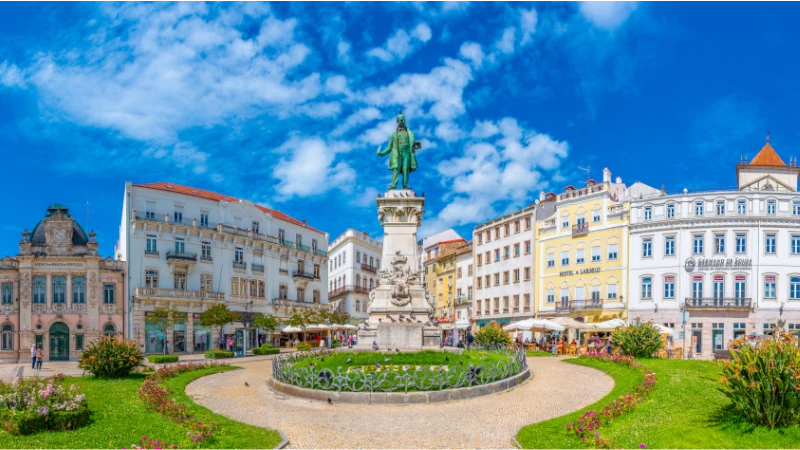
When it comes to health care needs, the city is home to the Coimbra University Hospital, one of the biggest in the country. As is the case with any other city in Portugal, you also have private clinics.
You’ll need a Número de Utente to access the National Health Service or Serviço Nacional de Saúde (SNS). This is a reference number that corresponds to your registration in the SNS.
Depending on what level of care is needed, you may have to pay a fee called a taxa moderadora or nothing at all.
An appointment with a family doctor or general practitioner, for example, will cost you 4.50 euros.
In Coimbra, the price for a dental cleaning is about 50 euros (at Clínica Delille), and for a visit to the general practitioner, it will be 81 euros (at Hospital CUF Coimbra), in both cases without insurance.
Most importantly, it pays to do some research before choosing health insurance because there are so many different options.
If you love the idea of living in a city that’s not too big and not too small, not too busy and not too sleepy, then Coimbra may be the balance you’re looking for.
Explore how the healthcare system works in Portugal, what expats typically do for coverage, and what to expect for day-to-day care—so you can plan with confidence before you move.

Portugal has for years been on the Global Peace Index’s list of the safest countries in the world. This alone should give you some peace of mind.
Walking around the city, you’ll notice there’s always something happening, and yet there’s a sense of peace. Still, taking basic precautions, like locking your car when you park, will earn you extra points for safety.
Around the time of Queima das Fitas (in May, as mentioned above) and the beginning of the academic year (in September and October), you can expect some possible complications stemming from this simple formula: excited university students + alcohol = trouble.
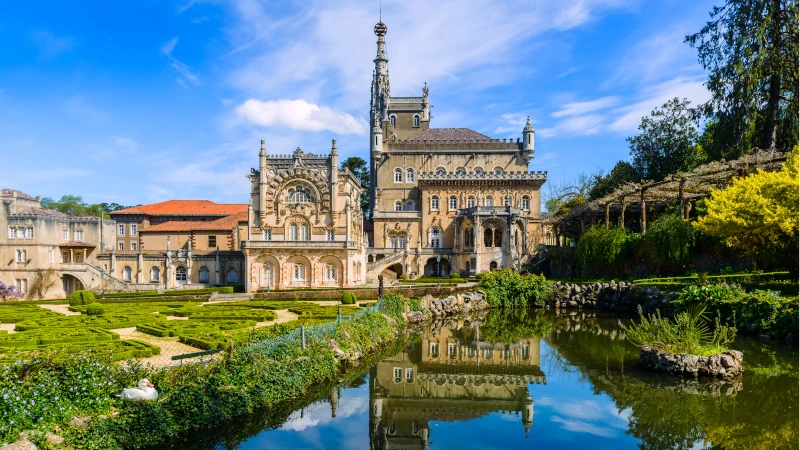
The weather in Coimbra is mild, as in most of mainland Portugal. Although the city is relatively far from the coast, the presence of the Mondego River helps make for moderate winters and summers.
In winter, temperatures usually go from 59°F to 41°F (15°C to 5°C), with the occasional drop below 32°F (0°C). Summer temperatures usually range between 82°F and 59°F (28°C and 15°C).
In general, you can expect plenty of rain year-round, except for July and August—typically the warmest months.
Explore top living destinations, beach communities, highland havens, and city hubs across Portugal.
Practical guidance for planning your life, move, retirement, property purchase, or investment in Portugal.
Secrets. I have a few. I figure everyone does. Well, secrets sometimes need to be revealed, explained, or clarified—especially if the secret has anything…
Read InsightAI has no role at Live and Invest Overseas. Every time we allow AI into the conversation, we give up a little piece of your trust—and trust is the foundation of everything we do. Our strength is simple: real people speaking from real experience, in first person, telling real stories from the ground.
We will never publish AI-generated content. Not from ourselves, and not from anyone submitting to us. Our work is built on judgment, experience, trust, and what’s actually happening on the ground—not scraped summaries or recycled internet information.
When you read us, you’re reading lived experience. The stories, the insights, the perspective—that’s what AI can’t touch. And that’s exactly why we don’t use it.
Top Countries
Budgets
Resources
Real Estate
Conferences
Store
Free Report

© 2008 - Live and Invest Overseas - All Rights Reserved.