Mexico: Accessible, Affordable, And Familiar… Why Go Farther?
Mexico is the most accessible country in the region from the United States and Canada.
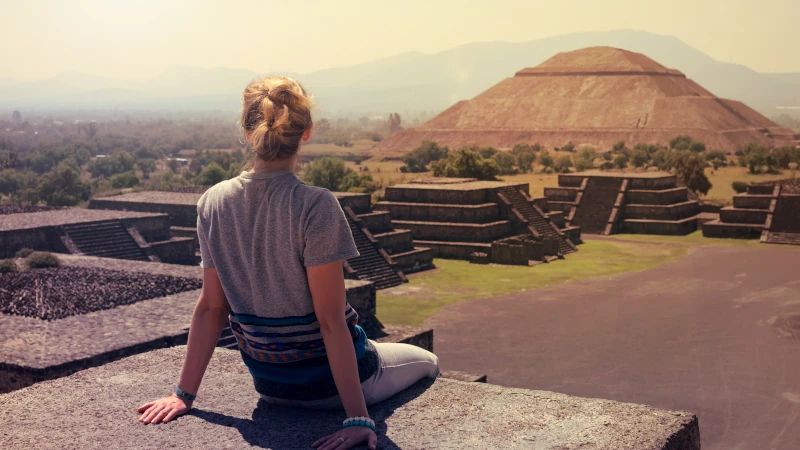
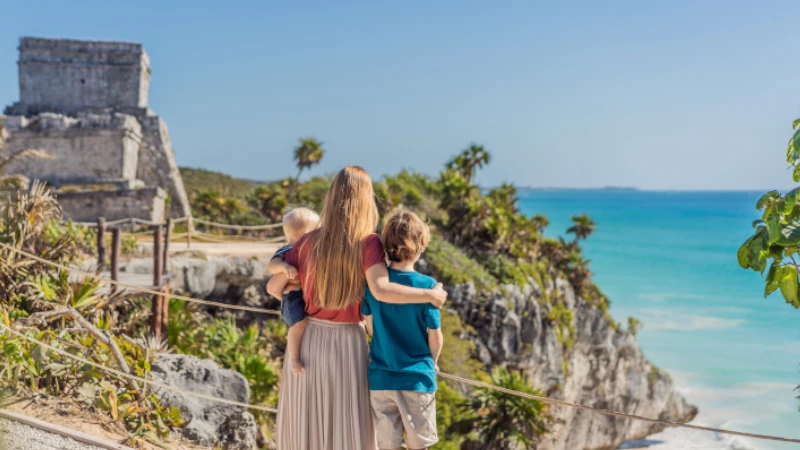
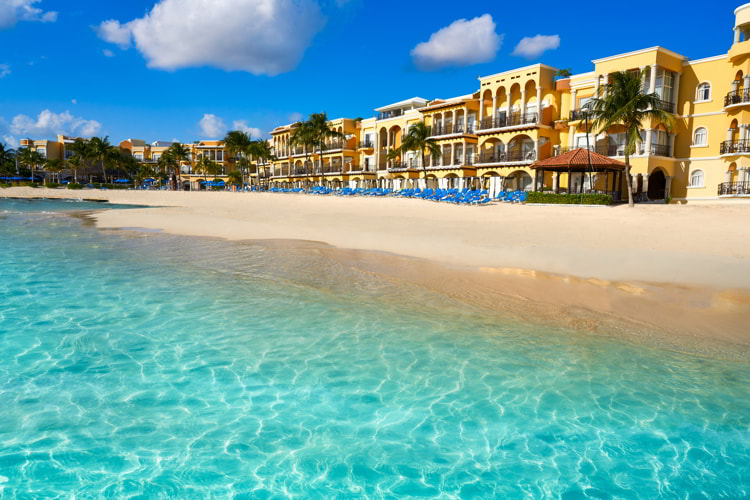
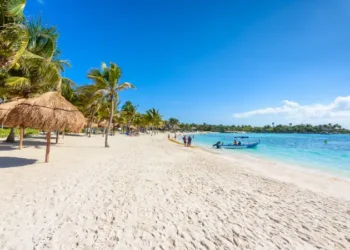
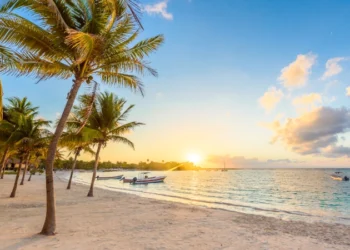
Also, Mexico offers lots of options and opportunity for the expat. This is a big, extraordinarily diverse country that offers two long coasts, mountains, and colonial cities… not to mention Mayan ruins, jungle, rain forest, rivers, and lakes.
Being in North America, this country is home to many American franchises, from McDonalds to Pet Depot and Walmart to Starbucks.
Almost anything you buy in the States is also available in Mexico, though ease of availability depends on your location (rural and remote areas would offer fewer franchises and order fewer imports).
For all these reasons Mexico is home to the biggest established population of American expats in the world.
Ajijic and Chapala are two of the world’s biggest established communities of North American retirees overseas (though these aren’t our top recommendations in the country).
Puerto Vallarta is of the most affordable turnkey retirement on the Pacific Ocean, here, you could enjoy all the comforts of home at a fraction of the cost (despite the well-established expat community).
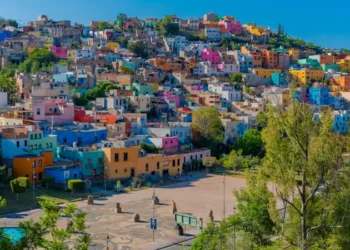
The silver mines in Mexico’s central highlands provided the incredible wealth that impelled Spain to world prominence in the 16th century and created Guanajuato, the crown jewel of Mexico’s colonial cities.
Along with Guanajuato and Puerto Vallarta and we recommend the Bahia de Navidad and San Miguel de Allende.
Traveling To Mexico
With its close proximity to the United States and Canada, travel to Mexico is straightforward—one of the country’s biggest advantages for retirees and expats. Most international arrivals come through major gateways like Mexico City International Airport, as well as popular hubs in Cancún, Guadalajara, and Monterrey.
From the U.S., direct flights are common and often short. Flights from cities like Miami, Houston, Dallas, Chicago, and Los Angeles can range from a few hours to roughly half a day depending on your departure point and destination. From Canada, direct flights are widely available too, especially to coastal destinations—making travel to Mexico surprisingly convenient from major North American hubs.
For travel within the country, domestic flights are frequent and affordable, connecting Mexico City to regional capitals and expat-favorite areas across the country. You can also travel by modern long-distance bus networks or by car on major highways—options many retirees find practical once they settle into a routine.
Plus, Mexico makes an excellent base from which to explore the rest of Latin America and the Caribbean, with frequent flights throughout the region. That easy access is another reason travel to Mexico appeals to retirees and expats who want a comfortable home base with plenty of options for quick getaways.
Living In Mexico
Some things you learn or, you get the scoop from insiders who already live in a place. Here is a little guide:
Paying The Bills In Mexico
Cash is king when it comes to paying your household bills in Mexico. So, this will require you to pay in person. You can do that at the company offices (some have kiosks with electronic scanners). Or, you can also pay at supermarkets and other retail outlets that serve as payment centers.
Mexico Time Zones
Mexico has three different time zones: Central Standard Time, Mountain Time, and Pacific Time.
South, Central, and Eastern Mexico follow Central Standard Time, which is GMT -6. However, from the first Sunday in April to the Saturday before the last Sunday in October, it changes to GMT -5.
Nayarit, Sonora, Sinaloa, and Baja California Sur follow Mountain Time, which is GMT -7. But, during daylight saving time, it changes to GMT -6.
Lastly, Baja California Norte follows Pacific Time, which is GMT -8. Nevertheless, during daylight saving time, it changes to GMT -7.
Tipping In Mexico
If you plan to spend time with our neighbors south of the border you should understand the protocol for tipping in Mexico. While many developed nations are heavy tipping societies, Latin America follows different rules, especially away from tourist areas.
In Mexico, the people who work in service industries like restaurants, hotels, and other tourism-related fields are often paid minimum wage or less. They count on tips to make ends meet and always appreciate a tip in exchange for hard work and good service.
Tourist Areas Versus Local Areas
Tipping in Mexico can vary quite a bit. In tourist destinations, waiters, bellhops, and spa staff will expect a tip since the majority of the people they serve are visiting from countries with tipping societies.
However, some all-inclusive resorts have a no-tipping policy in place and do not allow tipping since the staff is well compensated by the establishment. Other all-inclusive destinations provide guidelines for the guests to follow.
Very high-end places such as the St. Regis or W line of hotels may automatically add a tip to various services such as your room rate, meal checks, and bar tabs. In local, traditional Mexican towns with few tourists, tipping is less common or the servers are content with a small tip.
Be sure to check your bill to see if a gratuity was already added to avoid double tipping. If you are unsure whether a tip has been added to your bill, look for “IVA” which is the Mexican value-added tax that indicates an extra payment for service. You are welcome to add to the IVA amount if you want, but don’t double tip by accident.
In general, it’s wise to carry pesos and Mexican coins with you for when you receive great service and would like to tip the staff. In Mexico, U.S. dollars are widely accepted, so tipping with paper dollars is fine but don’t leave U.S. coins since the locals cannot exchange U.S. coins for pesos.
When And How Much To Tip
In Mexico, there are no hard rules when it comes to tipping. If you receive exceptional service or assistance from someone in Mexico, you are always welcome to thank them with a tip. Here are some of the most common tipping situations you may encounter.
Waiters
Service charges may or may not be included in restaurants, but in tourist locations or if you have a large group a tip may be automatically added to your bill. A standard restaurant tip is 10% to 20% of your total bill.
Bartenders
Depending on the exchange rate, it’s acceptable to tip a bartender 10 to 20 pesos (around US$1) per drink, or 10% to 15% of your bar bill.
Drivers
Taxi drivers do not expect a tip, but you can simply round up the total and refuse any change. Also, 10 pesos per bag is appropriate if they help with your luggage. Airport shuttle drivers likewise do not expect a tip, but 10 pesos per suitcase is appreciated if they help with your baggage.
Grocery Store Baggers
In most other countries, people do not tip the bagger in a grocery store. In Mexico, the baggers work only for tips, especially in the larger chain grocery stores. You should give them one or two pesos per bag at the counter and 10 to 20 pesos if they help carry the bags to your vehicle.
Bellhops
If they help you with your luggage and escorts you to your room, 25 to 50 pesos is a customary tip depending on how far they had to take you.
Housekeeping staff
These hard workers are among the lowest-paid employees in a hotel, so tips are greatly appreciated. You should leave a tip of 25 to 50 pesos per day in your room each day rather than waiting until the end of your stay because several different cleaners may attend to your room during your stay.
Concierge
If someone goes out of their way to help you make tour arrangements, dinner reservations, or provides other special attention, a tip of 50 to 150 pesos is appreciated.
For a simple half-day tour, a tip of 50 pesos is appropriate. For a full-day tour, 10% to 20% of the total cost of the tour is customary.
Hair Stylist
Most stylists do not expect a tip in Mexico. If you absolutely love your new look, tipping up to 15% of the total cost is appreciated.
Spa Service Provider
Since they are usually working in a tourist destination, spa providers expect 10% to 15% of the cost of the service provided.
Gas Station Attendant
In Mexico, an employee pumps your gas and will also check your oil, wiper fluid, wash your windshield, or other small items if you ask. A minimum tip of 10 pesos is appropriate for the gas, and you should add more if they do more.
In some places, expats are viewed as flaunting wealth and trying to look important when in fact they are simply trying to be generous in exchange for good service. Try to follow the local guidelines and you will be welcomed and appreciated.
Understanding Mexican Culture
I’m seeing my Spanish tutor, Camila, later today. We sit opposite each other in the kitchen of my Mexican home and discuss the subtleties of advanced grammar, along with anything else that comes up.
My class is the highlight of my day, and I can hardly wait.
Since my husband, Barry, and I bought an old home in the heart of the UNESCO World Heritage city of Guanajuato 17 years ago, I’ve had seven tutors, and each has not only taught me Spanish but also offered a window into Mexican culture.
In my experience, a tutor provides more benefits than just language. They help me get beyond the stereotypes to understand the real culture. Here are eight cultural insights I’ve learned from my different tutors…
#1. The Importance Of Courtesy In Mexico
When Camila WhatsApps me, she always starts with buenos días or a similar greeting. I’ve learned to use similar courtesies, in speaking and writing, rather than the American way of just getting to the point.
Courtesy is highly valued in Mexican culture. When I approach a stranger to ask directions or enter a small shop to greet the proprietor, I now know to first say buenos días or buenas tardes.
One Mexican custom is not only polite but charming. When people leave a restaurant, they say to the remaining diners, buen provecho or “bon appétit.”
An American expat married to a Mexicana told me that when his mother-in-law orders a pizza, she spends five minutes on the phone: 30 seconds ordering the pizza and four and a half minutes greeting and offering courtesies.
#2. Indirect Communication
Even among Latino cultures, Mexicans tend to take longer to get to their point. For example, in the yoga class I take, one member coordinates a monthly breakfast.
A few weeks ago, I was tickled when I read the long, effusive message she wrote to the group. She took 160 words to basically say, “We need to decide where to have our breakfast this month.”
It was very different from my more direct, minimalist English style.
#3. Ahorita And Other Diminutives
Mexicans add –ito and -ita to many words as a way of being warm and personal. Un ratito means “a little while.” Similarly, the word ahorita means “pretty soon,” but beware of taking these literally—either of them could mean hours.
When our neighbor visits, she likes to have a palomita (tequila and Fresca). People refer to their grandparents as their abuelitos. Camila wished me a fun time at la playita (the beach).
In Mexico, you might hear someone referred to as llenito or gordito, meaning on the chubby side, and calling someone this is much less of a taboo in Mexico than it is in the States.
#4. Personal Space And Body Language In Mexico
I’ve observed that Mexicans typically stand and mingle much closer to each other while talking than do Americans. As a gringa, I find their jostlingunsettling. I also observe many more crowds in Mexico than in the States.
A 25-year-old Spanish tutor who Barry had a few years ago told him that her sister was getting married, so she would have a room to herself for the first time in her life.
Being British, he could think of nothing better. “Isn’t that wonderful?” he asked. “Oh, no,” she said. “I’ll be lonely.” Their respective reactions reflected very different cultural values.
Mexicans are affectionate, and you see people touching and hugging frequently in public. You also see adolescents entwined and making out on benches, in squares, and public parks, enjoying a degree of freedom, at least in smaller cities, that I don’t see in the States.
On Friday evenings it’s common for students in the secundaria (middle school) to converge on the main square, having fun with each other unsupervised by adults.
#5. Women Marrying Later, If At All
One of Barry’s and my former Spanish teachers is now a law professor in Mexico City in her 40s, still unmarried.
Another former tutor, a single mom with two grown sons, got back together with her high school sweetheart and now lives with him in the city of Querétaro.
Camila just turned 32 and has a boyfriend but is in no hurry to marry.
This is completely different from when we first studied Spanish in Mexico in the 90s.
#6. Spoiled Sons
I was surprised to learn that even modern, contemporary mothers spoil their sons. Camila explained that this is partly because the mothers are counting on their sons to financially subsidize them when they’re old and widowed.
Unfortunately, spoiled Mexican sons sometimes grow up to be entitled husbands. Mexican wives are not as financially dependent on their husbands and don’t have to put up with it, so there are a lot of divorces.
The number of divorces in Mexico has increased in recent years and separations even more so.
#7. Make-Up
Mexican women wear a lot of make-up and see no problem putting it on in public—for example, on the Mexico City metro, buses, and other public transit.
It’s funny to me, because the whole point of make-up is to create an illusion, but Mexican women don’t mind dispelling that illusion.
#8. Close Family Ties
Mexicans have strong family ties, with a national tradition of an intergenerational comida every Sunday. However, Camila says that family unity is fraying somewhat.
According to my teachers, the downside of family unity is that parents place a lot of pressure and a strong sense of obligation on their adult children.
For example, one of our first teachers was teaching Spanish part-time while simultaneously going to university. Although tuition in Mexico is free, extras (like the actual título or diploma) are not.
Because our tutor came from a poor family, we offered to pay for the diploma. Later we learned that her mother demanded that she let her use the money to repair the bathroom in the family home, which badly needed it. Our teacher felt she couldn’t say no to her mom.
I’m more than twice as old as Camila, but age is irrelevant; over Spanish, we share our lives, I consult with her when I face tricky cultural situations, and she helps me decode Mexican culture.
As my paid friend, informant, and cultural expert, she’s worth every peso I invest.
By Louisa Rogers
Mexico Insider
Moving To Mexico
To relocate to Mexico permanently, you’ll first need to gather important documents, including proof that you can support yourself financially and a police record check.
Next, get on a plane to Mexico. You can enter as a tourist for a limited period, but to be admitted by immigration, you may need proof of accommodation (such as a hotel reservation), proof of funds or a credit card, and proof of onward travel (such as a return ticket or a flight to another country, whether or not you intend to use it).
Once you’re in Mexico, you can start the residency-application process, selecting from the different visa and residency pathways Mexico offers.
For many retirees, Mexico’s retiree-friendly residency routes can be one of the most straightforward ways to get legal residency. Requirements vary depending on the program and your circumstances, but in most cases you’ll need to show proof of income or savings, provide background documentation such as a police record check, and complete your application process through official channels. Some steps may need to be started outside the country and then finalized once you arrive.
Mexico is a top expat haven, paperwork aside. It offers a high quality of life at a cost that can be significantly lower than in the U.S. or Canada, depending on where you choose to live. Retirees are drawn to the lifestyle—fresh food, walkable town centers, strong service culture, and the ability to build a comfortable routine without overspending.
And Mexico’s variety is hard to beat. From highland colonial cities to modern urban centers, and from the Pacific coastline to the Caribbean, the country offers a huge range of climates and lifestyles. Many expats spend their free time exploring new regions, enjoying beaches, hiking and nature escapes, or settling into the rhythms of local community life—one of the biggest reasons Mexico continues to attract retirees year after year.
Retire In Mexico
Mexico has long been a favorite retirement destination for expats, and retirees here tend to find a welcoming culture, strong community support, and a lifestyle that’s easy to enjoy at any pace.
As a retiree here, you can often benefit from perks and practical advantages such as:
Affordable everyday services (from housekeeping to home maintenance)…
Strong value in dining out and entertainment…
Excellent options for domestic travel across the country…
Discounts and seasonal deals on hotels and long-term stays…
Access to affordable private health care in many areas…
Lower overall living costs compared to the U.S. and Canada in many regions…
Flexible housing options—renting or buying depending on your goals…
Walkable towns and neighborhoods that make daily life simple…
A wide selection of expat-friendly communities to plug into quickly…
And in day-to-day life, Mexico tends to be very retiree-friendly in ways that don’t show up on paper. People are patient, helpful, and social. It’s a small thing, but for many retirees, that feeling of being genuinely welcomed is one of the biggest perks of all.
Health Care In Mexico
Mexico provides excellent and reasonably priced medical care that is accessible to residents.
There are two national care plans that individuals can choose from, which are either entirely free or almost free, depending on their circumstances.
In large cities, many doctors speak English as their second language. And, the majority of pharmaceutical products do not require a doctor’s prescription, with the exception of narcotics and some powerful antibiotics.
Simply walk into a pharmacy and request what you need, as the cost is significantly lower than in the United States.
Depending on the specialty area, a typical doctor’s visit can cost US$15 up to US$40. Due to the low costs, many individuals choose to pay for medical expenses out of their own pocket.
Real Estate In Mexico
Mexico represents one of the most promising markets for overseas property investment.
This country is home to several well-known cities that, due to their favorable reputation, continually attract tourists, retirees, and digital nomads. When you’re ready to rent or sell your property, you will have little to no trouble doing so.
Mexico is easy to get to by plane or by car. If you want to use your property as a second home or decide to retire to Mexico full-time, it will be hassle-free.
So, take advantage of the current strength of the U.S. dollar against the Mexican peso, which will provide you with excellent lifestyle and cash flow potential.
Interactive Map Of Mexico
Click on any highlighted city or region to explore in-depth guides on what life is like there—from cost of living and climate to culture and real estate opportunities. Each location featured is one we’ve carefully reviewed and consider among the most livable and investment-friendly spots in Mexico. Use this map as your starting point for discovering where in Mexico your ideal lifestyle awaits.
Where Is Mexico Located?
Mexico is located in the southern portion of North America, between the United States and Central America. Mexico is bordered by the U.S. to the north and Guatemala and Belize to the south.
The entire western border of Mexico is a coastline of the Pacific Ocean, except for the inward jutting Gulf of California that separates the Baja Region with the rest of the country.
On the eastern coastline of Mexico you will find the Gulf of Mexico.
Climate In Mexico
Mexico is, perhaps, your best choice if you seek an adventure overseas with all the comforts of home.
The temperature in all areas of Mexico typically ranges between 50°F and 90°F throughout the year.
Mountainous regions and any area above sea level get cooler temperatures and lower humidity.
The rainy season lasts from May through October. However, Mexico receives the most annual rainfall during rainy season, most regions receive about 40 inches of rain per year.