Taxes for Foreign Residents in Panama
Panama offers a favorable tax system for foreign residents, where personal income tax is only applied to income earned within the country. This makes it an attractive option for retirees, especially Americans, as U.S. Social Security and pension income are not taxed in Panama. However, U.S. citizens are still required to file tax returns with the IRS, even if they are not liable for taxes. Panama’s tax structure is further complemented by various exemptions, making it possible for foreign residents to significantly reduce their tax burdens with proper planning. Here is all you need to know.
Panama uses a territorial tax system, meaning only income earned inside Panama is taxable. Income earned from the U.S. — including pensions, Social Security, investments, and remote work — is not subject to Panamanian tax.
More on the Foreign Earned Income Exclusion.
Paying Taxes In Panama
Foreign residents pay tax in Panama only on money earned inside this country.
Regardless of your residency status, personal income tax is only applied to Panamanian sourced income. Americans retirees are not taxed on pensions, Social Security, or similar income earned in the States.
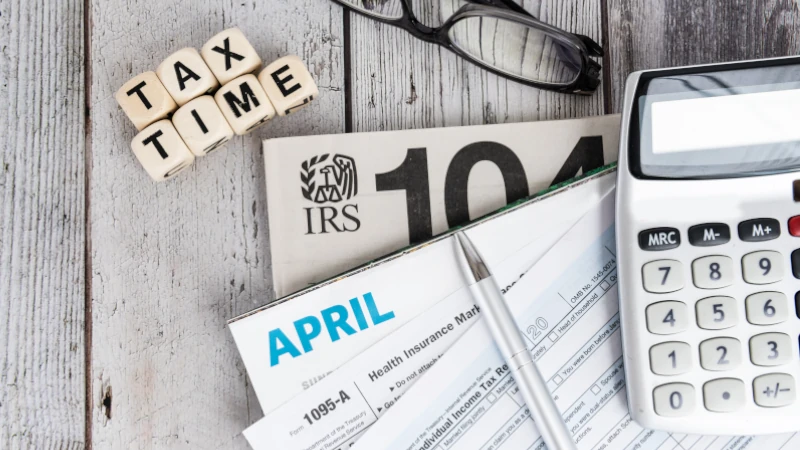
Still, the IRS requires that U.S. citizens file U.S. tax returns, even if they’re not living in the States and even if they have no tax liability (as long as they meet the minimum income requirements).
You will not be taxed on your first US$128,200 (2025) of earned income under the Foreign Earned Income Exclusion (double that for a couple). When it comes to taxation, this is as good as it gets for the foreign resident or retiree.
U.S. Tax Obligations While Living in Panama
ITBMS (Panama’s Sales Tax)
Panama charges a 7% sales tax known as ITBMS, which stands for Impuesto a la Transferencia de Bienes Muebles y Servicios (basically, the tax added to most goods and services).
ITBMS works very much like state sales tax in the United States, where a percentage is added at checkout on everyday purchases. Most items are taxed at 7%, while alcohol is taxed at 10% and tobacco at 15%.
Essential items such as certain groceries, medicines, and medical services are usually exempt, so day-to-day living expenses often end up lower than what many Americans pay in states with high sales tax.
Income Tax In Panama
Panama Tax Rates For Real Estate
When buying real estate in Panama there will be applicable taxes rates for every circumstance, including:
Rental Income Tax
If you receive rental return on your property, you will be liable for income tax up to a maximum of 25% (on returns greater than US$250,000). However, if you invest in a hotel or condo-hotel you may be exempt from income tax for 15 years. This does not apply to any private residence, only hotels and condo-hotels.
Transfer Tax
Taxes In Panama: Property Tax
Properties with a registered value of US$120,000 or lower do not pay property tax. Properties worth more than US$120,000 are taxed under Panama’s progressive property tax system introduced under Law 66 of 2017 , and implemented in 2019, as follows:
- 0% up to $120,000
- 0.5% from $120,000–$700,000
- 0.7% over $700,000
Capital Gains Tax
Construction And Improvements
Various property tax exemptions are in place, ranging from 5 to 20 years. If you buy resale, the remaining exemption time is yours.
Exemptions On Taxes In Panama
If you invest at least US$50,000 in tourist-related infrastructure in designated special tourism areas of Panama’s interior, you can benefit from:
- A 20-year exemption on any import taxes due on materials, furniture, equipment, and vehicles;
- A 20-year exemption on real estate taxes for all assets of the enterprise;
- Exemption from any tax levied for the use of airports and piers;
- Accelerated depreciation for real estate assets of 10% per year.
The investment amount does not include the price of the land. The minimum investment requirement for projects in the metropolitan area is US$300,000.
How To Live Tax Free In Panama
You could live in Panama tax-free, even as a U.S. citizen (that is to say, paying no income tax either in Panama or in the United States).
However, some work and preparation are required. You have to set yourself up properly.
If you’re retired, you won’t pay taxes on retirement income you bring into Panama or on any dividends or interest income earned outside the country. But, you would still pay taxes in the United States on the dividends and interest income.
And, depending on the source of the retirement income, you’d pay the same tax to the IRS as you would if you lived in the States (although, if you live in a state that taxes retirement income, you’d avoid that tax by moving to Panama).
To live completely income tax free in Panama as a U.S. citizen, you must have a business generating earned income for you as an individual and that income must be derived from outside Panama.
Panama taxes residents on income earned in the country only, so your non-Panama business would pay no taxes in Panama.
And, assuming it is a business where you can legitimately claim that you are earning your income outside the country, your individual income wouldn’t be taxed there.
Typically, this means a consulting or an Internet-based business.
If you start an active business in Panama, with sales in Panama to Panama residents, then that income would be taxable in Panama, as would any related personal compensation you receive.
In either case, your salary up to the annual Foreign Earned Income Exclusion limit (US$128,200 for 2025, adjusted annually for inflation) can be excluded for U.S. income tax purposes. The key is that it be truly earned income.
Taxes in Panama - FAQ's
Is Panama still considered a tax haven?
Panama is not legally classified as a “tax haven,” but it does offer a territorial tax system that only taxes income earned inside the country.
This means foreign income — including U.S. pensions, Social Security, and investment income — is not taxed in Panama, which is why many retirees view Panama as a very tax-friendly destination.
What are the tax benefits of living in Panama?
The biggest tax benefit is that Panama only taxes income earned inside Panama.
This means U.S. retirement income, Social Security, foreign investment income, and rental income from properties outside Panama are not subject to Panamanian tax.
Panama also offers:
- 0% property tax on homes valued up to US$120,000
- progressive 0.5%–0.7% property tax above that threshold
- low capital gains tax (5%) on Panama-based real estate
- various tax exemptions for new construction and tourism-related investments
Does Panama tax U.S. Social Security?
No. Panama does not tax U.S. Social Security benefits or any other U.S.-sourced retirement income.
The only time a foreigner pays Panamanian Social Security tax is if they work for a Panamanian employer or earn Panamanian-sourced employment income.
This payroll tax is:
- 9.75% Social Security (employee portion)
- 1.25% Educational Insurance Tax
- Income Tax (Impuesto Sobre la Renta): applied on a sliding scale
- 0% on the first US$11,000
- 15% from US$11,000 to US$50,000
- 25% over US$50,000
Retirees who do not work in Panama do not pay any local payroll taxes or income tax on U.S. retirement income.
Do I still have to file U.S. taxes if I retire in Panama?
Yes — U.S. citizens must file a federal tax return every year no matter where they live. U.S. taxes are based on citizenship, not residency.
Do I need to report my Panamanian bank account to the IRS?
Yes. U.S. citizens with foreign accounts over the reporting thresholds must file FBAR (FinCEN 114) and possibly FATCA Form 8938.
Does the Foreign Earned Income Exclusion (FEIE) apply to retirement income?
No. The FEIE only applies to earned income (salary, self-employment). It does not apply to pensions or Social Security.
Does Panama tax remote work income from a U.S. employer?
Under Panama’s territorial tax system, only income from Panamanian sources is taxed. If you are living in Panama but working remotely for a U.S. employer and your services are provided to and used outside Panama (no Panamanian clients, operations, or fixed base), that income is generally treated as foreign-source and not subject to Panamanian income tax.
As of 2025, tax-guidance summaries used by the DGI and major international tax advisory firms reaffirm that Panama taxes only Panama-source income; interpretation of “where income is earned” for remote work remains subject to legal and factual review.
Is there a tax treaty between Panama and the United States?
No. There is no tax treaty and no totalization agreement between the two countries.